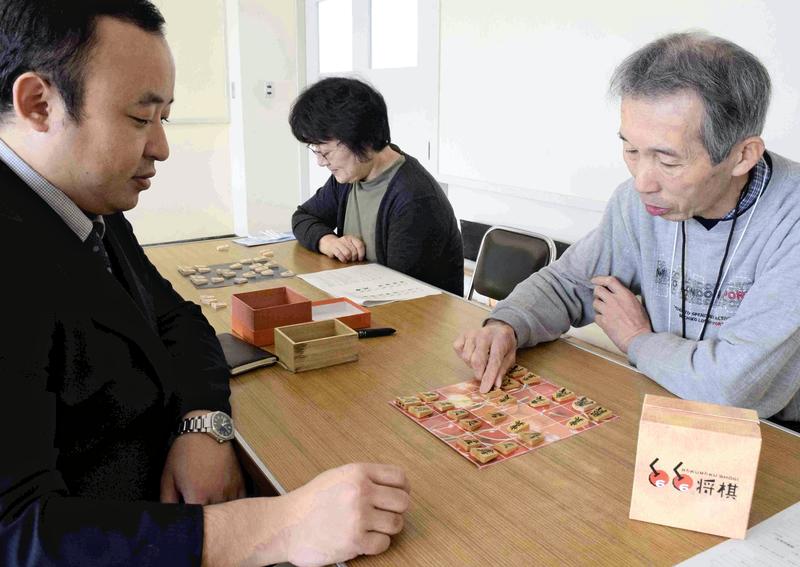
TENDO, Yamagata -- "How do I move these pieces?" asked a participant in an unusual event featuring shogi, a game also known as Japanese chess, in Tendo, Yamagata Prefecture, in October. Tendo is known as the city with Japan's largest production of koma, or wooden shogi pieces.
The event let visitors enjoy shogi in a specially modified form.
Ordinarily, shogi is played on an 81-square board (with nine rows and nine columns) on which each player commands 20 koma pieces. But in the modified game, each player uses just 12 koma, consisting of six fu pawns, an osho king, a kinsho gold general, a ginsho silver general, a keima knight, a kyosha lance and the player's choice of either a hisha rook or kakugyo bishop.
The modified shogi is played on a board with six rows and six columns for a total of 36 squares. It is therefore called "roku-roku" (six-six) shogi.
The pieces move in the same way as in the usual game. But there are special rules for roku-roku shogi, including that koma -- with the exception of pawns -- can be positioned freely at the start of the game. With the number of koma reduced by nearly half compared to conventional shogi, a game of roku-roku shogi can be finished in an average of about six minutes. This is the most distinctive feature of the modified game.
Amid a decline in the number of people playing shogi, the altered version was developed to easily give people a taste of what the traditional game is like.
Attendee Masazo Sakurai, 72, said with a smile: "I was embarrassed at first, but as I tried it, I found it very pleasant. I want to do it again."
Roku-roku shogi is the centerpiece of a "Komanomics" economic initiative promoted by the Tendo Chamber of Commerce and Industry from the current fiscal year to vitalize the region. The three objectives of Komanomics are to expand the number of shogi players, to market koma for use as decorative items and to build an attractive community.
Hisayuki Ouchi, 39, a section chief at the chamber, said: "Despite living in the city with the largest production of koma pieces, many residents here don't know how to play shogi. Our reputation as the biggest producer of koma has yet to be fully utilized to attract tourists."
According to a survey conducted in December last year on all elementary and junior high school students in the city, only about 40 percent said they know how to play shogi.
The number of tourists visiting the city has hovered at slightly less than 2.5 million in the past several years, according to the chamber. For reasons such as the spread of online shogi games, sales of koma pieces have dropped by more than 30 percent from their peak around 1980.
Komanomics calls for boosting the number of tourists to the city by 10 percent in three years and creating new demand for koma pieces.
Unlike chessmen, all koma pieces are the same shape. Their roles are therefore identified by kanji characters painted onto them. As part of Komanomics, the city is considering developing koma pieces with kanji painted in red and green to evoke such local specialty crops as cherries and safflowers. Scented koma are another possibility.
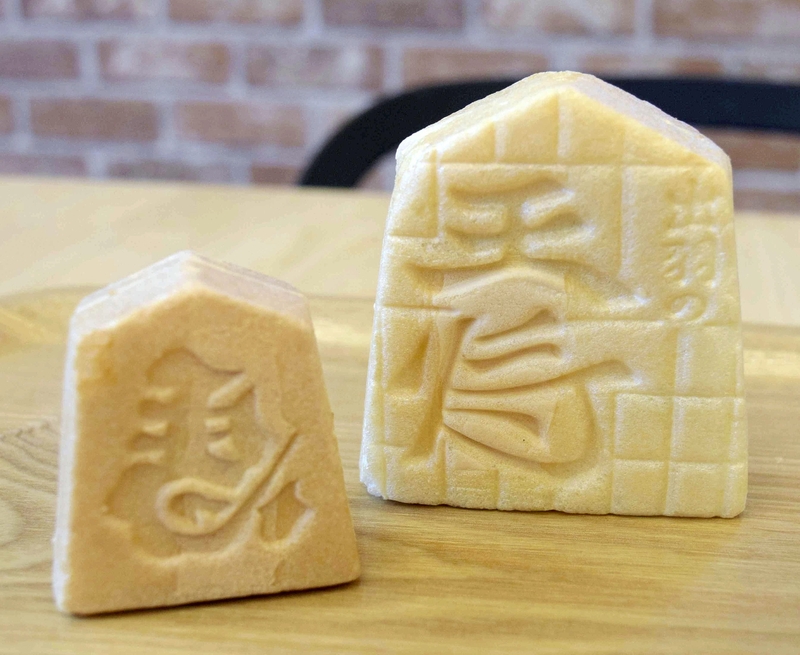
As part of the shogi promotion campaign, the city has partnered with the Tendo branch of the Japan Shogi Association to do such things as holding classes for women and beginners. In another promotion campaign to promote an attractive community, the city has developed two sizes of koma-shaped monaka, a frozen treat similar to an ice cream sandwich, in cooperation with an ice company. The products are sold at cafes in the city.
The Tendo chamber devised roku-roku shogi in cooperation with Michio Matsuda, a specially appointed professor at Shokei Gakuin University in the city of Natori, Miyagi Prefecture, with the idea of creating "a shogi game that can be played easily and anywhere."
The first roku-roku shogi tournament was held in a Tendo shopping center in July with 24 people on eight teams participating. A roku-roku shogi session was offered in September in Tsukiji, Tokyo, during an event called "Tendo Marche."
A booth where people could try the game was set up during an event held in the city on Nov. 22-23 to mark the Day of Shogi, a festival in which many professional shogi players took part.
The spectacular performance of 7-dan up-and-coming professional shogi player Sota Fujii is certainly giving shogi a tailwind. Another boost comes from the success of "March Comes in Like a Lion," a manga whose main character has a connection with Tendo and which has been made into an anime and a live-action movie.
Tendo Mayor Shinji Yamamoto said, "I'm determined to promote 'Tendo as a community of shogi' nationwide and globally, and at the same time I will work toward promoting shogi in order to pass on the culture of shogi to the next generation."
Local 'nomics'
Komanomics is far from the only regional economic vitalization project to include the suffix "nomics" in its name. Other such projects can be found in various parts of Japan.
For example, the town of Ichinomiya, Chiba Prefecture, which was selected as the venue for surfing events in the 2020 Tokyo Olympics, has put forth an overall strategy dubbed the "Ichinomiya version of surfonomics," building on its features as a surfing spot.
By designating the area along Prefectural Highway Route 30 as "Ichinomiya Surf Street," the town tries not only to bring about economic benefits from the gathering of surfers but also to create a virtuous circle of job creation to be followed by an increase in the number of people migrating into the town.
Yamagata Prefecture has been pushing ahead with a comprehensive policy of "Yamagata morinomics" aimed at invigorating the forest industry. "Mori" means forest.
The prefecture has increased the rate of subsidies for the costs of forestry businesses. As a result, the reforestation rate, which is the rate of afforestation of areas after deforestation, is said to have surged from 24 percent in fiscal 2014 to 40 percent in fiscal 2015.
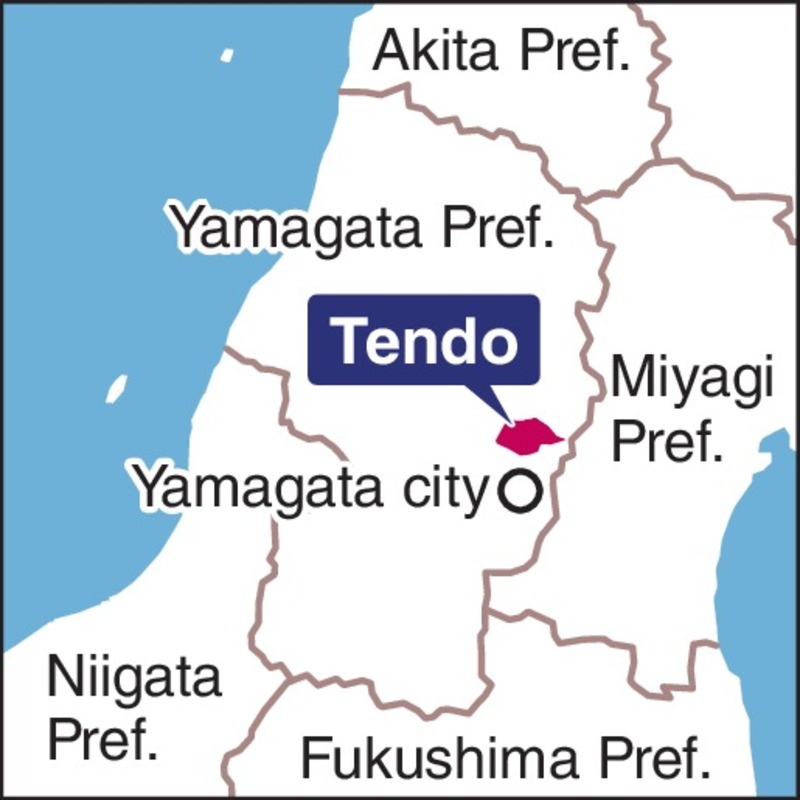
Tendo, Yamagata Pref.
Located in the eastern part of Yamagata Prefecture, Tendo has an area of about 113 square kilometers, the smallest among the 13 cities in the prefecture. Its population totaled 62,012 as of the end of September. This year marks the 60th anniversary of its foundation as a city.
The city's production of koma, or shogi pieces, currently accounts for about 90 percent of the total national output and has continued since the late Edo period (1603-1867). Koma production was recommended as a side job for samurai of the Tendo domain who were not in good financial condition.
Koma-themed objects can be seen in various places in the city. Sidewalks on which shogi problems are described are dotted with tiles embedded in the pavement. Production of such crops as cherries and pear is also brisk.
Read more from The Japan News at https://japannews.yomiuri.co.jp/