In Adachi Ward, Tokyo, there is a curious food called "bunka furai" in Japanese -- literally meaning "fried culture."
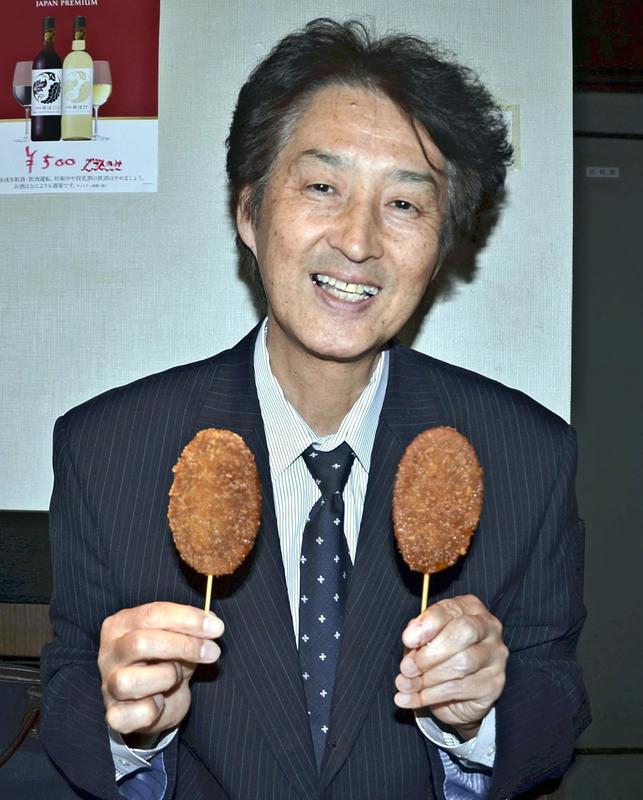
The food involves flour being kneaded into an oval shape, bread crumbs coated on the surface and then fried in cooking oil. There is no filling in the food. The taste is slightly sweet, and people eat the bunka fry after dipping it in sauce.
What is the origin of the B-class cuisine?
The Adachi Museum, which exhibits items related to the local folk history of the ward, has replicas of bunka fry, which were developed in 2009.
Chitose Ogihara, 54, a staff member of the museum, said: "It is food that is suitable for traditional residential and commercial areas, as it is cheap and fills you up. The food falls somewhere between dagashi cheap sweets and a meal. It became popular during Japan's high economic growth era when Adachi Ward was converted from a farming area into a residential area."
The word bunka was also attached to the names of other trendy things in those years, such as "bunka nabe" pots and "bunka bocho" kitchen knives. Thus, the food was named bunka fry.
Hiroshi Hasunuma, 60, an expert on bunka fry who has given lectures at the museum, described the taste as being like ham cutlets without ham and the sauce like more watery Worcestershire sauce.
"The balance of people who say the bunka fry are delicious and those who say it is not is fifty-fifty. But I like it," he said.
Returning a favor
According to the museum and Hasunuma, bunka fry was invented in Hasegawa Shoten, a store that used to be in the Umeda area in the ward.
Masako Hasegawa, who managed the store, invented the food sometime between 1955 and 1964. She set up a stall not only in the ward, but also the nearby cities of Matsudo and Funabashi in Chiba Prefecture. She also sold the food in many places on such occasions as ennichi festivals of shrines and temples.
In his childhood, Hasunuma bought bunka fry cooked by Masako at ennichi festivals of the Nishiarai Daishi temple. He said that he was focused when he ate bunka fry.
As he could not forget the taste, he continued to visit her stall after he became an adult. But in 2000, he was told that Masako would stop selling the bunka fry at the street stall due to her waning physical strength and would only sell them in her store.
Hasunuma posted this on his website, Hasupy Kurabu, from which he provides information about nostalgic things dating back to the Showa era (1926-1989). Since then, Masako's store began receiving rapidly increasing orders for bunka fry from long-standing fans of the food.
One day, Masako rode to Hasunuma's house on a bicycle to take him a large number of bunka fry, and told him, "Let me return a favor to you."
In her usual thick tones and with a smile, she said, "Contact me whenever you want to eat [bunka fry], as long as I live."
Afterward, she presented a total of 100 bunka fry every year to Hasunuma in summer and year-end gift seasons.
Masako passed away more than 10 years ago. Her husband, Seiji, continued to cook bunka fry, but has now discontinued it.
Secret recipe stays secret
Masako never disclosed her recipe for bunka fry.
But Kimihiko Sato, 51, owner of Kogetsu, an okonomiyaki restaurant in the Senju district of the ward, had studied how to cook bunka fry by relying on his memories of eating the food. He finally put bunka fry on his restaurant's menu as a "reproduced" version.
Sato had also frequented Masako's stall from childhood. After becoming the owner of Kogetsu, he bought bunka fry from Hasegawa Shoten and served them to customers in his restaurant.
Sato said: "That taste was slightly sweet and delicious. I could not forget the taste." His recipe for bunka fry is a secret.
I went to Kogetsu with Hasunuma and tried the bunka fry. After pouring the very thin sauce over the fried food, I took a bite. The crispy texture, simple taste of flour and slight sweetness was a good combination.
Hasunuma claims he is "the person who has eaten the most bunka fry in Japan."
He said, "As the taste from my childhood has been accurately reproduced, I can feel nostalgic."
Read more from The Japan News at https://japannews.yomiuri.co.jp/