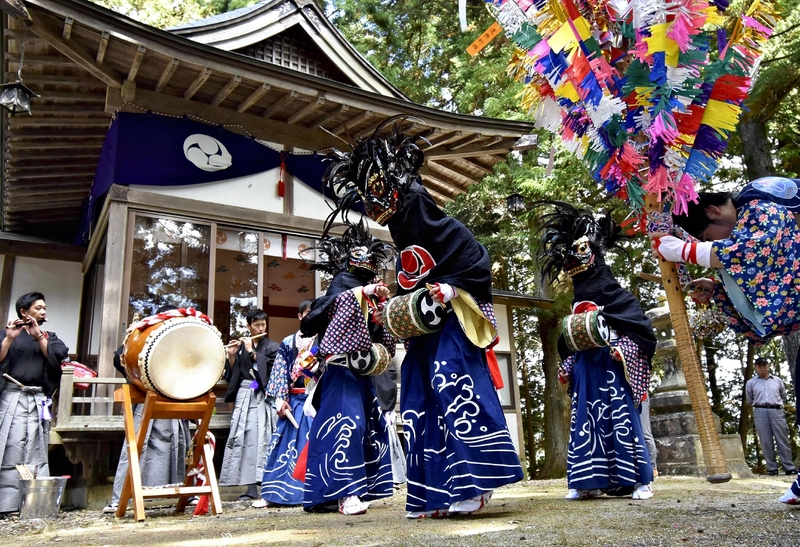
FUKUSHIMA -- A recent survey found that activities for 80 folk performing arts, including kagura and nenbutsu odori dancing, which were suspended after the 2011 disaster at Tokyo Electric Power Company Holdings, Inc.'s Fukushima No. 1 nuclear power plant in 15 municipalities in Fukushima Prefecture had resumed.
Thirty percent of such arts were having trouble continuing, with some having suspended activities again or being forced to change or cut back on performances, according to the survey by Minzoku Geino o Keishosuru Fukushima no Kai, a Koriyama-based nonprofit organization that supports folk performing arts in the prefecture.
"Without both passionate skilled leaders and sympathetic companions, performances won't last long even if they resume," a specialist said.
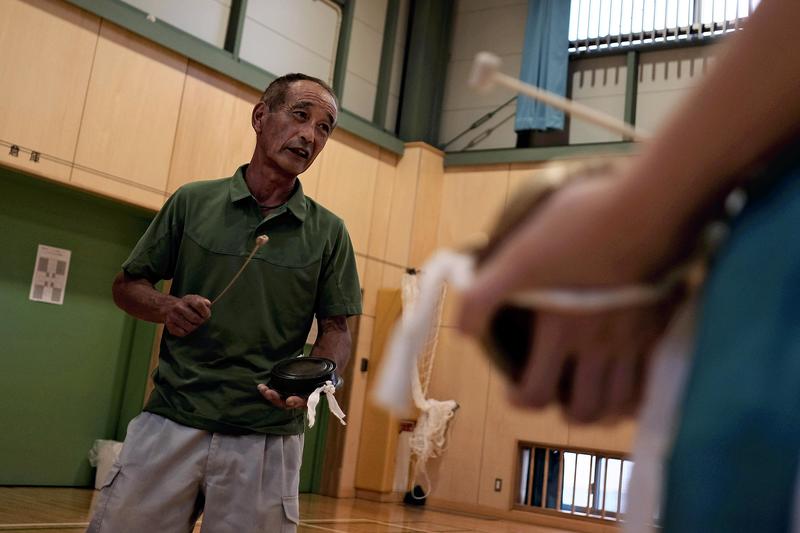
In December last year, The Yomiuri Shimbun interviewed municipal governments, preservation societies and other groups involved in the 80 folk performances based on data from the NPO.
Four that at one time resumed activities, such as the Okura rice planting dance in Iitate, have since halted again, due to a lack of participants and other reasons.
Twelve performances have undergone various changes, such as going from performing at annual festivals to doing so only when asked. It was uncertain if six performances would continue going forward after next year.
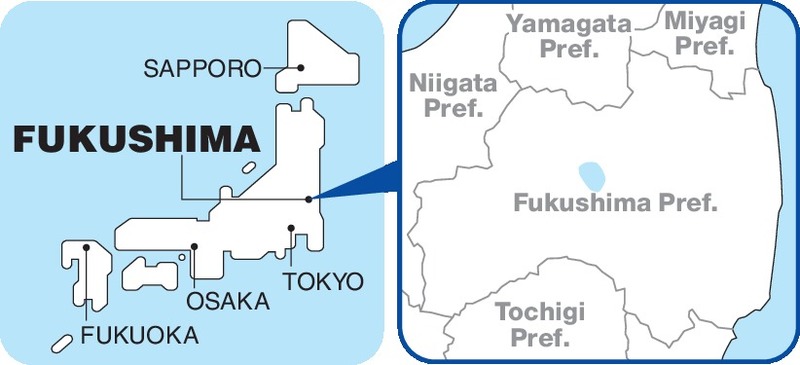
Folk performing arts have struggled particularly in Namie, Futaba, the Odaka district of Minamisoma, and other municipalities where residents were ordered to evacuate.
"There were a lot of rice-planting dances to pray for a good harvest performed in the Hamadori area where the eastern cool wind blows. But these were almost totally destroyed when people evacuated from the nuclear disaster," Hironori Kaketa, 81, a vice chairman of the NPO who is an expert on folk arts.
The central and prefectural governments have not looked on passively. The Cultural Affairs Agency has given from 10 million yen to 30 million yen to preservation societies in the six years up to fiscal 2017 to support purchases and repairs of supplies like taiko drums and happi coats. In municipalities around the nuclear plant, the prefectural government has paid for instruments, transportation back to hometowns for rehearsals, and other things.
In Futaba, the 10 members who performed the Yamada Jangara Nenbutsu Odori dance were scattered around the country after the disaster. They got back together in 2012 under Yasushi Kikuchi, 67, a former chairman of a preservation society for the dance, and purchased gongs, taiko and other instruments with funds from the central government.
Before the disaster, the dance was performed every August at households commemorating the first Bon festival after a member's death. Now the dance is performed only irregularly at various events.
The dance used to be restricted to adult men, but now women and children are allowed to join.
"It would be sad if a dance that was passed down for so many years came to an end. I want to involve the younger generation to keep it going," said Keiichi Suzuki, 54, the current chairman.
Finding dancers has also been difficult. In the Yamakiya district of Kawamata, the Sanbiki Shishi-mai, or "Three lion dance," which dates back to the Edo period (1603-1867), has been traditionally performed by elementary and junior high school students. Last year, three dancers were found and the dance was performed locally by children for the first time in eight years.
"Almost no children have returned to Yamakiya even since the evacuation order was lifted [in March 2017]. It's going to get even more difficult to put on performances like they used to be," said Kiyokazu Kanno, a 68-year-old member of the preservation society.
In Iitate, a rice-planting dance that is in danger of not being passed down is being taught in junior high school classes.
"Hometown festivals and annual functions stir up one's courage to live. The resumption of folk performing arts is also a barometer for the restoration of disaster victims' hearts," Kaketa said.
Read more from The Japan News at https://japannews.yomiuri.co.jp/