A local specialty ramen dish that originated in Hachioji, Tokyo, features an ingredient you don't often find atop ramen noodles -- chopped onions. What are the origins of Hachioji ramen, and how did the dish develop?
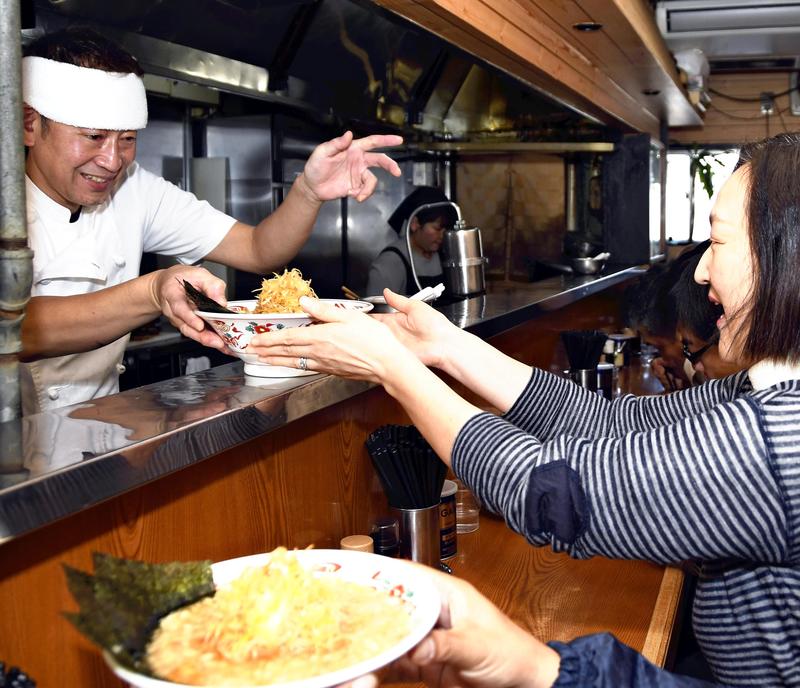
In a residential area about two kilometers from JR Nishihachioji Station, long-established Hachioji ramen restaurant Hatsufuji can be found in the city's Nakanokamicho district.
Even though the restaurant is a long walk from the station and has an inconspicuous 30 centimeter by 30 centimeter sign, it is always brimming with diners.
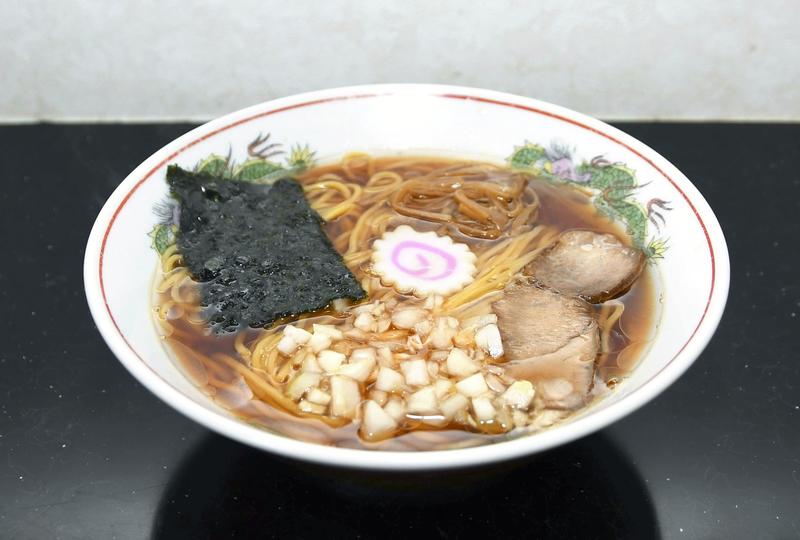
I ordered a bowl of chuka soba, or Chinese noodles. The soy sauce-based soup the noodles were served in was dark brown and had a rich luster. The soup is made with a seafood dashi stock and soy sauce, giving it a full-bodied flavor. On the other hand, chopped onions bring out a refreshing taste.
Masahiro Okawa, the restaurant's 70-year-old owner-chef, said he changes the way he chops onions depending on the season. Onions harvested in spring continue to be soft until around summer and become harder later on, so "I use large pieces in summer and small pieces in winter," he said.
A local group that promotes Hachioji ramen, Hachimen-kai, defines the dish as Hachioji ramen in a soy sauce-based soup, with a glossy luster and topped with chopped onions.
Hatsufuji is believed to be the first ramen restaurant that used chopped onions as a ramen topping.
Okawa said that his father, Shoji, used to run a soba noodle restaurant but switched to ramen around 1960 after he was forced to relocate his previous restaurant under the land readjustment plan.
Shoji began developing a menu for the new restaurant.
Okawa's mother-in-law, who had traveled extensively around Japan as a geisha, mentioned she had enjoyed a delicious bowl of ramen in Hokkaido that contained onions.
Shoji was inspired and he decided to use chopped onions in his ramen dishes.
The soup in a traditional bowl of ramen tends to be rich and heavy, so adding chopped onions gives it a refreshing taste.
"This is a new sensation!" he thought, after trying his modified recipe. He decided to serve the dish at his new restaurant and it was an instant hit.
However, it was about 40 years after the opening of Hatsufuji that ramen topped with chopped onions was officially acknowledged as Hachioji ramen.
In the winter of 2002, Hiroyuki Tachikawa, 48, a Hachioji city government official, was thinking with his colleagues about how to boost the local community.
A Hachioji native among them said, "It's normal for ramen to be topped with onions, isn't it?"
Tachikawa, from Yokohama, and another colleague from Saitama Prefecture exchanged glances, "I've never seen [that kind of ramen] in other regions before."
It was then that they realized there was a food culture unique to Hachioji that Tachikawa thought could be promoted as "Hachioji ramen."
Borrowing an idea from Utsunomiya, a city famous for gyoza dumplings, Tachikawa and his colleagues decided to make a map of restaurants serving Hachioji ramen. But they had no idea how many restaurants served the dish in the city.
Five persons, including Tachikawa and other city government officials, established the Hachimen-kai group in 2003. For about 18 months they would visit the city's ramen restaurants to sample dishes on their days off.
In 2005, they drew up the first "Hachioji ramen map." In less than half a year, 20,000 copies of the map were given out.
The group's map was only the beginning for the newly recognized local specialty.
In 2009, the Seven-Eleven and FamilyMart convenience store chains developed microwaveable Hachioji ramen. The chains sell the product during limited periods of the year. And in 2012, Nissin Food Products Co. released Hachioji ramen instant noodle cups.
Hachioji ramen started being served as a school lunch in 69 municipal elementary schools in the city in fiscal 2010.
In 2013, Hachioji ramen was served in such places as the Ishikawa rest area along the Chuo Expressway.
The city currently has 32 restaurants that serve Hachioji ramen, and the number of Hachimen-kai members has grown to 15.
In early December 2018, about 10 people formed a line before the opening of Chuka Soba Goemon, a ramen restaurant in Hachioji's Sennincho district.
According to Hachimen-kai, owner-chef Masayuki Ishikawa, 48, runs one of the most popular Hachioji ramen spots.
Eiichi Amagai and his wife, Yoko, come to the restaurant at least once a month from Bunkyo Ward, Tokyo. "The soup is mild, and the strong flavor of onions accentuates the mild taste. Eating the ramen lowers my blood pressure so I can kill two birds with one stone," Eiichi said.
Tachikawa said the group has received positive responses. "Each of the Hachioji ramen restaurants in this city has experienced a significant rise in the number of customers."
He said that even people from neighboring prefectures come to the city to eat Hachioji ramen.
Though the novel ramen specialty is based on a Hokkaido dish, today, Hachioji ramen is luring foodies into the city and has played an important role in vitalizing the local community.
Read more from The Japan News at https://japannews.yomiuri.co.jp/