With former Vice President Joe Biden's victory in the U.S. presidential election now assured, the Japanese government is hoping for stability in the Japan-U.S. relationship.
Prime Minister Yoshihide Suga will begin scheduling a visit to the United States soon after the inauguration ceremony for the new president, to be held on Jan. 20 next year.
"Japan will work with the United States to further strengthen the Japan-U.S. alliance and ensure peace and prosperity in the Indo-Pacific region," Suga told reporters Monday at the Prime Minister's Office, adding that he would arrange a phone conference and a U.S. visit with precise timing.
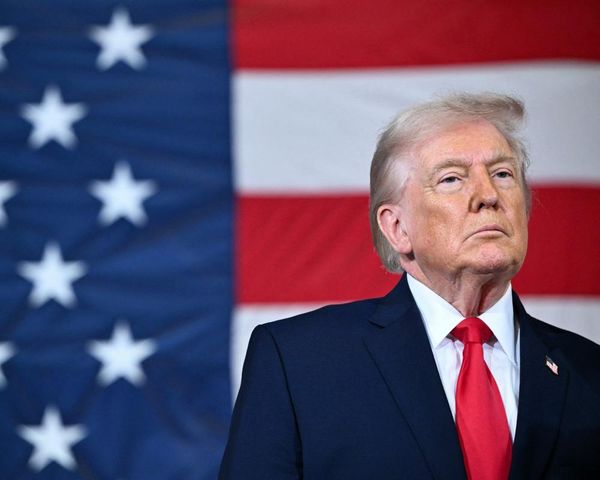
A strong sense of crisis loomed over Japan with the 2016 presidential election victory of President Donald Trump, who had repeatedly made remarks deprecating the Japan-U.S. security treaty. That prompted then-Prime Minister Shinzo Abe to immediately visit Trump Tower, where the president was living in New York City at the time, to hasten the building of a personal relationship.
This time around, Biden has indicated that he intended to focus on the alliance, and senior officials from the administration of former President Barack Obama are expected to take up pivotal diplomatic posts. A high-ranking Japanese Foreign Ministry official confided that he felt "much more at ease" than four years ago.
Chief Cabinet Secretary Katsunobu Kato expressed confidence that Article 5 of the Japan-U.S. Security Treaty -- which sets forth the U.S. obligation to defend Japan -- will continue to be applied to the Senkaku Islands in Okinawa Prefecture under the incoming administration and told reporters Monday, "This has been repeatedly confirmed, and we trust that the United States will fulfill its obligation under the treaty."
For this reason, the atmosphere within the Japanese government is not one of frantic urgency over arranging an immediate visit to the United States.
It is seen that Tokyo can have a realistic discussion with Washington about Japan's share of the cost of stationing U.S. troops in Japan, unlike with the administration of Trump, who expressed a wish to increase Japan's financial burden far beyond the current level. However, a senior Japanese government official said: "Biden will reduce military spending. As a result, [U.S.] allies will be squeezed."
The Japanese government is nervous about how the incoming administration will handle China. Biden has so far indicated that he would continue to take a hard-line stance toward China. However, some observers fear that security controls will be weakened if Susan Rice -- who served as Obama's national security adviser and was prominent in her call for cooperation with China under the Obama administration -- takes a key position in the new administration.
Read more from The Japan News at https://japannews.yomiuri.co.jp/