The government has started working to establish the systems that will be needed to vaccinate people against the novel coronavirus.
An amendment to the Immunization Law, which stipulates how vaccinations are provided, is to be submitted to the extraordinary Diet session scheduled to start Oct. 26. With a goal of starting inoculations in the first half of next year, this could be the biggest vaccination effort in history. But there are numerous issues to resolve first, including the creation of systems for municipal governments and medical institutions.
-- Legal revisions
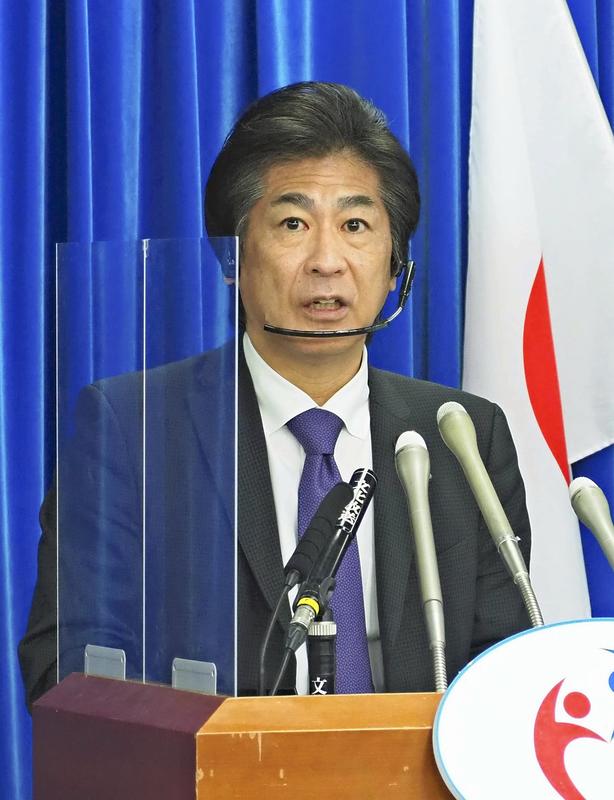
"The council has been discussing the division of roles, including those of local governments and medical professionals. We are starting to prepare revisions to the law," said Health, Labor and Welfare Minister Norihisa Tamura at a press conference Friday.
Regarding a vaccine for the novel coronavirus, the revisions would mainly clarify the division of roles among the national, prefectural and municipal governments, and create a system that allows the public to be vaccinated quickly and at state expense.
As for possible adverse health effects from a vaccine, there are expected to be provisions stipulating that the government, instead of pharmaceutical companies, will pay for any harm that results.
The government sees a vaccine as "key to normalizing economic and social activities," according to a senior government official. It wants to quickly pass an amendment that would allow vaccinations to start in the first half of next year and that would secure enough to cover everyone in Japan.
-- Key role for municipalities
That said, local governments and medical institutions will actually be in charge of providing the massive number of staff and amount of labor to proceed with the vaccination effort.
Municipalities are expected to be the main entities performing the vaccinations. In addition to stratifying people by risk and notifying them individually, municipalities will have a wide variety of tasks to perform, such as signing contracts with medical institutions and providing consultations for residents.
"We're already busy dealing with the novel coronavirus. Where will we find the personnel for vaccinations?" said the person in charge of the matter at the Japan Association of City Mayors.
"Even if it takes six months to inoculate everyone, that means nearly 1 million shots per day. We really need to prepare thoroughly," said Takaji Wakita, director of the National Institute of Infectious Diseases and a member of the government's subcommittee on the novel coronavirus.
The ministry plans to encourage local governments to start preparing even before the revised law is passed.
It will be important to figure out how to efficiently disseminate a limited supply of vaccines. The ministry is developing a system to help it visualize the status of distribution nationwide so it can gather information on how much medical institutions around the country need and how much manufacturers and others can ship so distribution remains balanced.
-- 10 vaccines in final stages
According to the World Health Organization, as of Oct. 15 there were 42 new coronavirus vaccines that had advanced to the clinical trial stage around the world. Ten are in the final stages, and some of these are expected to conclude their clinical trials this autumn. There are another 156 vaccines in the pre-clinical trial stage.
Some of the vaccines being developed would require a person to receive more than one inoculation.
The government hopes to use about 670 billion yen from reserves in this fiscal year's budget to secure 280 million doses from three companies based in Europe and the United States.
If things proceed smoothly, the first doses could arrive in Japan as early as the beginning of next year. The government has also joined an international framework to make joint purchases of completed vaccines with other countries. However, it is unclear whether this will actually secure enough supplies.
At present, the ministry sees medical professionals, the elderly and people with underlying diseases as the priorities for vaccination.
The subcommittee and other entities are expected to begin discussing how to clarify who will be vaccinated, such the age of elderly subjects and what specific underlying diseases to cover.
However, knowing which pharmaceutical company's vaccine will be available, and how much, is essential to this process. Even if a vaccine is successfully developed and distributed, there is a risk that demand will focus on a particular vaccine if there is a difference in quality among them.
A senior ministry official said, "There's a limit to how we can respond until it's decided which vaccines we will receive."
The government will continue to consider its response as it keeps an eye on the vaccine development process.
Read more from The Japan News at https://japannews.yomiuri.co.jp/