A month-long battle to decide the fate of the latest coronavirus surge has begun.
The government declared a state of emergency for Tokyo and its three neighboring prefectures on Thursday, nine months after the first coronavirus-related declaration in April last year.
Tokyo reported more than 2,000 new coronavirus cases on the day, about 1.5 times higher than the previous day. The Osaka prefectural government, which confirmed more than 600 daily cases for the first time, said it would ask the central government to issue the same declaration for the prefecture.
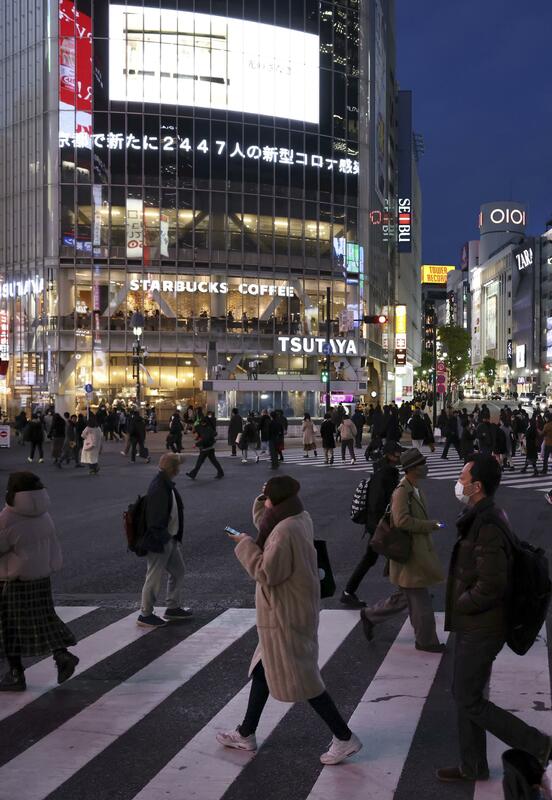
At around 6 p.m. on Thursday at Tokyo's iconic Shibuya Crossing, the digital display on an adjacent building showed the news of the declaration.
"Somehow, I thought everything was going to be OK. But, now that a second state of emergency has been declared, there's going to be tension in everyday life," said a 29-year-old worker from Higashimurayama, Tokyo.
"It's tough," said a taxi driver from Mitaka, Tokyo, while listening to Prime Minister Yoshihide Suga's press conference statement.
He has picked up passengers at Tokyo's Shinbashi and Ginza entertainment districts for more than 40 years. Last year, passenger numbers dropped sharply after a request was made to restaurants and bars to shorten their business hours. This year, he said he earned nothing while working on New Year's Day.
"This state of emergency will further reduce the number of passengers. I want the country to look at people like me, who are impacted by things that affect the dining industry," he said.
Tokyo reported 2,447 new coronavirus cases on Thursday, up about 850 from the previous day.
"I never thought the number would exceed 2,000," said a woman from Katsushika Ward walking along the Arakawa river with her 2-year-old son. Her 5-year-old son goes to kindergarten. "What children can do to prevent infection themselves is limited. I'm wondering if it would be best to take my son out of kindergarten," she said.
A woman from Tokyo's Bunkyo Ward who was shopping with her 1-year-old daughter near Sendagi Station said she was looking for a part-time job because her husband's winter bonus had been significantly reduced.
"The last time the previous state of emergency was declared, I was desperate not to get infected, but this time I'm more worried about my family's finances," she said.
A university student from Kawasaki said she has not been given any shifts next week at the Tokyo bar where she works part-time because it will close at 8 p.m. from this weekend in accordance with the government's request to shorten business hours.
"I can't make a living without an income. I have to find a new job soon," she said.
Read more from The Japan News at https://japannews.yomiuri.co.jp/