Lawyer Toru Nagasawa, administrator of the bankrupt apparel company Renown Inc., issued a directive within the company, saying: "I want you to sell all our stock [of apparel] to earn cash. We need to get ahead of the competition before other companies start having sales."
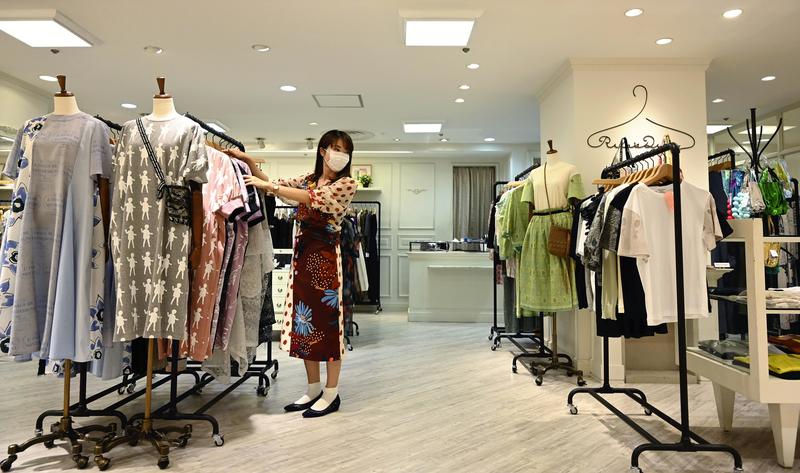
Department stores that gradually reopened in late May quietly started half-price sales of D'urban, a men's clothing brand of Renown.
The apparel company went bankrupt due to slumping sales, but ironically, on one day its sales amid the discounts were 1.8 times the level seen the year before.
Due to the outbreak of the novel coronavirus, department stores -- Renown's main sales channels -- were forced to close, which eventually led the company to begin procedures under the civil rehabilitation law in May. Renown owes 13.8 billion yen to more than 200 lenders, which is why it has sought to turn its inventory into cash.
Department stores originated from kimono shops. Because of this, department stores and apparel makers have developed based on a business practice known as "backdating payment," which is unique to Japan. Renown is a typical example. It was once one of the world's leading companies in the industry, and its TV commercial "Wansaka Musume" drew people's attention.
Backdating payment is a system in which goods on the sales floor of a department store are treated as the apparel company's stock. When they are actually sold, they are counted as the store's stock.
This allows department stores to avoid the risk of surplus goods. At the same time, apparel companies created fashion trends from the sales floor, letting them sell the latest products at higher prices.
"If you put goods in the stores, they'd sell," said a former staffer at a department store.
This brought about the so-called DC brand boom where young designers created new brands such as Bigi and Comme des Garcons in the 1980s.
However, apparel featuring lower prices as well as higher function, such as the Uniqlo brand, emerged in the late 1990s. "From the consumer's point of view, the cost performance of department store clothing is lower. That's why many customers, in particular young people, have moved away from department stores," said Minoru Fukuda, a partner at consulting firm Roland Berger.
Renown has failed to develop new core brands following D'urban and Arnold Palmer, which has led to sales remaining low. Over the past 15 fiscal years, it has posted a net profit in only four. It sold its headquarters building and a brand subsidiary for survival, and finally ran out of steam amid the coronavirus turmoil.
--Cries of distress
Due to the long-time practice of backdating payment, department stores have lost their ability to choose the right goods, while apparel companies have lost the strength to develop new sales channels. Sales of department stores fell by about 40% and clothing sales at the stores dropped 60% from their peak in 1991. Amid these severe conditions, the outbreak of the coronavirus caused demand to evaporate.
When the government declared a state of emergency on April 7, apparel companies hastened to collect their products from the stores in Tokyo. Under the backdating payment method, unsold items are apparel companies' stock. Companies tried to sell products through online shipping or at local department stores that were open.
Fashion trends change easily. If apparel companies wait for stores to reopen, competition will shift from spring clothing to summer clothing, meaning they lose a business opportunity. If they do so, they won't have the funds to create new products.
Some have lamented to department stores that since they have a lot of stock, they want the stores to open.
Apparel companies' financial base is weak due to prolonged sluggish sales, and their financial situation will be battered if the impact of the virus continues for a long time. Department stores are also suffering from few customers, and cannot afford to support them.
A department store executive said: "They have no core technology. Even if they're in danger financially, it's difficult to devise a revival plan."
-- Promote e-commerce
Department stores have been forced to operate stores inefficiently to avoid congestion amid concerns over the spread of infection.
"That makes [department stores] become strict regarding sales of the stores that are open. In the future, we're going to hear more of 'if you can't [sell your staff], please make room [for someone who can],'" a veteran employee at a department store said.
Apparel companies will also seek to break away from their dependence on department stores.
"We want to accelerate our digital strategy like we were an e-commerce company," Onward Holdings Co. President Michinobu Yasumoto said at an earnings press conference in April.
The company plans to increase its online sales to 50 billion yen in fiscal 2020, up 50% from the previous year. In the medium term, half of its sales will go online. Currently, about 60% of the sales of Onward Kashiyama Co., a core subsidiary of the company, are made through department stores.
The mutually dependent relationship that department stores and apparel companies have worked closely to develop is at a crossroads.
Read more from The Japan News at https://japannews.yomiuri.co.jp/