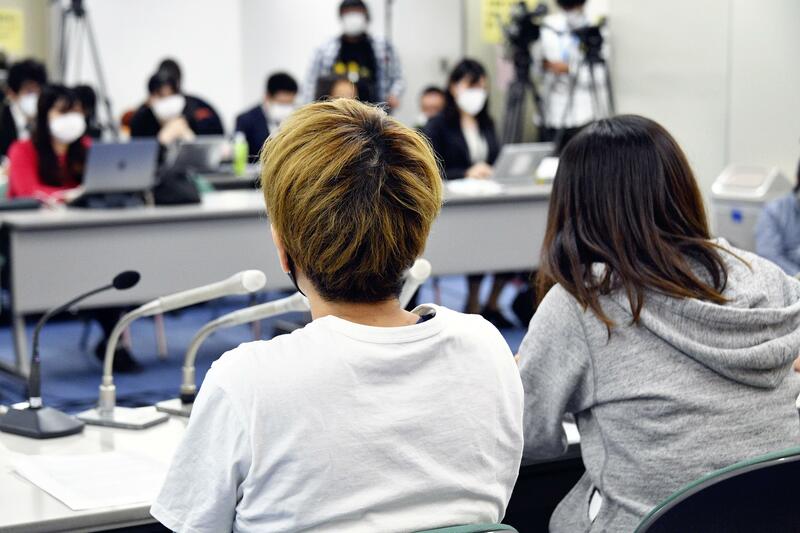
The Sapporo District Court's ruling that the government's failure to recognize same-sex marriage is unconstitutional has given gay and lesbian couples hope and raised expectations that the legalization of such marriages could become a reality in Japan.
The plaintiffs and their lawyers savored the legal victory of Wednesday's ruling that provisions in the Civil Code and Family Register Law that did not recognize same-sex marriages violated the Constitution. "This was a substantial triumph in our favor," one plaintiff said.
However, the court rejected the plaintiffs' demand for financial compensation from the central government. Lawyers representing the plaintiffs indicated they planned to appeal the ruling because the court did not hold the government responsible for this situation, and to press the government to promptly establish a legal framework for same-sex marriage.
"It is unfortunate that the ruling has delayed the realization of these rights for many same-sex couples," the lawyers said in a statement.
Three same-sex couples from Sapporo and Obihiro, Hokkaido Prefecture, filed the suit in February 2019. The main point of contention in this case was whether the failure of the current Civil Code, which was revised in 1947, and other laws to recognize same-sex marriage was unconstitutional.
"This ruling is like a dream," one plaintiff, a woman in her 20s from Sapporo, said after the court made its decision. "Now we just need the central government to start moving toward legislation."
The woman met her partner, who is in her 30s, in 2007 and they started a relationship. They exchanged rings in February 2018 and submitted a written oath under Sapporo's "sexual minority partnership" system. The two women now live together in a condominium they purchased in Sapporo.
In January 2019, just before the court case was launched, the women submitted a marriage registration to the city's Chuo Ward office. However, their registration was rejected.
The woman said the latest court ruling was hugely significant for same-sex couples. "This ruling has given homosexuals courage and hope to live their lives," she said.
Waseda University Prof. Masayuki Tanamura, an expert on family law, said: "It is highly significant that the court handed down a judicial ruling acknowledging that the human rights of sexual minorities should be protected. The central government and other administrative authorities must listen to these people, and try to provide greater social support and a legal framework to eliminate discrimination and protect their rights."
Following the court's ruling, the Justice Ministry said in a statement it would carefully watch the results of similar cases being heard in other courts.
--78 local govts recognize same-sex couples
Homosexuality was once considered a mental illness, but in the 1960s movements advocating the human rights of gay people became increasingly active. In 1989, Denmark became the world's first nation to legally recognize gay and lesbian couples when the Registered Partnership Law came into force. In 1992, the World Health Organization said homosexuality should not be considered a "disorder."
In 2001, the Netherlands became the first nation to fully legalize same-sex marriage. In 2019, Taiwan became the first place in Asia to recognize gay marriage. According to the plaintiffs' lawyers, 29 countries and regions have established legislation that allows gay couples to tie the knot.
Momentum for recognizing same-sex marriage also has been growing in Japan. In 2015, Tokyo's Shibuya and Setagaya wards established a "partnership system" for same-sex couples.
According to the plaintiffs' lawyers, 78 municipal governments across Japan -- including the cities of Sapporo, Fukuoka and Osaka -- had introduced similar systems as of March 1. The Sapporo District Court ruling also touched on this shift. "There is growing public awareness of demands to eliminate discrimination on the basis of sexual orientation. This is similar to what is happening in other nations," the court said.
Read more from The Japan News at https://japannews.yomiuri.co.jp/