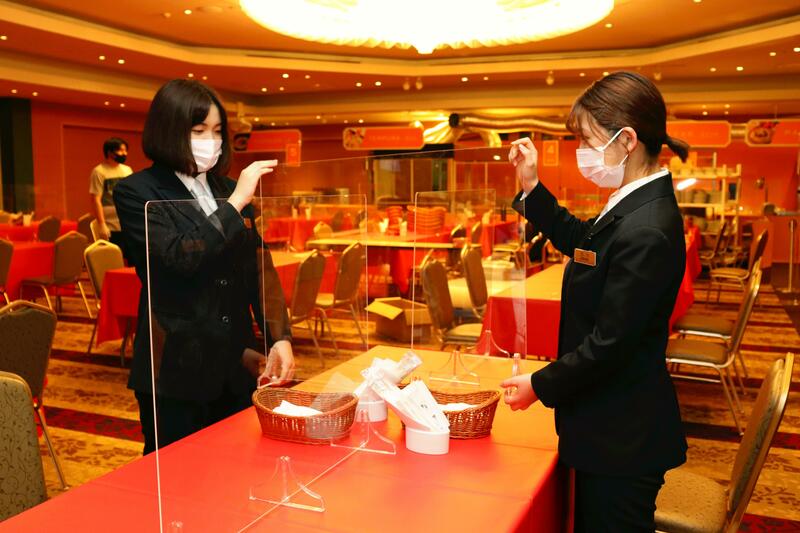
A serious backlog has emerged in payments of relief money to businesses that are complying with prefectural governments' requests to shut down or shorten their business hours amid the pandemic.
No payments have been made since April in some of the nine prefectures where a state of emergency was in place until Sunday -- Okinawa Prefecture's state of emergency has not yet been lifted -- and an increasing number of officials are being deployed to solve the problem.
Between 40,000 yen and 60,000 yen in relief was paid daily across the board until March. From April on, however, the amount has varied depending on an applicant's sales. In areas under a government-declared state of emergency, for example, up to 200,000 yen is supposed to be paid daily to large companies, with up to 100,000 yen going to small or medium-sized companies.
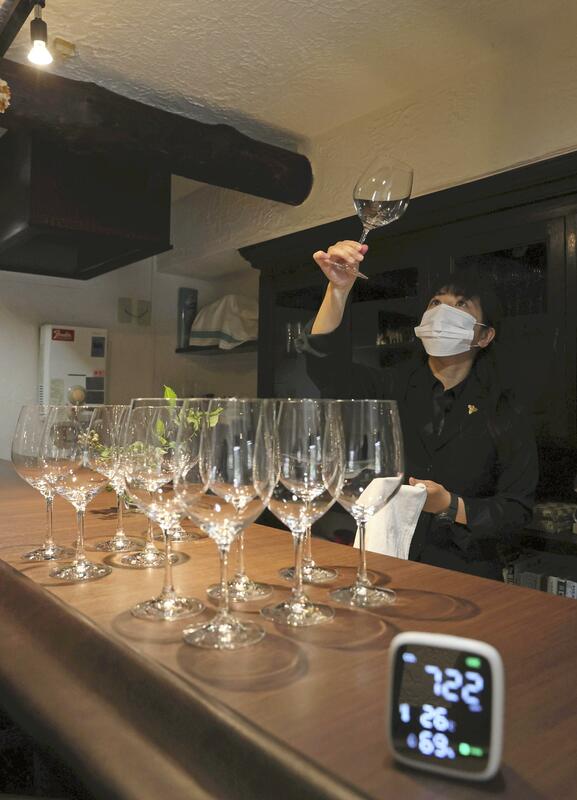
Money is also to be paid to businesses that are not under a state of emergency but are subject to restrictions established at the discretion of their prefecture.
-- Paid half-year later
"I might not have had to close my restaurant if the relief money arrived a little earlier," a 45-year-old owner said. One of her four restaurants in Tokyo will close at the end of this month. She employs a total of 15 employees at the four locations, and needs at least 3 million yen a month for labor and rent.
The owner had complied with the metropolitan government's request to operate for fewer hours, but it was not until June that she received a payment meant to cover the one-month period from Jan. 8.
"It takes too long," she said.
Restaurants in the capital that serve alcohol had been asked to close since a state of emergency was declared in Tokyo on April 25. Two of the woman's restaurants did not comply with that request.
"I really wanted to cooperate, but I'm on the edge," she said.
-- Short of staff
Since November last year, Tokyo restaurants have been required to shorten their business hours, causing many owners to seek relief money as soon as possible.
To avoid a flood of administrative work, the Tokyo metropolitan government has been handling applications in blocks, resulting in the distribution of 92% of the payments for January to March. However, only half the payments for April 1-11 have so far been sent out.
Applications for payments for April 12 onward started on Monday.
Lack of manpower is behind this backlog. There are about 120,000 restaurants in Tokyo, but only about 600 officials handling the payment of relief money.
"There are problems with some of the applications, and we're struggling to contact the applicants in many cases," an official in charge said.
-- Drastic change
Other prefectural authorities have also failed to pay.
The Hyogo prefectural government has not been able to sent out any relief money for April onward. It initially expected the state of emergency would last from April 25 to May 11, and set up a plan to accept applications for relief for April and May all at once.
However, two extensions of the state of emergency forced the Hyogo government to change its plans. Applications for payments for April 1-24 -- a period when the prefecture issued its own request for businesses to shorten their hours before a third state of emergency was declared on April 25 -- were pushed back to May 25.
In Osaka Prefecture, 23% of the payments for April to May had been made as of Friday. At first, the Osaka prefectural government outsourced the procedures to a private company, but it was difficult to determine eligibility in many cases, hindering the screening process.
The local government changed its outsourcing approach in May and instead had its officials handle the screenings.
Changes in how prefectural governments pay relief -- from across-the-board, uniform-rate payments until March to sliding scale payments based on the size of a business from April -- also caused delays.
Kyoto Prefecture had to change its computer system as a result of this change, and consequently had completed only 18% of the payments for April to May.
"The calculation method changed drastically and we had to check many things with the central government. As a result, it took time for us to provide relief," a Kyoto prefectural official said.
Read more from The Japan News at https://japannews.yomiuri.co.jp/