A week has passed since the state of emergency over the new coronavirus was lifted, and department stores, restaurants and other businesses have gradually reopened. However, many of them are only operating in a limited manner as they implement thorough measures against infection.
As concern over a possible second wave remains high, businesses are looking for ways to return to full operations.
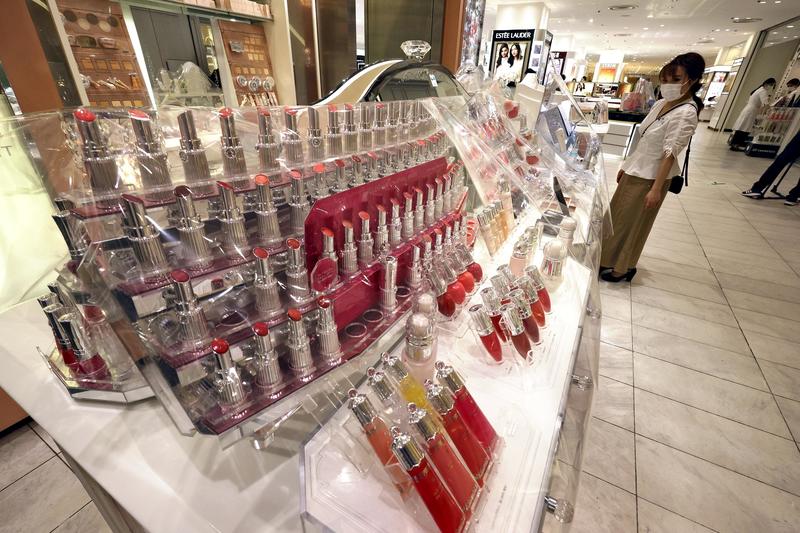
On Monday, the Matsuya Ginza department store in Tokyo's Ginza district reopened fully, including its clothing and jewelry sections, for the first time in about two months. Products in the cosmetics section were covered with plastic sheets to prevent customers from touching them.
Beauty consultants also refrained from touching customers' skin to check its condition and recommend appropriate products. Meticulous service is one of department stores' strengths, but wide-ranging measures are now in place to prevent infections.
"Being a step ahead of the changes in customers and society will help our business recover," said Akiko Kawai, the general store manager of Matsuya Ginza.
Aeon Cinema outlets also fully reopened on Monday. They are keeping customers apart by leaving a seat open between them and to avoid contact, customers can enter the theaters simply by showing their tickets to employees, instead of handing them over.
Sports gym operator Rizap also reopened its outlets nationwide, asking members to wear masks even when exercising. Antibody tests are conducted at the gyms free of charge to check members' infection history.
-- Late-night operations halted
As there is still no prospect of the pandemic being brought under control, some businesses are selling products for a good discount while others are exploring operations tailored to new lifestyles.
The Daimaru Tokyo department store, which fully reopened in late May, sells sets of products for up to 50% off, including things like sweets that are nearing their expiration date. Its aim is to sell out of products that could not be sold due to the temporary closure.
Skylark Holdings Co., the operator of Gusto and other restaurants, on Monday started extending its business hours by two hours to 10 p.m. at its outlets in Tokyo and Kanagawa Prefecture. From July 1, the company intends to close its outlets at 11:30 p.m. in principle, even though the requests for shortening business hours will have been lifted.
It expects the number of late-night customers to decrease as teleworking and other working styles spread.
-- Costs expected to rise
Even though companies resume operations, they may continue to struggle financially, as strengthening measures to prevent infection will result in fewer customers and higher costs.
Aeon Mall Co., which operates commercial facilities, saw a 20% drop from a year earlier in the number of visitors on Saturday and Sunday, the first weekend since its outlets reopened nationwide. To prevent the "3 Cs" -- closed spaces, crowds and close proximity -- in stores, some of its facilities have limited the number of people on elevators from a capacity of 24 people to just four and halved the number of seats in food courts.
The company plans to continue taking such measures for the time being.
Hit by temporary closures, three major department store chain operators released severe preliminary sales data for May on Monday. Isetan Mitsukoshi Holdings Ltd. saw its sales plunge 90.2% from a year earlier, while sales of Daimaru Matsuzakaya Department Stores Co. fell 72.7%. Takashimaya Company, Ltd. reported a 62.9% drop in sales.
All three companies saw their sales of duty-free products purchased by foreign customers dive to about 1% of year-on-year sales.
Isetan Mitsukoshi resumed full operations at its six stores in the Tokyo metropolitan area on Saturday, but two-day sales through Sunday were down 20% from a year earlier.
"Consumption is expected to recover gradually as economic activities resume. But it will take several years to return to normal levels," said Toshihiro Nagahama, a chief economist at the Dai-ichi Life Research Institute. "In addition to fears regarding infection, there is also the aspect that income loss and concerns over job insecurity have reduced people's desire to consume."
Read more from The Japan News at https://japannews.yomiuri.co.jp/