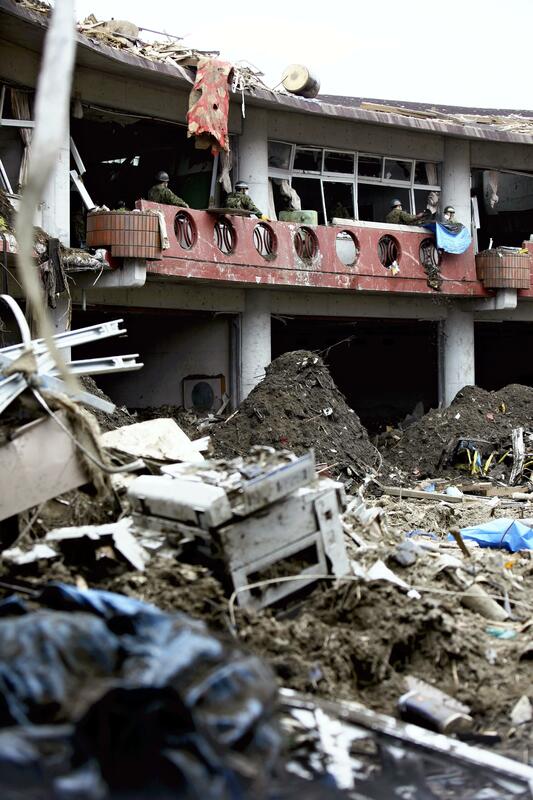
What happened at Okawa Elementary School in Ishinomaki, Miyagi Prefecture, following the Great East Japan Earthquake in March 2011 was a nightmare. Seventy students were found dead, 10 teachers also perished, and the bodies of four schoolchildren are still missing.
The tsunami caused by the quake ran up the Kitakami River for nearly 4 kilometers and engulfed the line of teachers and students who were unable to escape. A village of about 100 households in the area disappeared, and today only the school building remains with its distinct design incorporating many curved lines.
The architect who designed the building has told The Yomiuri Shimbun about a project for the school that never materialized, which could have saved many lives.
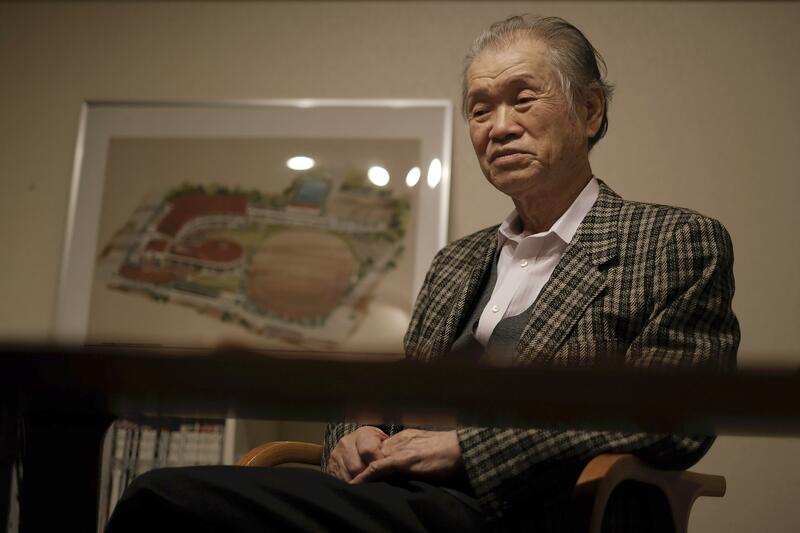
The school building, which opened in 1985, was designed by Tokyo architect Koichi Kitazawa, 83. Kitazawa studied under Antonin Raymond (1888-1976), who is known for his involvement in the design of the former Imperial Hotel in Tokyo and for teaching many Japanese architects.
The buildings designed by Kitazawa include a Sophia University campus building in the Yotsuya neighborhood of Shinjuku Ward, Tokyo, and Rikkyo University's dormitory for female students in Tokyo's Ikebukuro area. Kitazawa's wife comes from the former town of Kahokucho, which is now part of Ishinomaki. This connection led to the town commissioning Kitazawa to design a public school for the city.
"I tried to make a school building that children could use happily," said Kitazawa, recalling his thoughts when he faced the drawing board. He used movable walls between trapezoid-shaped classrooms so that the classrooms could be connected to let many students study together.
Specially ordered unglazed tiles adorned the exterior. Kitazawa made the ceilings 2 meters higher than usual, with ceilings in the classrooms on the second floor being 5 meters high. The open, pleasant building came complete with large windows that let in a lot of sunshine.
The earthquake occurred 26 years later, and a delay in evacuation guidance caused the tragedy at the school. Having learned that many children died in the tsunami, Kitazawa immediately recalled a project for the school he proposed a quarter of a century ago.
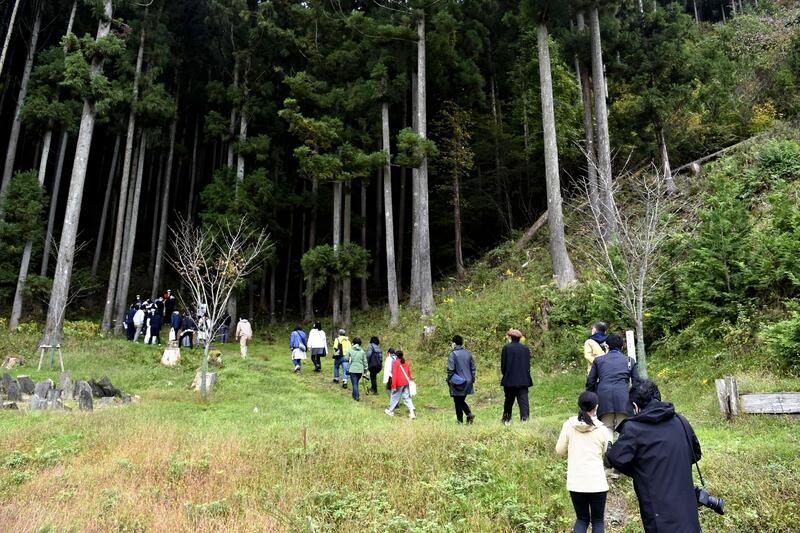
The project was meant to encourage outdoor education activities for the school, in which students could go outside and learn about nature and society, while looking over the Kitakami River and the town where they live. The project involved paving a path on the hill behind the school and constructing an azumaya gazebo at a height of more than 10 meters above the ground. The town seemed to like the idea, but the hill was private property, so it never came to be.
The estimated height of the tsunami that devastated the school was 8.6 meters.
Kitazawa still vividly remembers the smiles of the children running inside the new school building on the day he attended its inauguration ceremony.
"It's too late to bring this up again, but couldn't the children have climbed up the hill and avoided the worst if the gazebo had been there?" Kiazawa asked.
The school building will be open to the public this spring as a relic commemorating the tragedy.
--Lingering question unanswered
About a month after the earthquake, Kitazawa went to Ishinomaki from Tokyo and visited the site of the school. He wanted to find an answer to a question lingering in his mind: Why didn't they run to the hill behind the school?
After avoiding severed roads, he finally arrived at the school. Both the building and the playground were filled with debris. The glass-walled corridor connecting the gym and the school building had collapsed, and its support pillars had cracked from the base.
A non-Japanese reporter approached Kitazawa and asked him what connection he had to the school, but he walked away without a word, not revealing his identity.
Kitazawa then walked toward the hill, the site where the outdoor school activities he had envisaged would have taken place. When he got close to the hill, he could see sand on the ground, which meant the tsunami did not reach there.
He still feels it would have been possible to climb up the hill. His heart ached for the children who were swept away by the tsunami.
"I heard that many elderly people in the neighborhood had also gathered at the school. Maybe [the facts at hand] didn't lead to the decision to run to the hill together with everyone," Kitazawa said.
Read more from The Japan News at https://japannews.yomiuri.co.jp/