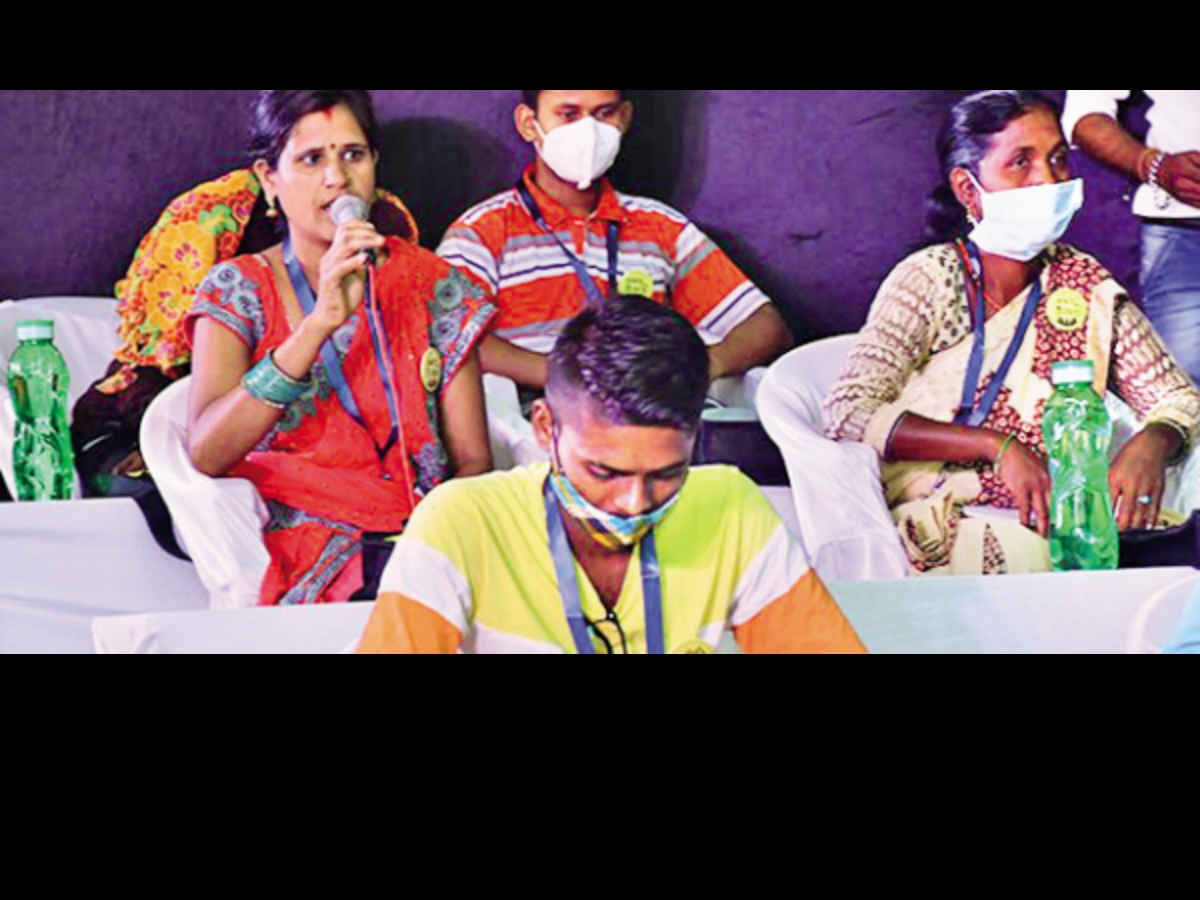
RAIPUR: A unique five-day programme ‘Janta Ka Faisla’ is being held in Raipur. It is for the first time that a citizens’ jury of migrant workers is being organised by a joint collaboration of three organisations from Monday.
Community of migrant labourers was among worst-affected during Covid-19 pandemic and citizens' jury aims to become an empowering tool for the affected section to participate in the policy-making process and influence the existing schemes for their benefit.
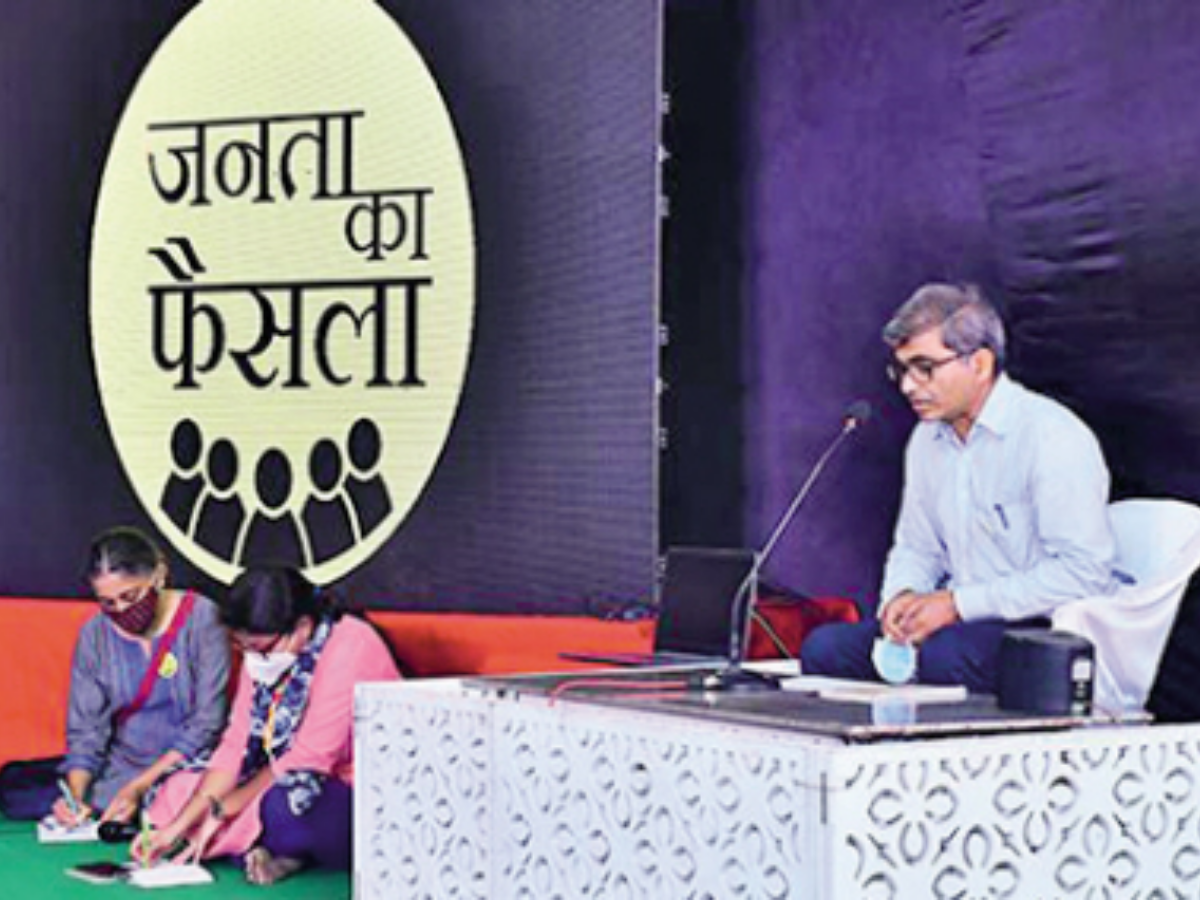
As an important ‘source state’ of migrant workers, the organisations have chosen to hold the event in Raipur. 'Janta Ka Faisla' is a citizens’ jury on a range of issues impacting migrant workers is being organised by the National Foundation of India, Socratus Foundation and Chaupal from July 11-15 at Pastoral Centre in Raipur.
"During the Corona pandemic, one of the communities that was most adversely affected was migrant workers’. Migrant workers and their families experienced hardships. It is estimated that around 10 to 12 crore people leave their native places and go in search of livelihoods to other places including distant states, leaving behind their villages, meagre assets and often families, in this struggle for survival. Indians saw the heart-wrenching images of thousands of these workers walking hungry and thirsty in the harsh summer, for hundreds of kilometres to reach back home, during last year’s lockdowns," the organisers shared.
They said that it had happened because the policies that were created did not keep in mind the realities of the migrant workers. Legal frameworks that even in ordinary times were not being implemented were shown to be useless at times of crisis period. The distance between policy-makers and the affected citizens was wider than ever before. The reality of the ones affected and their experiences are things that the non-affected policy-maker may not be able to imagine fully, the representatives of agencies said.
"Policy-making can, however, be different. It can be based on deliberative democratic processes, wherein the affected get to actively participate in the policy formulation process, and influence the tweaking of existing schemes or creation of new schemes for their own benefit. 'Citizen Juries' are empowering tools that facilitate such deliberative democratic processes. A carefully chosen set of representatives of the affected community becomes the centre of proceedings in a courtroom-like setting. A citizens’ jury turns the processes of a jan sunwai on its head," the organisers said.
Affected people listen to policy-makers and other experts to present their analysis, evidence and perspectives on issues that affect migrant workers directly. These ‘advocates’ will be from government, industry, civil society as well as migrant workers’ community. After sifting through presentations of various ‘pleaders’ or ‘advocates’ who present expert witness, the jury will deliberate collectively amongst themselves and present their verdict on how their futures should be shaped, and through what policies, laws and schemes.
On the first day of the session, Sudhir Katiyar of Contract Labour Regulation and Abolition Act informed the jury that there is an attempt to keep a record of the unorganised workers. According to the inter-state migrant workmen Act, the labour department should keep the records of migrant workers. Under the Shramev Jayate Yojana, there is a provision to give unique IDs to unorganised workers. Workers should get facilities like PF, Insurance and employer registration. Livelihood expert Namita Mishra said that while 56 lakh households are connected with MNREGS, there are only 42 lakh job card holders and just 35 lakh card holders are active. There is a need to improve its implementation.
Advisor to the chief minister, Rajesh Tiwari, explained to the jury the schemes of the government that were useful for the migrant workers. He also tried to explain the thinking of the government to the jury. He said that the state government wants to halt the migration and that local residents should get livelihood near their villages.