
What it is: The Helix Nebula (also called NGC 7293 and Caldwell 63), a planetary nebula
Where it is: 655 light-years away, in the constellation Aquarius
When it was shared: Jan. 20, 2026
A spectacular new image of the Helix Nebula captured by the James Webb Space Telescope (JWST) reveals the death throes of a sunlike star — and perhaps a harbinger of our own solar system's fate.
The Helix Nebula, also called the "Eye of God" or "Eye of Sauron," is one of the closest, most colorful and most studied planetary nebulas in space. The well-known and nearby starscape was destined to get JWST's near-infrared treatment, which reveals cosmic structures only hinted at by other space telescopes.
A planetary nebula is the slightly confusing name for a cloud of gas (primarily hydrogen and helium) and fine cosmic dust ejected by a dying, sunlike star as it sheds its outer layers, according to NASA. That star, a dense and hot white dwarf at the center of the cloud, ionizes the surrounding gas, causing it to glow in vibrant colors — in this case, in a helix-like (or corkscrew-like) structure, as seen from the solar system. (These bright, often circular nebulas resembled planets when viewed through early telescopes, earning them their title.)
Within this colorful scene, a vital process is unfolding: A star's former outer layers, now expanding into interstellar space, are seeding the galaxy with carbon, oxygen and nitrogen — the same elements that make life on Earth possible.
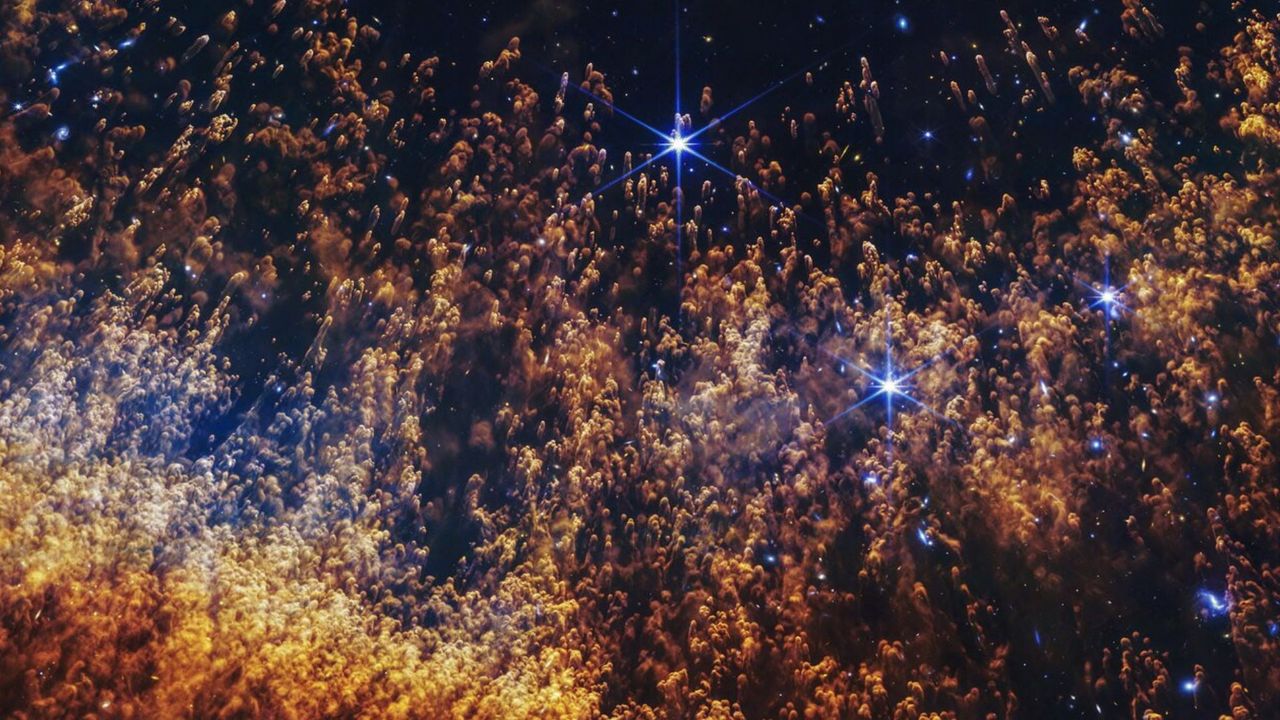
Using its Near-Infrared Camera, JWST pierced the Helix Nebula deeper than ever before. In this close-up of a small section of the nebula around the white dwarf, thousands of orange and gold, comet-like pillars stream upward. These features, technically called "cometary knots," separate high-speed stellar winds from the dying star and older, cooler layers of gas shed earlier in its life.
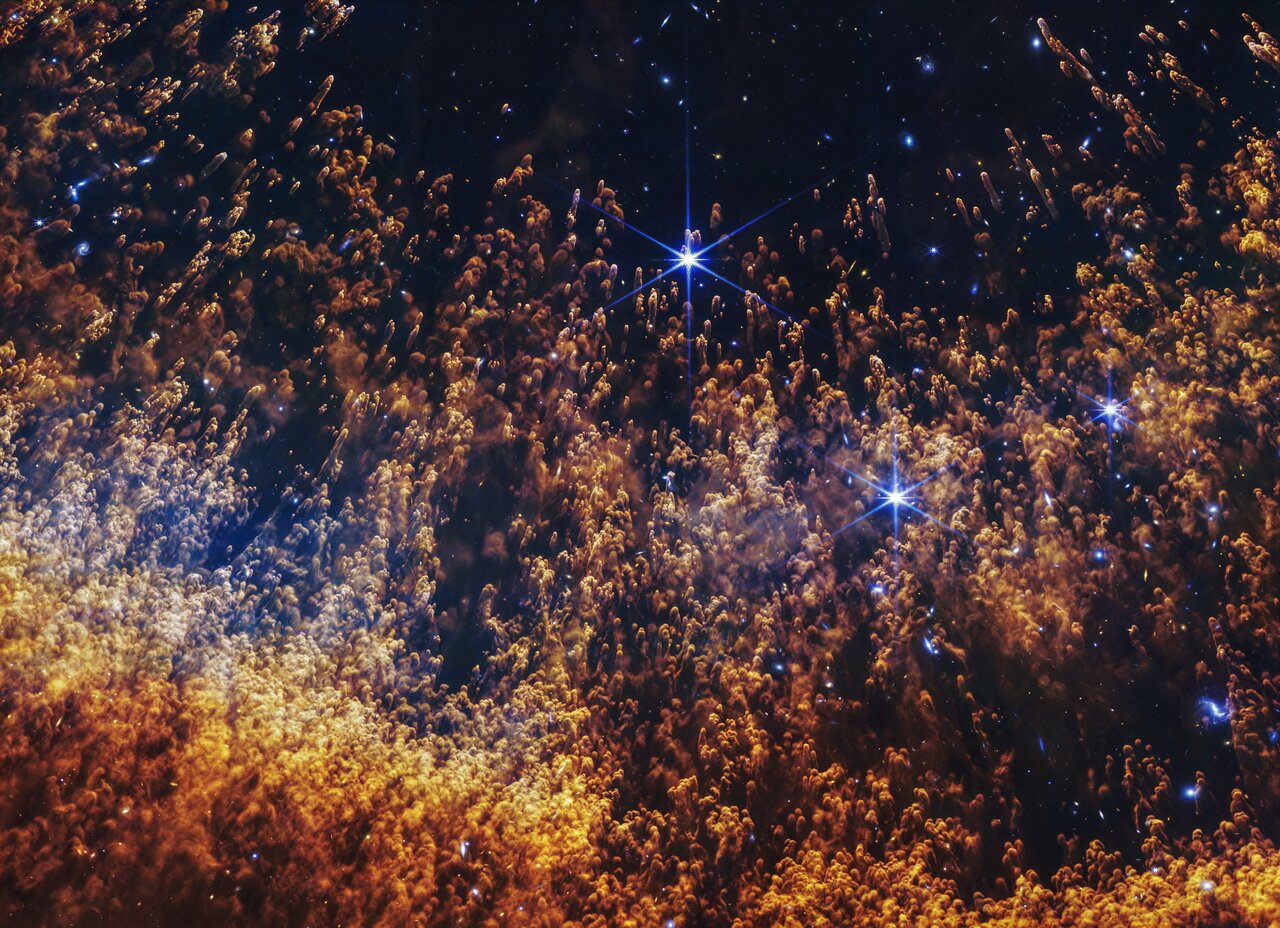
A partial orange semicircle at the bottom, where the pillars are more densely concentrated, is the circumference of the shell. The blackness of space hovers above, along with some blue background stars.
As is typical in space telescope images, filters have teased out the temperature and chemistry of the nebula, which changes according to its distance from the white dwarf. Close to the star, a blue glow is produced by ultraviolet radiation, igniting hot, ionized gas. Farther from the star, it gets cooler, with molecular hydrogen shown in yellow and deep-red dust even farther out.
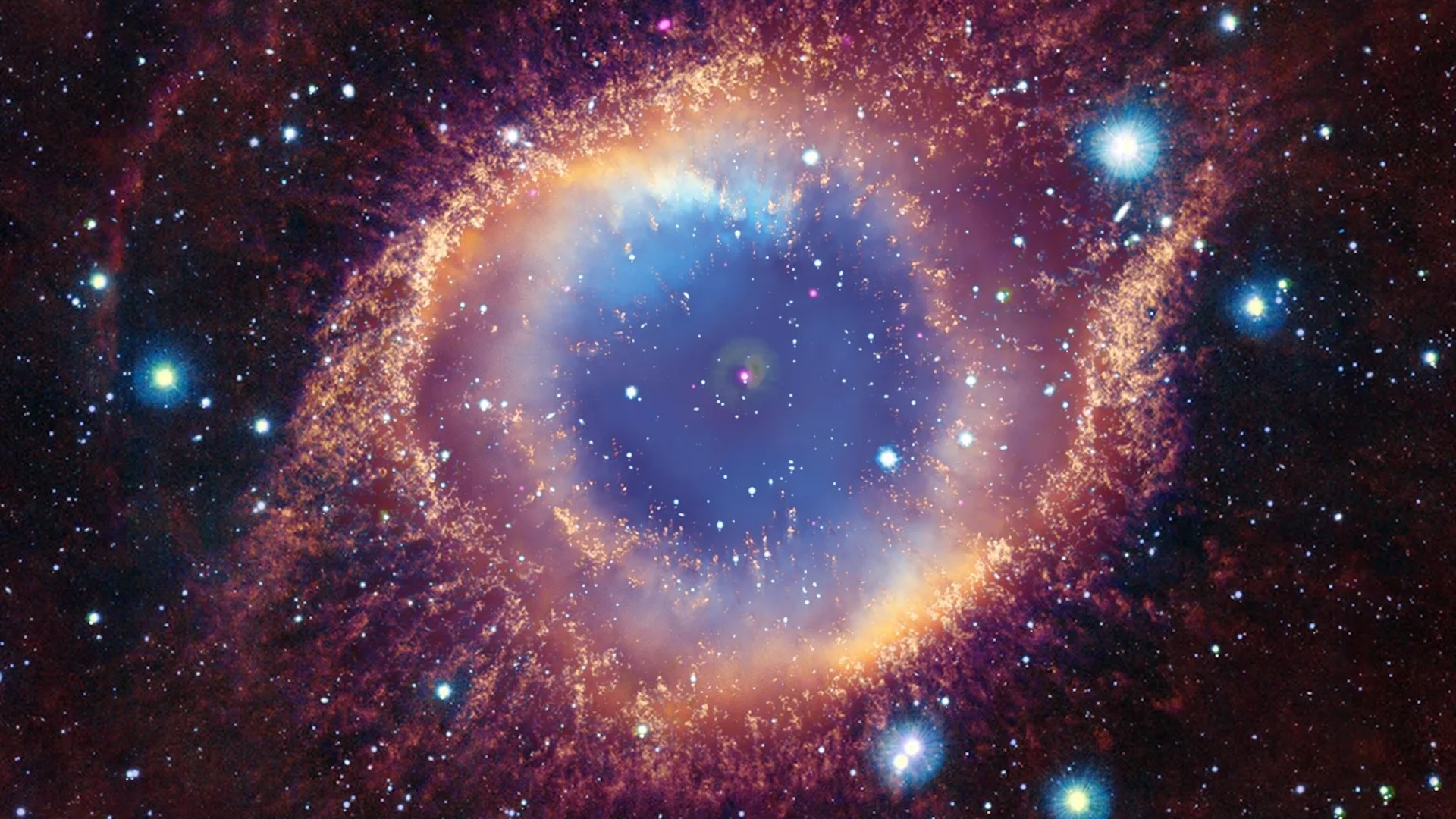
As the potential seeds of the next generation of stars and planets, that dust is, in part, what makes this image so exciting — the image shows the life cycle of matter. Radiation and expelled material from a dying star create regions where more complex molecules can survive and grow.
It may be beautiful, but the Helix Nebula is a cosmic recycling center and, ultimately, a blueprint for what will happen to the sun when it expands into a red giant, sheds its outer layers, and leaves behind a white dwarf in about 5 billion years.
For more sublime space images, check out our Space Photo of the Week archives.