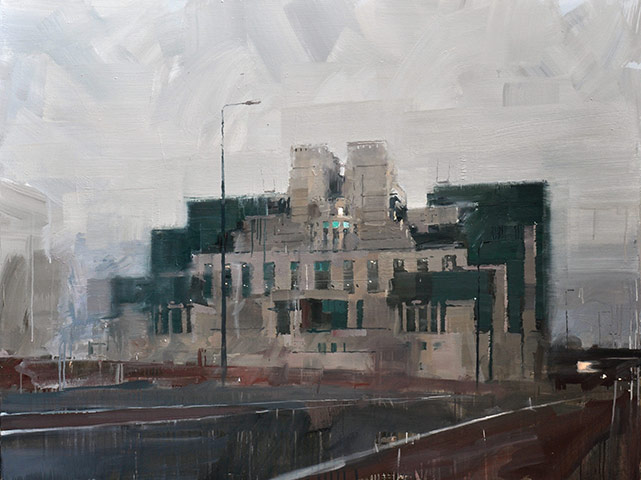
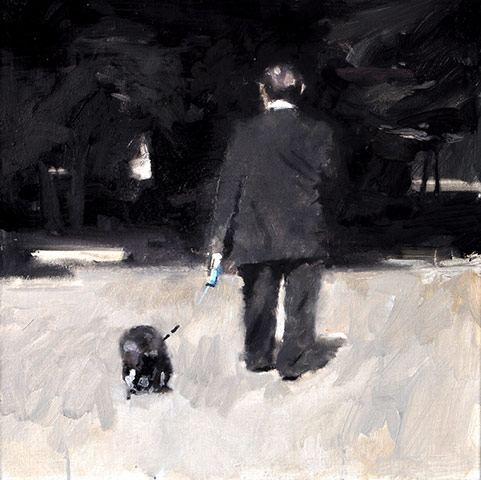
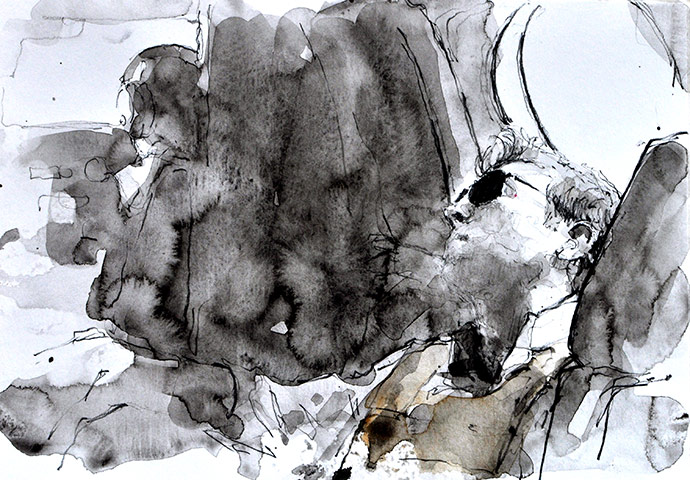
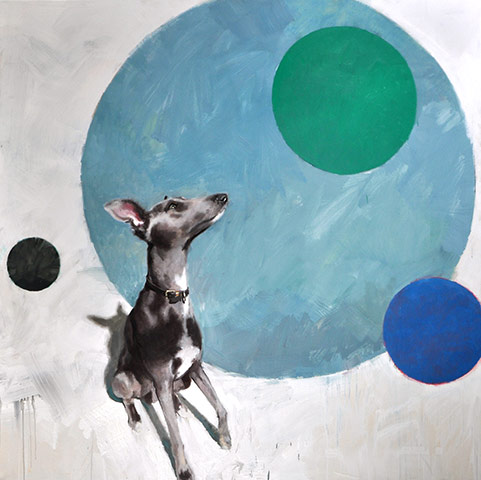
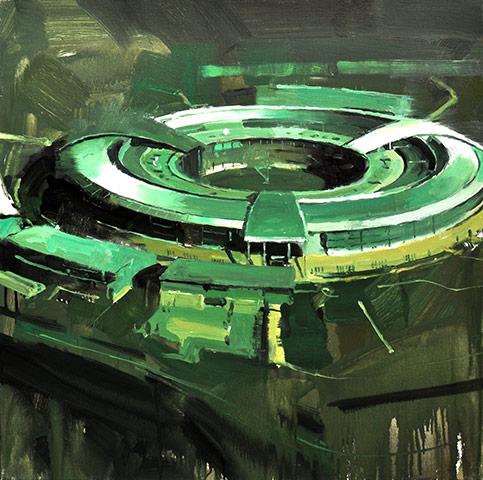
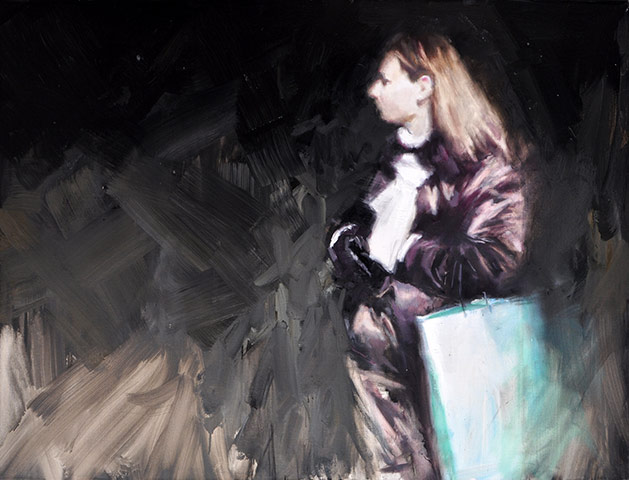
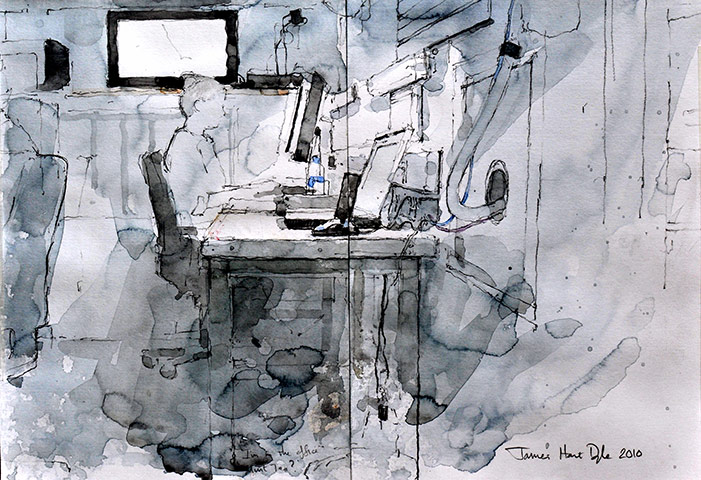
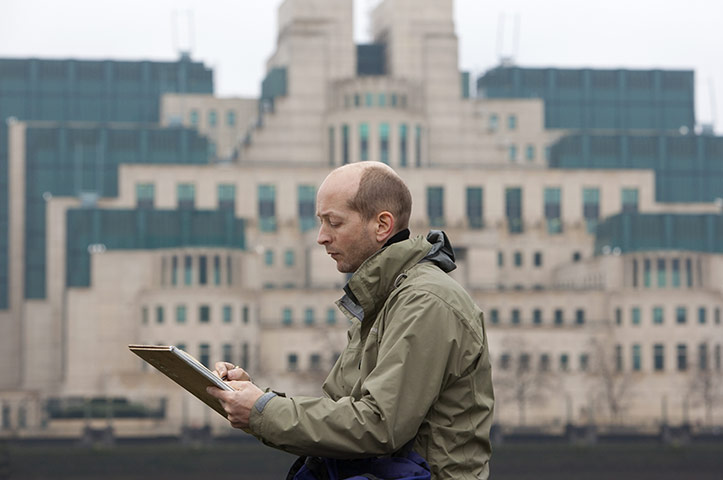
The Headquarters, Vauxhall Cross, London 2011, oil on canvas. The SIS HQ, on the south side of the Thames, beside Vauxhall Bridge, is one of London's most paradoxical buildings: well-known from the outside, a mystery within. Since it opened in 1994 it has become a landmark on the capital's skyline, but access to its interior is highly restrictedPhotograph: James Hart DykeDog Walker 2010, oil on canvas. The most everyday activities, such as walking a dog, can be used as a way of meeting a contact without attracting suspicionPhotograph: James Hart DykeSleeping Officer 2010, pencil and watercolour on paper. SIS officers travel around Afghanistan by aircraft. Here an officer sleeps on his way back to basePhotograph: James Hart Dyke
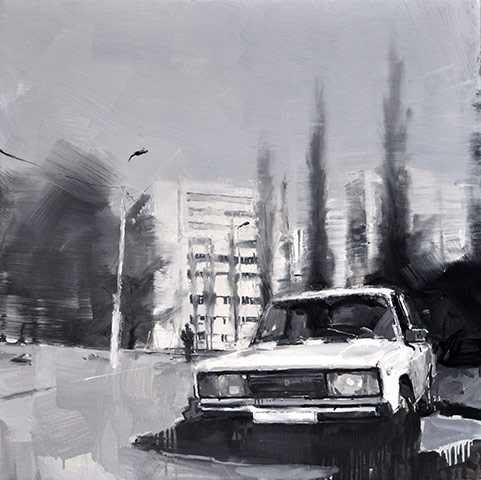
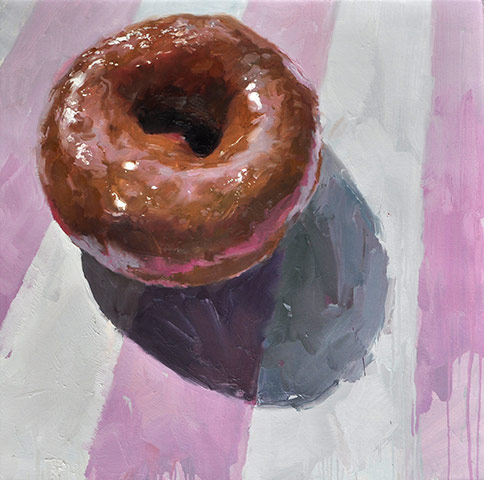
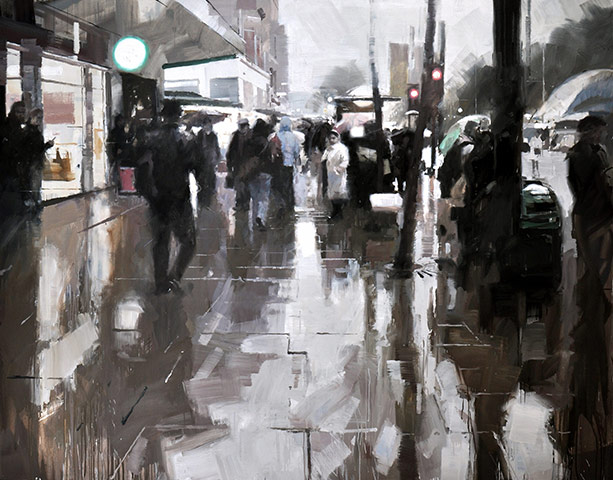
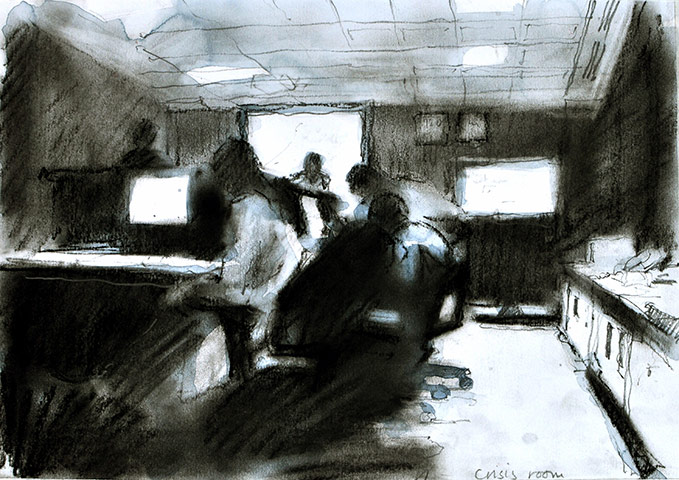
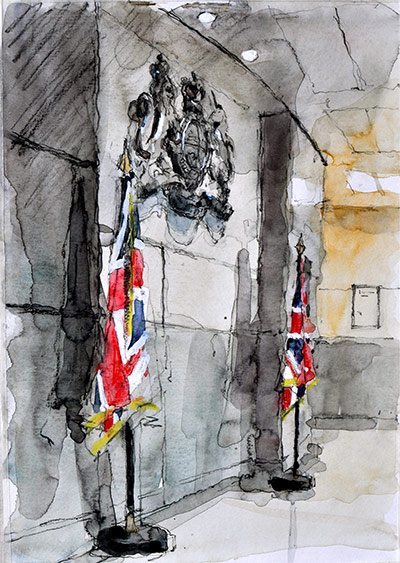
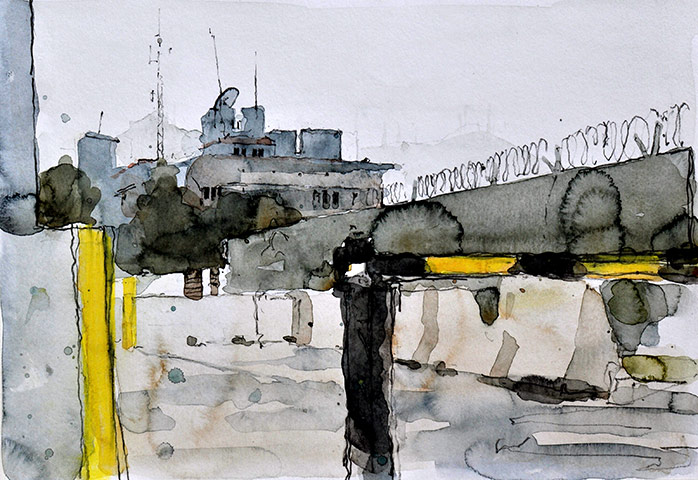
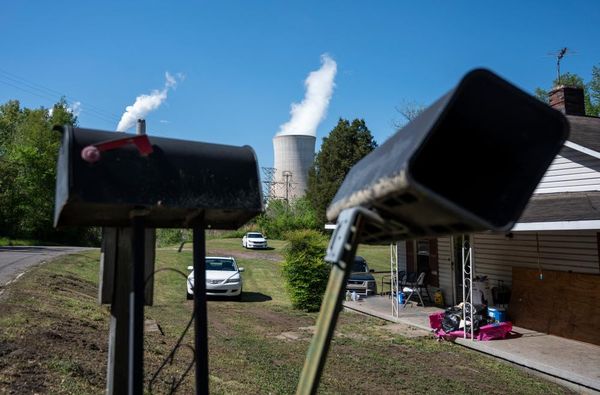
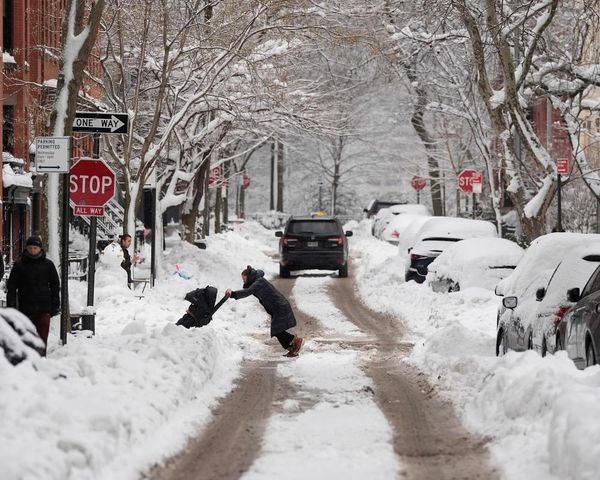
Housing Estate 2010, oil on canvas. A scene reminiscent of the cold warPhotograph: James Hart DykeDoughnut on Stripes 2010, oil on canvas. The intelligence community sometimes refer to the GCHQ building as 'the doughnut'Photograph: James Hart DykeDog in the Round 2010 oil on canvas. Spying is a world where often nothing is quite as it seems. 'Operations can be surreal,' says Hart DykePhotograph: James Hart DykeEspionage 2010, oil on canvas. An ordinary street scene. But is it ordinary, or is something out of the ordinary going on here? 'In the world of the spy, extraordinary events happen in the midst of the mundane,' says Hart Dyke. 'Once you're part of that world, you're never sure that things are as they seem. It can seem paranoid but it's paranoia with a point. Is this an ordinary day in a city or is it the scene of an SIS operation?'Photograph: James Hart DykeGCHQ, Cheltenham 2010, oil on canvas. Technology, especially with regards to communications, is a central feature in the work of the SIS who work increasingly closer with GCHQ, the Government's Communications HeadquartersPhotograph: James Hart DykeIce Breaker 2011, oil on canvas. SIS officers need to be able to cultivate contacts. An officer contemplates how she might strike up a conversation with her target, who is having a drink at the barPhotograph: James Hart DykeIt's a Lonely Business 2010, oil on canvas. Spies often have to work independently. They often live what appears to be a totally normal life. However, their chosen careers have given them a heightened sense of awarenessPhotograph: James Hart DykeStation 2010, pencil and watercolour on paper. 'The officers are mostly young men and women, and they work in very cramped and difficult conditions,' says Hart Dyke. 'It's hot, it's dusty: there's no space, and there's no air. There is also the threat of mortar attacks. To make the situation a little more tolerable the head of the station kindly buys everyone an ice cream at teatime.'Photograph: James Hart DykeThe Crisis Room 2010, pencil, watercolour and charcoal on paper. The crisis room is at the heart of the SIS building. The room seen here will become the centre of operations during a major incidentPhotograph: James Hart DykeThe Lobby 2010, pencil and watercolour on paper. Through the security barriers of the SIS HQ in London, the visitor is greeted by the royal coat of arms and two union flags: a reminder that the SIS exists to serve the interests of BritainPhotograph: James Hart DykeWaiting in the Hotel Room 2010, pencil, watercolour and charcoal on paper. Spies spend long hours working, waiting for contacts and waiting for calls. 'There's a lot of hanging around,' says Hart Dyke. 'You're in a completely ordinary place, waiting for something quite extraordinary to happen... and often waiting for a long time.'Photograph: James Hart DykeThe British Embassy, Kabul 2010, pencil, watercolour and pastelPhotograph: James Hart DykeJames Hart Dyke has spent a year as artist in residence at MI6Photograph: Graham Turner for the Guardian
Sign up to read this article
Read news from 100’s of titles, curated specifically for you.