Fear of deportation underlies the spirited banter of Jocelyn Bioh’s broad but lively, all-female workplace comedy, set in the titular hair salon in Harlem. Not that you’d know it from the bulk of the daily interactions between these West African and African-American women, which chiefly consist of rivalries, gossip, romantic upheavals and the buying of socks and jewelry from itinerant street vendors.
And of course, there’s the meticulous, laborious, finger-blistering process of braiding hair, which is very convincingly evoked. Over the course of a single sweltering New York day in 2019 we become au fait with the hierarchy of chairs in a salon and acclimatised to demands for packets of real hair bought from Malaysia or China: “No 2 at 38 inches!”
Bioh is also an actress, and her ear for dialogue is finely tuned. The characters are not fully fleshed and the arc of the plot is obvious, but the vibe and the texture of the play are strong. Jaja’s was nominated for six Tony awards from its 2023 Broadway run, including Best Play, but won for costumes and for hair and wig design.

Here, director Monique Touko – who also helmed the successful UK premiere of Bioh’s School Girls: or the African Mean Girls Play at the Lyric – fills the stage with atmosphere and attitude. The air conditioner churns against the summer heat outside; African sitcoms and music videos chunter on the TV; images of plaited and cornrowed hairstyles ripped from magazines peel from the windows of Paul Wills’s compact and detailed salon set.
Everyone here is chasing the American dream, or at least the Nollywood version of it. Senegalese Jaja, played by Zainab Jah, makes only one bombshell appearance, late on. But she’s built this business herself and sweated to put her daughter Marie (Sewa Zamba, in an impressive stage debut) through school, albeit using an ID “borrowed” from a cousin. It is Jaja’s wedding day to her white lover Steven – the women delight in pronouncing his name with contempt – which will finally get her her “papers”.
Meanwhile Miriam (Jadesola Odunjo), sweet and girlish but with a raunchy sexual confidence, dreams of making enough money in the States to return in glory to her lover and their five-year-old daughter in Sierra Leone. Queenly Bea (Dolapo Oni) broadcasts confidently about owning her own premises one day and wages a simmering war with the magnificently unbothered new girl Ndidi (Bola Akeju), to whom Bea’s harassed clients are gratefully defecting. Aminata (babirye bukilwa, who spells their name entirely in lower-case letters) won’t let a wastrel boyfriend or a furious customer dampen their booty-shaking swagger. Much is said here through body language: a wagged finger, a jutted pelvis.

There are fine performances, particularly from Odunjo and Akeju, and even the brasher characterisations among the main cast are hugely entertaining. The customers that come in however, apart from Karene Peter’s friendly Jennifer, are caricatures, mostly heedless expressions of citizenly privilege in contrast to the braiders’ precarious lives. This is a fault in the writing and direction rather than the efforts of Renee Bailey and Dani Moseley, who play three women apiece. But a shout out is due to Demmy Ladipo, who successfully differentiates all four male characters who flit briefly but amusingly in.
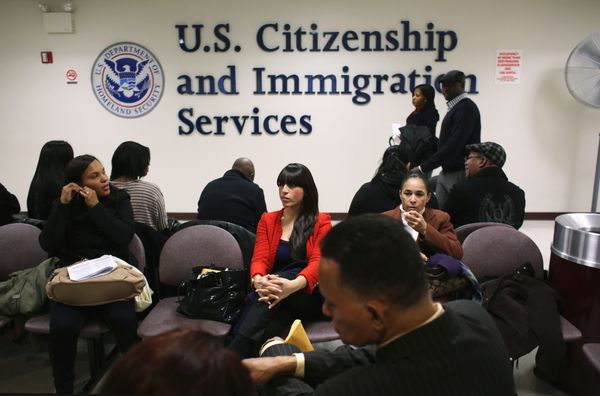
Bioh’s play highlights the dignity of hardscrabble labour and addresses the stories, specifically the female ones, behind the anti-immigrant rhetoric of the American right. Indeed, the author spells this out in a late and contrived speech by Jaja, asking if the authorities want African migrant women to “go home” before or after they have raised their employers’ children, cleaned their houses, or done their hair. The ending is telegraphed and melodramatic. For all its flaws though, Jaja’s African Hair Braiding vividly sketches in unseen lives. I can think of many worse ways to spend 90 minutes than in the company of these funny, feisty women.
To 25 April, lyric.co.uk.