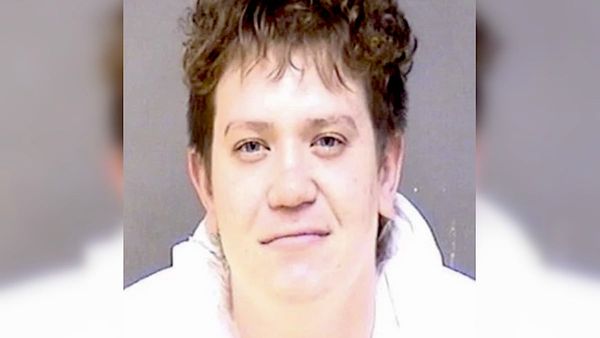
The saga of doppelganger director Clint Canning has ended with the charlatan being jailed – and a judge describing this column as a great public service.
In February, I revealed how Canning had been banned from being a company director for nine years in 2017, but had changed his name to Christian Beauchamp and formed a new company.
That ban came about after Canning’s company Quantum Satis Investments Ltd was liquidated owing more than £1.1million – some of the money being siphoned away to buy property in Cyprus, according to his disqualification report.
I also detailed his string of other failed investment companies, including FX World Managed Account Limited, which was put into compulsory liquidation owing £812,000, InvestConnect Limited which was liquidated owing £206,000 and Base2Trade, which owed more than £470,000 when it went bust.
That should have been the end of his career running investment companies but, as the court heard, I came across a new company called Alpha Nova Capital Limited, which was recruiting investors with Google adverts and promises of 15% returns.
Its sole director was named as Christian Beauchamp, but – as Southwark Crown Court heard last week – I was able to prove that he was really Clint Canning.

Dominic Connolly, prosecuting, told the court: “On January 19 Mr Penman sent an email to Mr Beauchamp challenging him as to his background and identity. Mr Beauchamp responded to that email to the effect that Mr Penman was incorrect.”
Beauchamp got London law firm Payne Hicks Beach on to me; his solicitor saying I had made “a large number of seriously defamatory allegations which would undoubtedly give rise to a claim in defamation if published”.
He then arrived unannounced at my house and, lying to my face, still insisted he was not Canning.
My evidence, including photographs, family Facebook posts and a fake LinkedIn profile, proved otherwise and the Mirror published my story on February 4, despite the legal threats. Shortly afterwards, Beauchamp was arrested by City of London Police at his home – a £1m farmhouse in Dunmow, Essex.

Last week, he was jailed for a year after pleading guilty to acting as a director while disqualified.
Possible fraud charges were not pursued, even though the court heard that two investors lost £185,000 to Alpha Nova Capital.
I’m going to stick my neck out and suggest that more investors would have lost money if Beauchamp had not been stopped.
Max Mills, defending, told the court: “I have to address to some extent Mr Beauchamp’s interactions with the journalist.
“He explained that the reason he went to Mr Penman’s house and said what he said was because he panicked and he didn’t want to lose what he had.”
Judge Martin Griffith described Beauchamp as “a dishonest man through and through” whose previous convictions “were offences of dishonesty, all to do with deception”.
He said in sentencing: "The money was used by you for all sorts of things, none of which represented an investment.
"It was committed over a long period of time and it was entirely for your personal gain. You are the person who was running this, you are the person who was getting the money.
'"People who are in your position who breach these orders and do so in the way that you have done fit the guideline of immediate custody.
“Custody is a punishment and a deterrent and that’s what’s needed in this case.”
Besides the jail term, Beauchamp was banned from being a director for another seven years.
In setting out how he came to be caught, the judge said: “A Mirror reporter, the appropriately named Andrew Penman – I’m sorry if I’m not the first person to say that – became aware of what you were doing and he investigated. Well done him.”
After sentencing, he asked if I was in court and told me: “You need to be commended for what you do.
“Thank you so much. In this day and age, we all know the police cannot do everything – people like you help, it’s a great service to the public.”
Besides the two victims name in court, I've heard from the solicitor for a third, a man who lost £135,000.
“People such as Beauchamp are highly intelligent, perceptive and manipulative criminals,” said Jaroslaw Stachiw of London firm Rippon Patel & French after the case.
“They form a relationship with their victims who, at the end, not only have to cope with loss of money but also the breakdown of what they considered to be a close friendship or relationship.
“My client has been left very distressed, confused and it will take time to process and come to terms that he was effectively manipulated.”
The case leaves some questions needing answers, including how Canning was able to set up a new limited company and become its sole director with the simple ploy of changing his name.
Companies House told me that it does not have the power or ability to verify the accuracy of information that it is given by directors.
Last September, the Government announced it would introduce reforms to “increase the reliability of the data showing who is behind each company”.
Minister for Corporate Responsibility Lord Callanan said: “Mandatory identity verification will mean criminals have no place to hide – allowing us to clamp down on fraud and money laundering and ensure people cannot manipulate the UK market for their own financial gain, whilst ensuring for the majority that the processes for setting up and running a company remain quick and easy.”
The reforms will come into effect "when Parliamentary time allows".
Beauchamp's company also boasted on material it sent to investors that was a "global macro absolute return hedge fund with offices in London, New York and Dublin" regulated by the Financial Conduct Authority.
The FCA points out that it never directly regulated Alpha Nova Capital, saying that the company was an “appointed representative” for another firm, Alpha Ethical Investment Limited, and it was this other firm that was regulated.
I suspect the distinction was lost on investors who took reassurance from the fact that Alpha Nova Capital appeared on the FCA register.