Get all your news in one place.
100’s of premium titles.
One app.
Start reading
Reuters
Reuters
Environment
Ueslei Marcelino

Jaguar burned by wildfires in Brazil is helped back to health

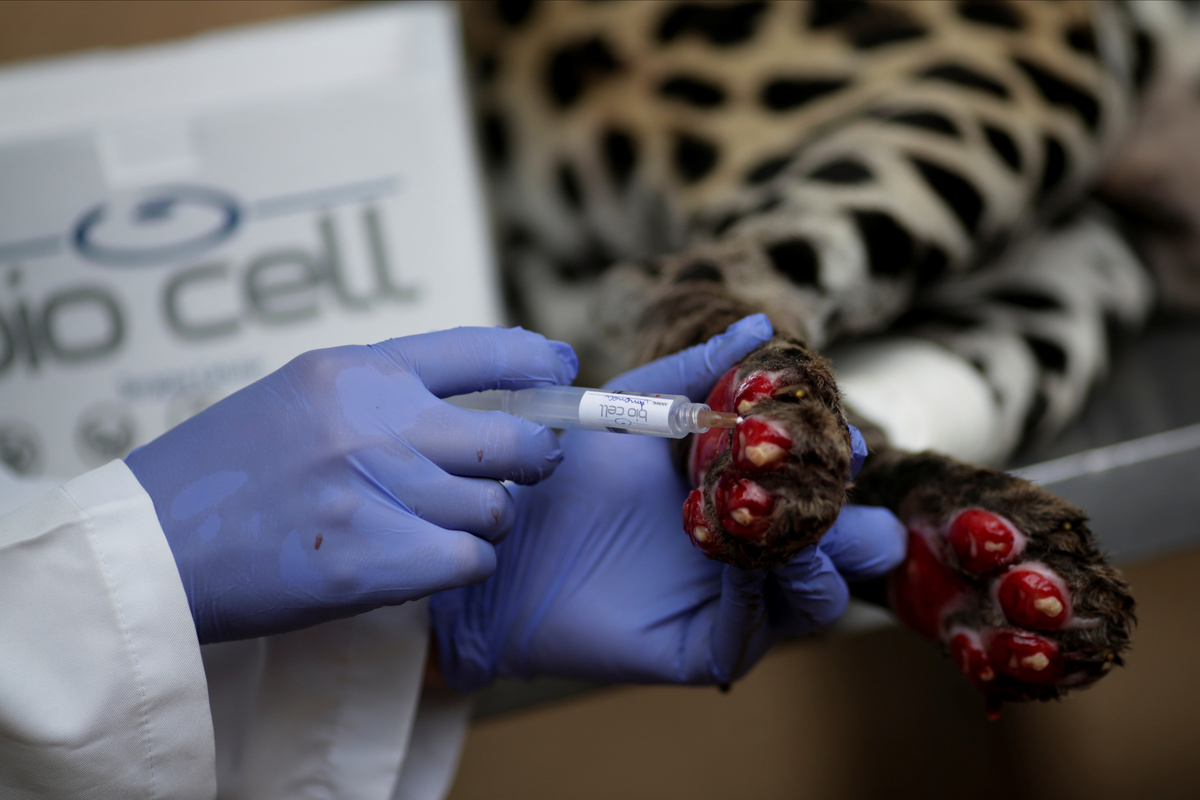
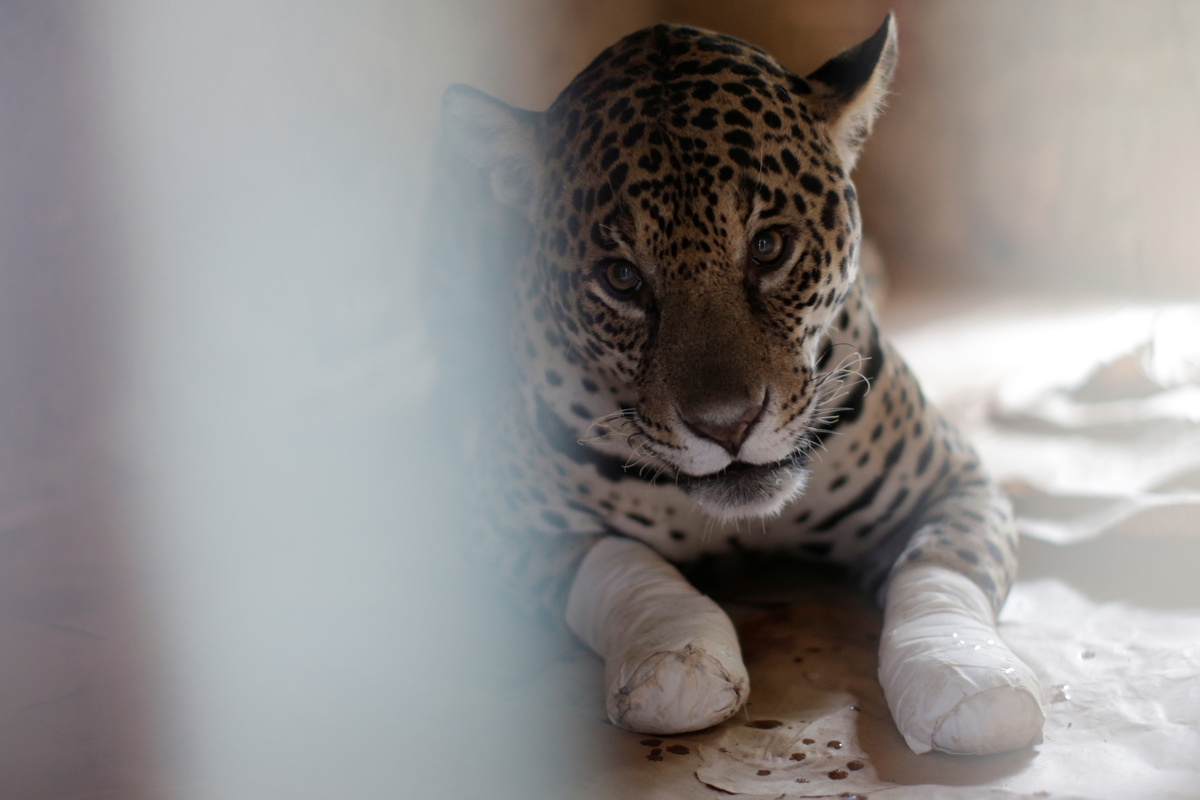
An adult female jaguar named Amanaci is seen before receiving stem cell treatment on her paws after burn injuries during a fire in Pantanal, at NGO Nex Institute in Corumba de Goias, Goias State, Brazil, September 19, 2020. Picture taken September 19, 2020. REUTERS/Ueslei Marcelino

The caged jaguar, hit by a tranquilizer dart, rises with a pained growl on to her bandaged, burned paws.

The spotted female, named Amanaci, is one of countless victims of the worst wildfires ever recorded in Brazil's Pantanal, the world's largest wetland. A jewel of biodiversity, it is home to the densest population of jaguars anywhere on Earth.
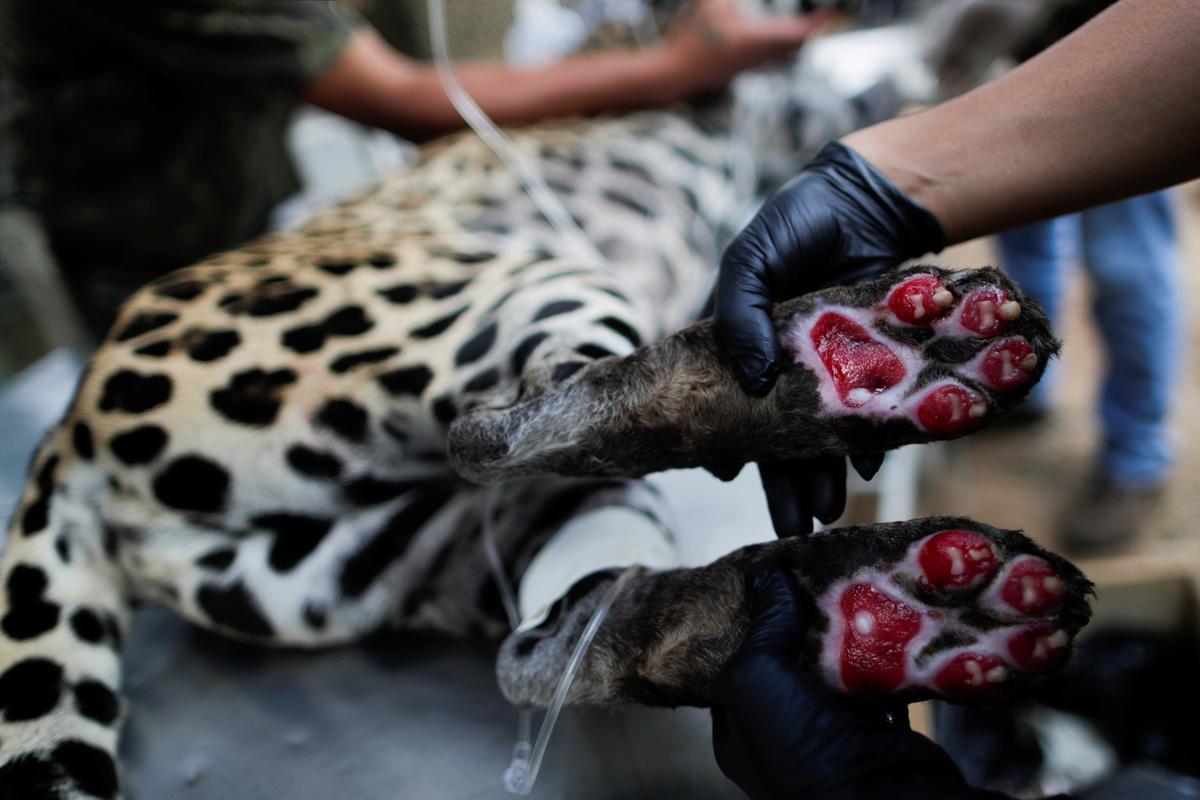
A caregiver shows burn wounds on the paws of an adult female jaguar named Amanaci sustained after a fire in Pantanal, as the animal undergoes a stem cell treatment, at NGO Nex Institute in Corumba de Goias, Goias State, Brazil, September 19, 2020. Picture taken September 19, 2020. REUTERS/Ueslei Marcelino

Amanaci was one of the lucky ones. Rescued by volunteers, she was brought to a farm in the state of Goias run by an NGO dedicated to protecting endangered wild cats.

She is being treated with cutting-edge medicine: stem cell injections to hasten the recovery of burned tissue and the regeneration of new tissue.

"We hope to see her walking on all four paws soon, with her quality of life restored," said vet Patricia Malard.
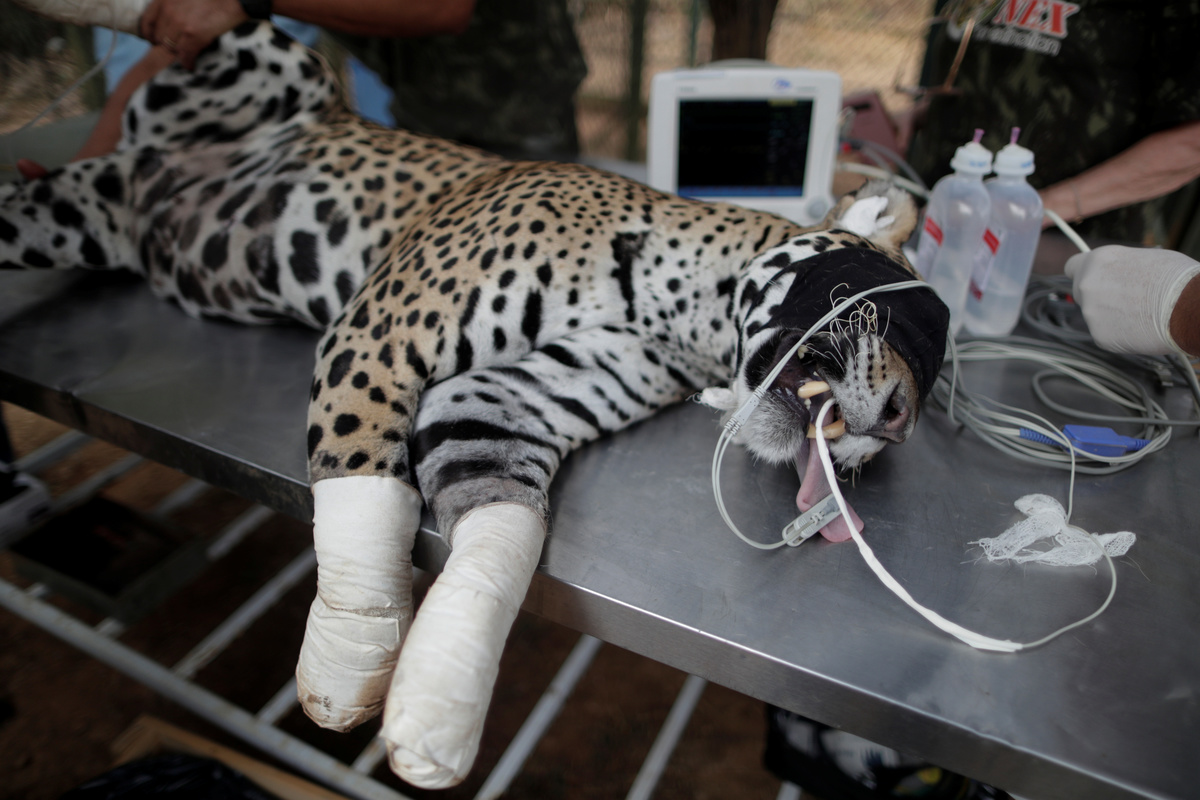
An adult female jaguar named Amanaci receives stem cell treatment on her paws after burn injuries during a fire in Pantanal, at NGO Nex Institute in Corumba de Goias, Goias State, Brazil, September 19, 2020. Picture taken September 19, 2020. REUTERS/Ueslei Marcelino

The stem cells were taken from Amanaci two weeks earlier and cultivated in a lab before the first injection on Saturday. While she was out, her dressings were changed.

"It makes me angry and sad to see how these animals are suffering," said Cristina Gianni, founder of the sanctuary called NEX Institute, for No Extinction, where 23 jaguars are being looked after.

"Imagine ourselves in their place. It would be like stepping barefoot on hot coals," she said in an interview.
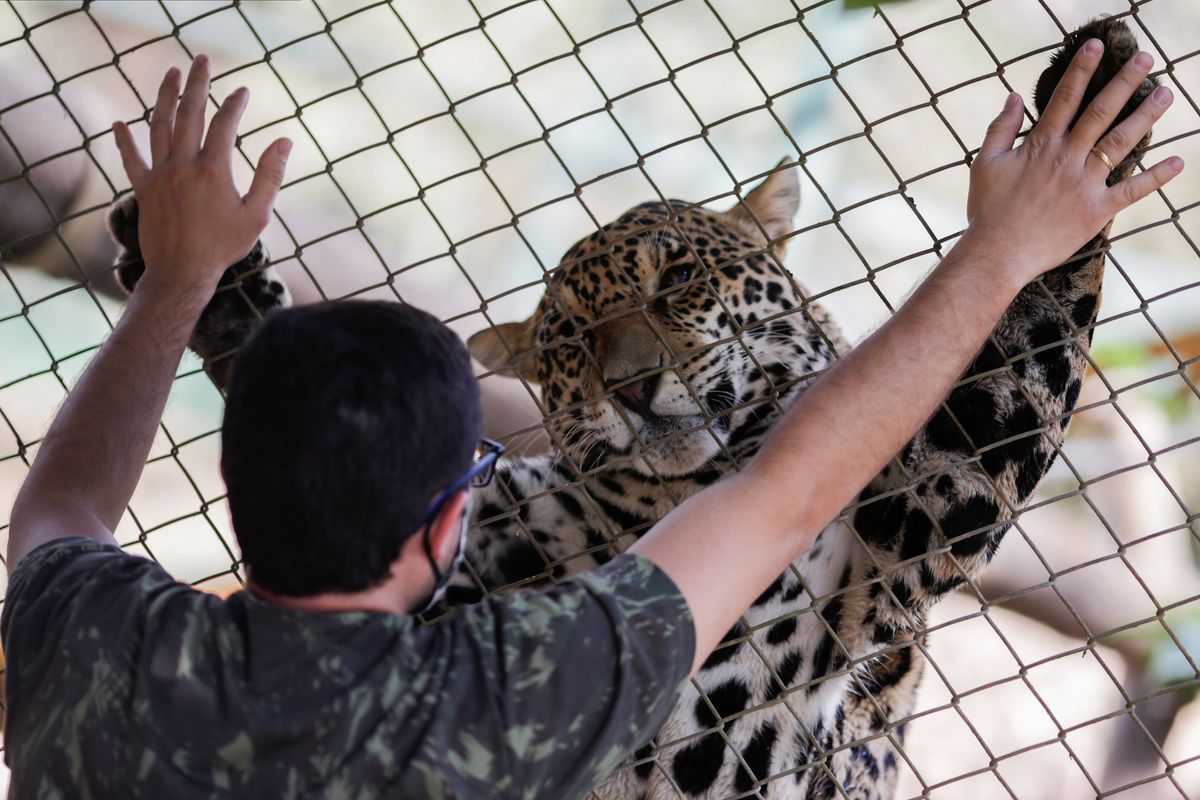
An adult male jaguar named Guarani responds to stimuli from his caregiver while receiving veterinary care, food and treatment at NGO Nex Institute in Corumba de Goias, Goias State, Brazil, September 19, 2020. REUTERS/Ueslei Marcelino

Gianni said she had never seen so much death and pain caused to wildlife as that from the blazes in the Pantanal this year, and accused Brazil's authorities of not doing enough to prevent the fires.

The Pantanal, whose name derives from the Portuguese word for "swamp," sprawls over more than 150,000 square kilometers (58,000 square miles) in Brazil and also extends into Bolivia and Paraguay.

The fires are the worst since records began in 1998. The flames threaten the region's wildlife, rich with tapirs, pumas, capybaras and jaguars.
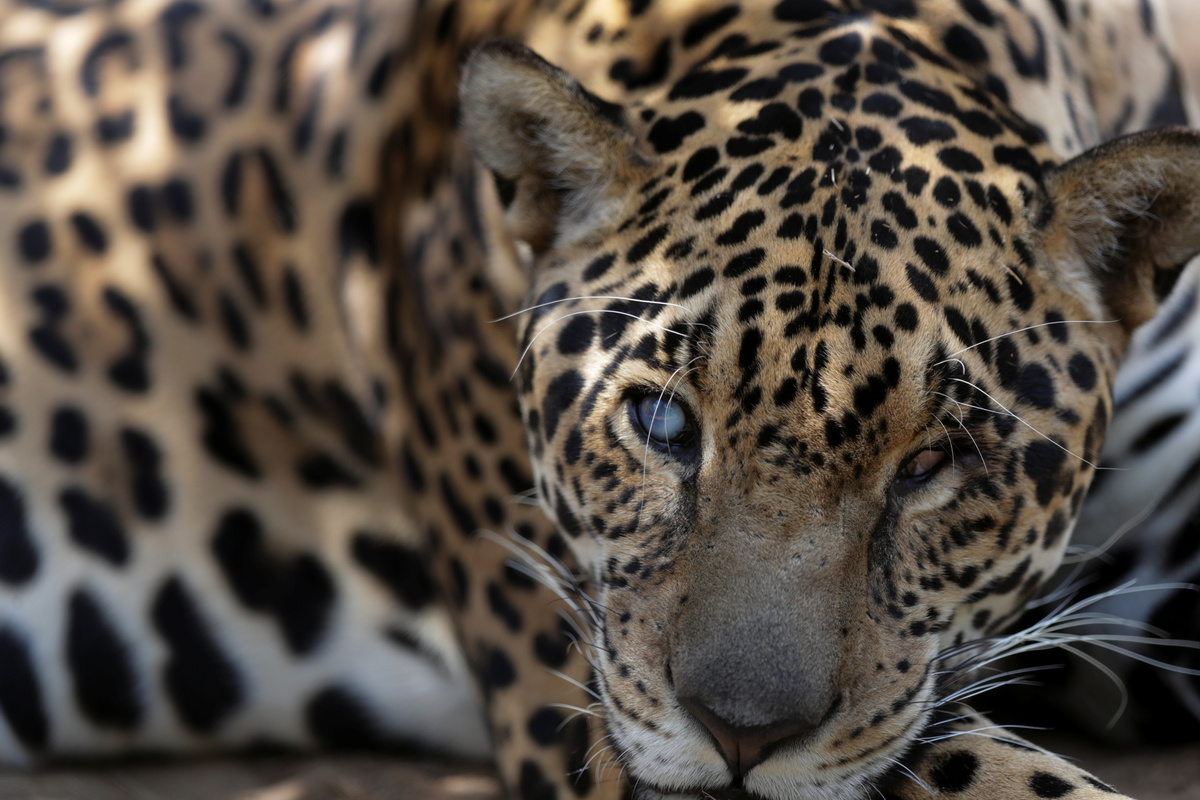
An adult male jaguar named Merlin rests while receiving veterinary care, food and treatment at NGO Nex Institute in Corumba de Goias, Goias State, Brazil, September 19, 2020. REUTERS/Ueslei Marcelino

Jaguars used to be found from the south-west of the United States down to northern Argentina, but today their range has shrunk. The World Wildlife Fund says Brazil may hold around half of the estimated 170,000 wild jaguars remaining.

For Amanaci, it is too soon to say if or when she will be able to return to the wild. In the meantime, she wakes up from her sleep, and gazes out at her new surroundings.
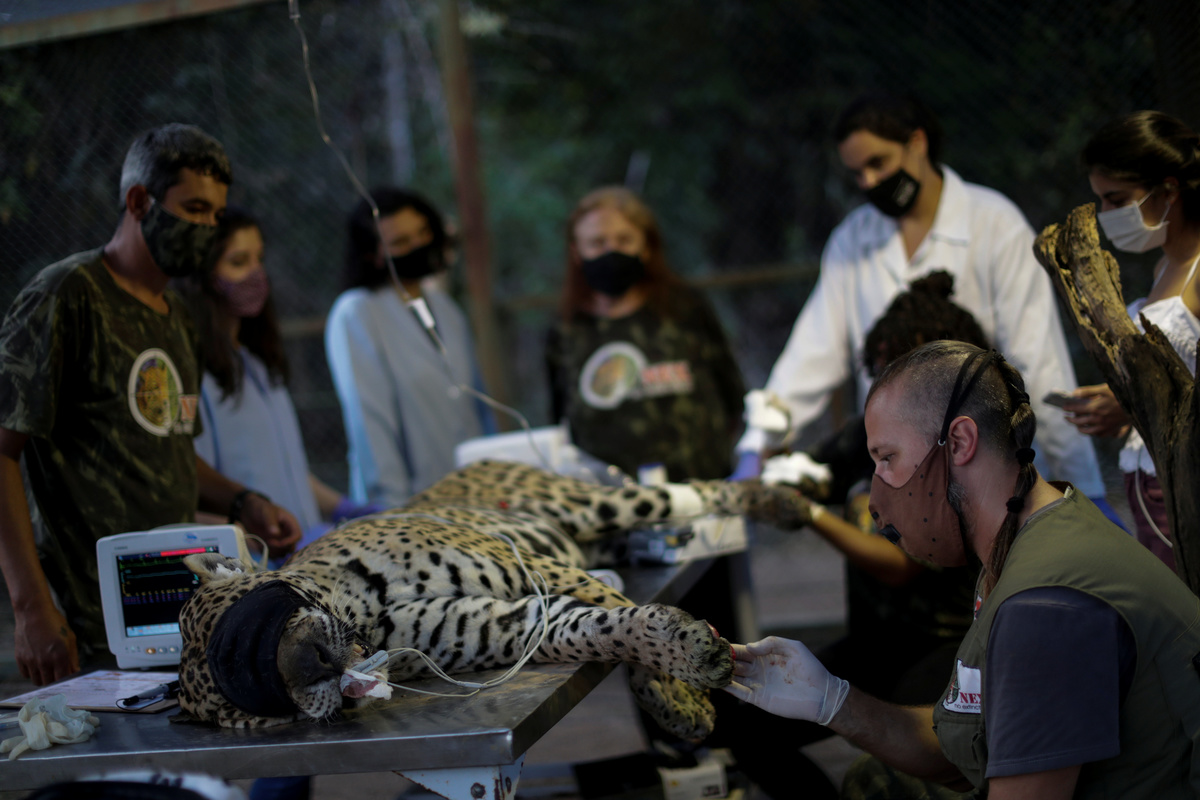
An adult male jaguar named Ousado receives treatment for burn injuries on his paws after a fire in Pantanal, at NGO Nex Institute in Corumba de Goias, Goias State, Brazil, September 19, 2020. REUTERS/Ueslei Marcelino

(Reporting by Ueslei Marcelino, Writing by Anthony Boadle, Editing by Rosalba O'Brien)
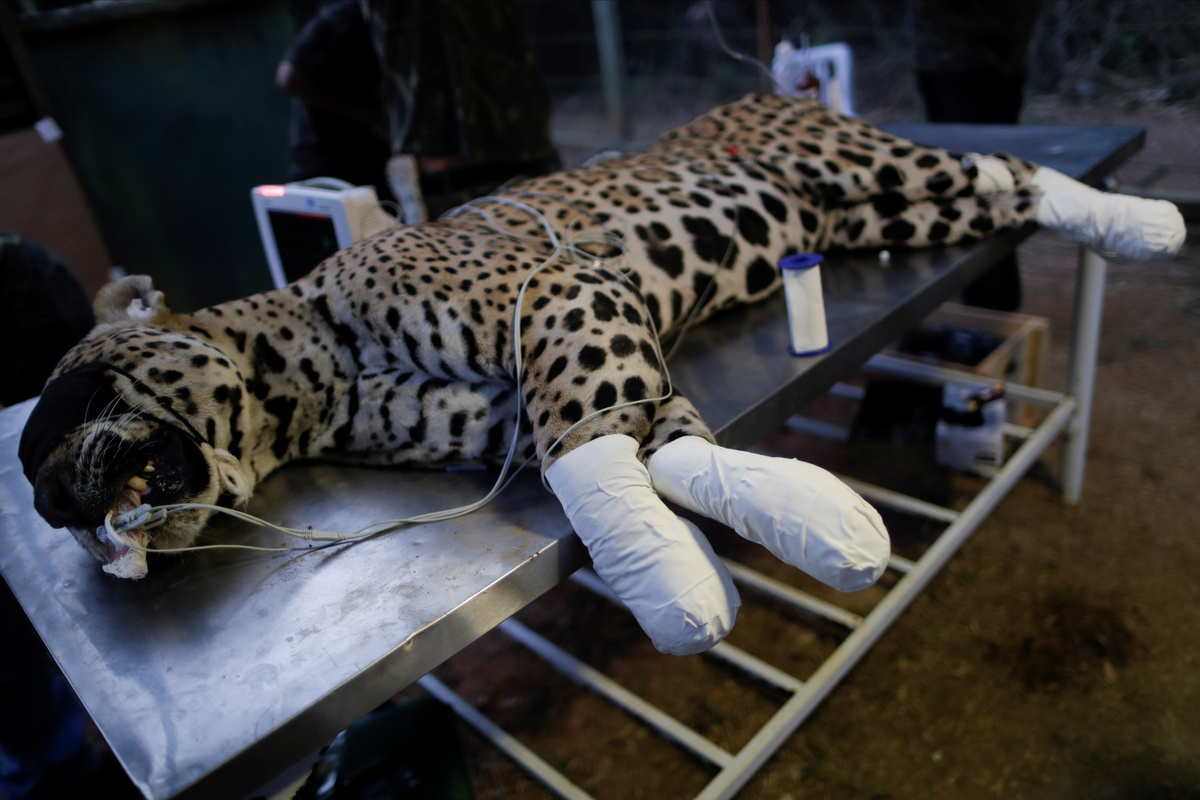
An adult male jaguar named Ousado receives treatment for burn injuries on his paws after a fire in Pantanal, at NGO Nex Institute in Corumba de Goias, Goias State, Brazil, September 19, 2020. REUTERS/Ueslei Marcelino
Manager of BIO CELL and veterinarian Patricia Malard applies stem cell treatment on the paws of an adult female jaguar named Amanaci who sustained burn injuries from a fire in Pantanal, at NGO Nex Institute in Corumba de Goias, Goias State, Brazil, September 19, 2020. REUTERS/Ueslei Marcelino
Sign up to read this article
Read news from 100’s of titles, curated specifically for you.
Already a member? Sign in here
Related Stories
Top stories on inkl right now
One subscription that gives you access to news from hundreds of sites
Already a member? Sign in here
Our Picks
Fourteen days free
Download the app
One app. One membership.
100+ trusted global sources.