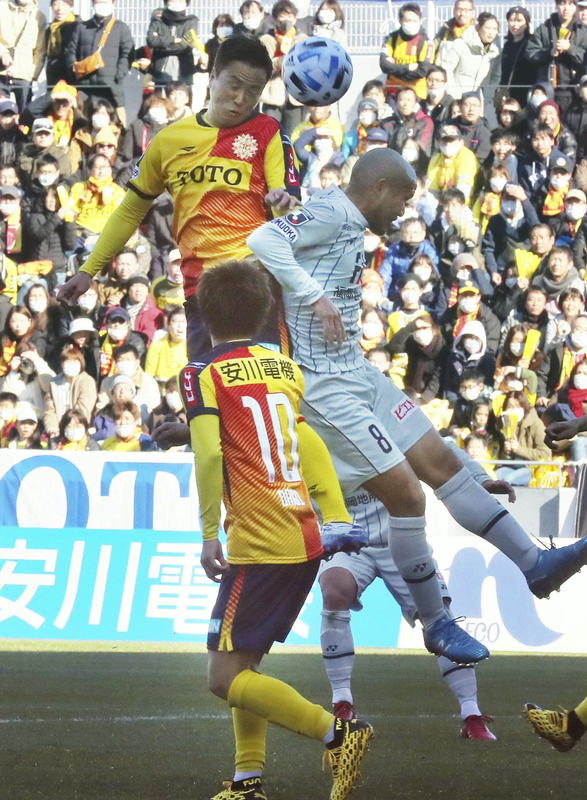
The J.League, which has suspended its games since the end of February because of the coronavirus, will resume on Saturday. The J2 and J3 leagues will hold their games in an empty stadium ahead of the J1 league, which is set to start on July 4. If things go smoothly, fans will gradually be allowed into the stadium to see the games starting July 10, however, it will be a difficult road for all 56 club teams to reach the last match of the season in December as the future remains uncertain.
-- Game management
Guidelines have been put in place to manage the games and to keep the coronavirus from spreading. The league will conduct PCR tests every two weeks, and only those who are confirmed as negative and do not have a fever on the day of the game will be able to play. Even though there are 18 registered players on a team, to prepare for the chance that some may test positive for the virus, the team will still be able to compete if they have at least 14 players, including a goalie.
What will be on top of everyone's mind is making sure the players do not come in contact with each other off the field. The teams will come into the empty stadium separately and the players will be at least 1 meter apart when posing for their team photo. Forming a huddle, shaking hands, hugging and other such actions will not be allowed. Sharing water bottles is also banned, so there will be a designated water break in which water will be supplied to the players in the middle of each half during the summer. Players on the bench will be required to wear a mask and leave one empty seat between each other. Even during a moment of excitement, such as when someone scores a goal, the players will need to maintain distance between each other, and exchanging jerseys will not be allowed.
-- Planning for shortened season
As the season has been suspended for about four months, each league is required to have its own plan to handle a condensed season. Especially the J2 league in which its 22 teams will basically have to play two games a week to play a total of 41 matches until Dec. 20. Each team will need to switch out its athletes, but with successive games, it could increase the risk of injuries to the starting players. The key to handling this situation will be to have a good manager who knows how to rotate its players while keeping in mind that it is not a sprint but a marathon.
Read more from The Japan News at https://japannews.yomiuri.co.jp/