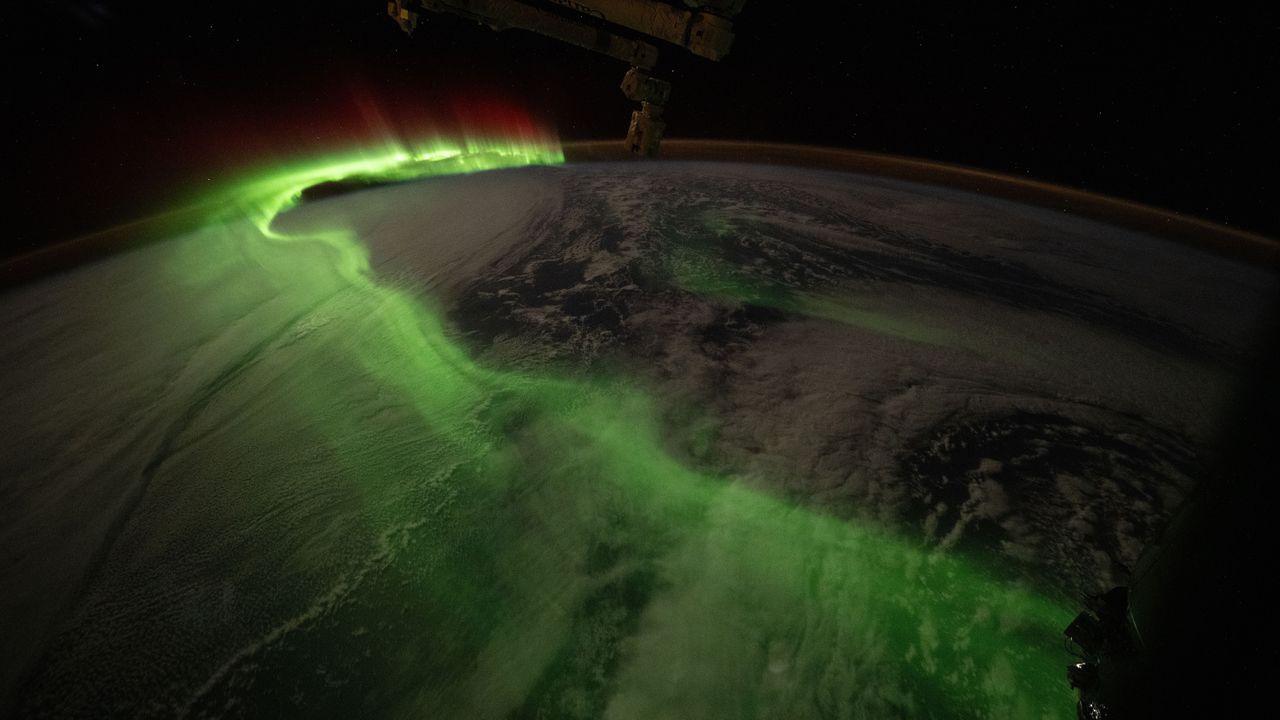
As much as I love chasing the northern lights, I haven’t yet attempted to see the southern lights. But NASA astronaut Jessica Meir arguably had one of the best views of the early June 2026 phenomenon, snapping swirling greens and reds 271 miles above the Indian Ocean aboard the International Space Station.
NASA shared the stunning photograph on June 16, but Meir captured the photo of the Australia Borealis on June 5 as the ISS passed south of Perth, Australia.
The photograph mixes both the arch of the lights with the curve of the Earth and swirling clouds. That means Meir and other ISS astronauts likely had one of the few viewing spots for the June 5 southern lights, as cloud cover will obstruct the views of the night sky phenomenon from Earth.
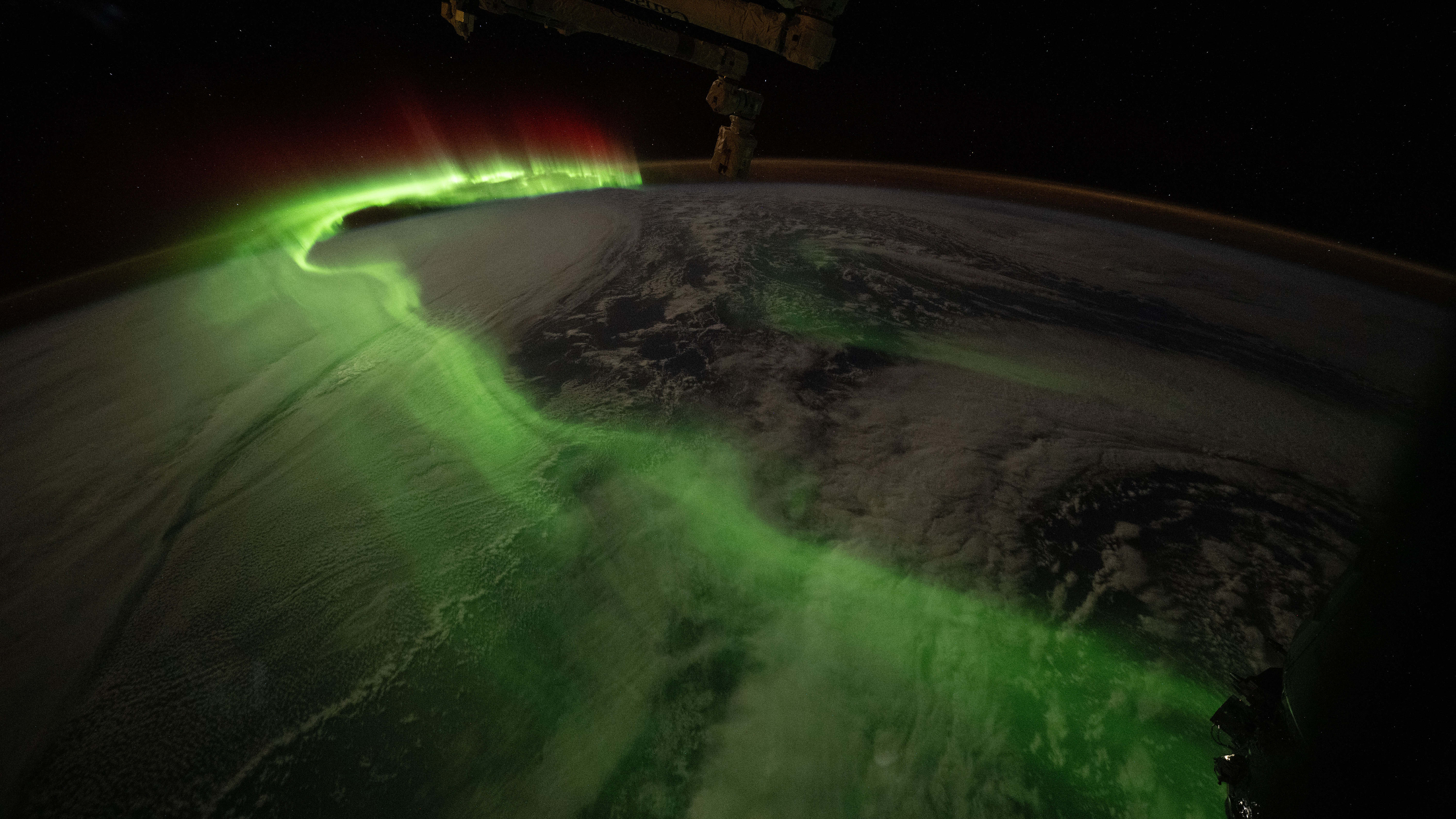
Meir took the photo with the Nikon Z9, which is one of the first mirrorless cameras ever to make the trek to space. As space cameras need to be thoroughly tested to withstand the rigours of space, using older DSLRs is more common – like aboard the recent Artemis II mission – but the Z9 is one of the first mirrorless cameras to be tested in space.
Meir took the shot through a window at the ISS – parts of the space station are visible at the top and bottom of the frame. A slow 1/4 shutter speed, bright f/1.8 aperture, and ISO8000 helped the camera gather enough light from the dark scene.
Meir is scheduled to remain at the ISS as the spacecraft commander through September 2026. Meir’s background is in studying life in the most extreme environments, from expeditions to study penguins in Antarctica while studying for her Ph.D. to her current role conducting biology experiments in space. Meir was also among the first all-female spacewalks alongside Christina Koch in 2019.
You may also like...
Explore tips for photographing the northern (or southern!) lights, or browse the best astrophotography cameras.