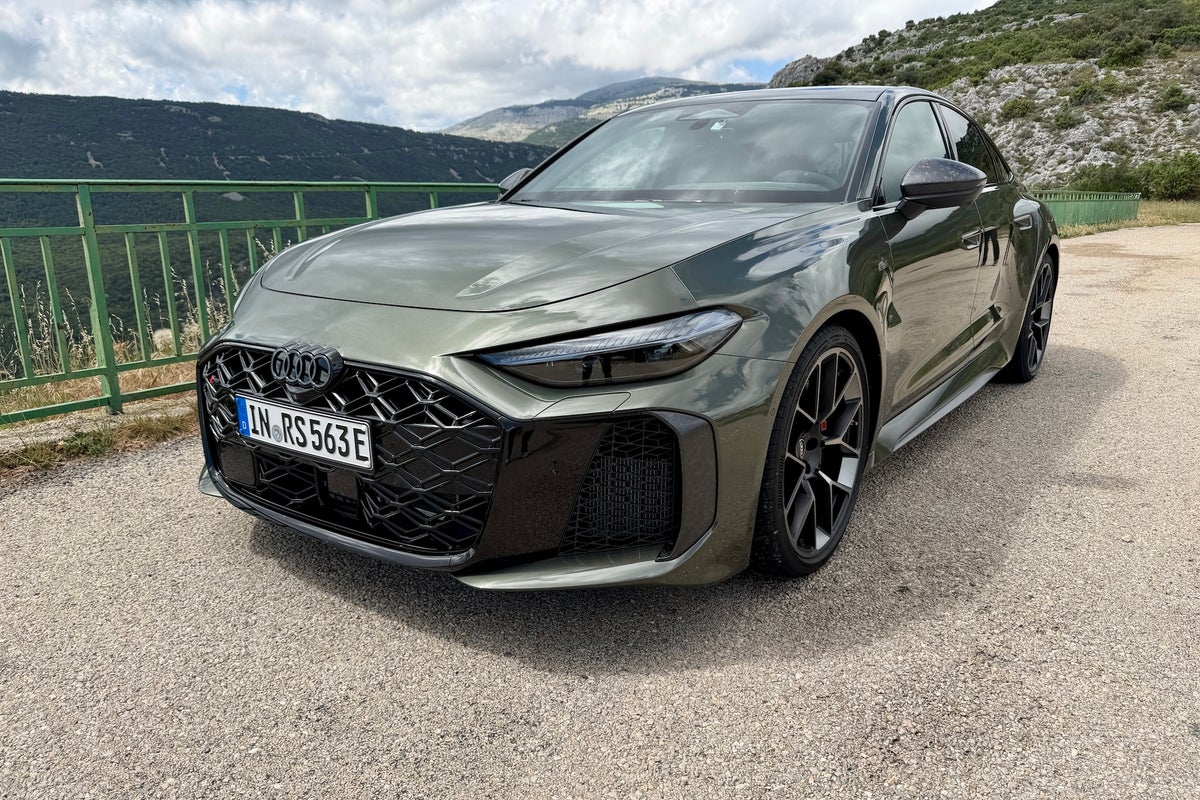
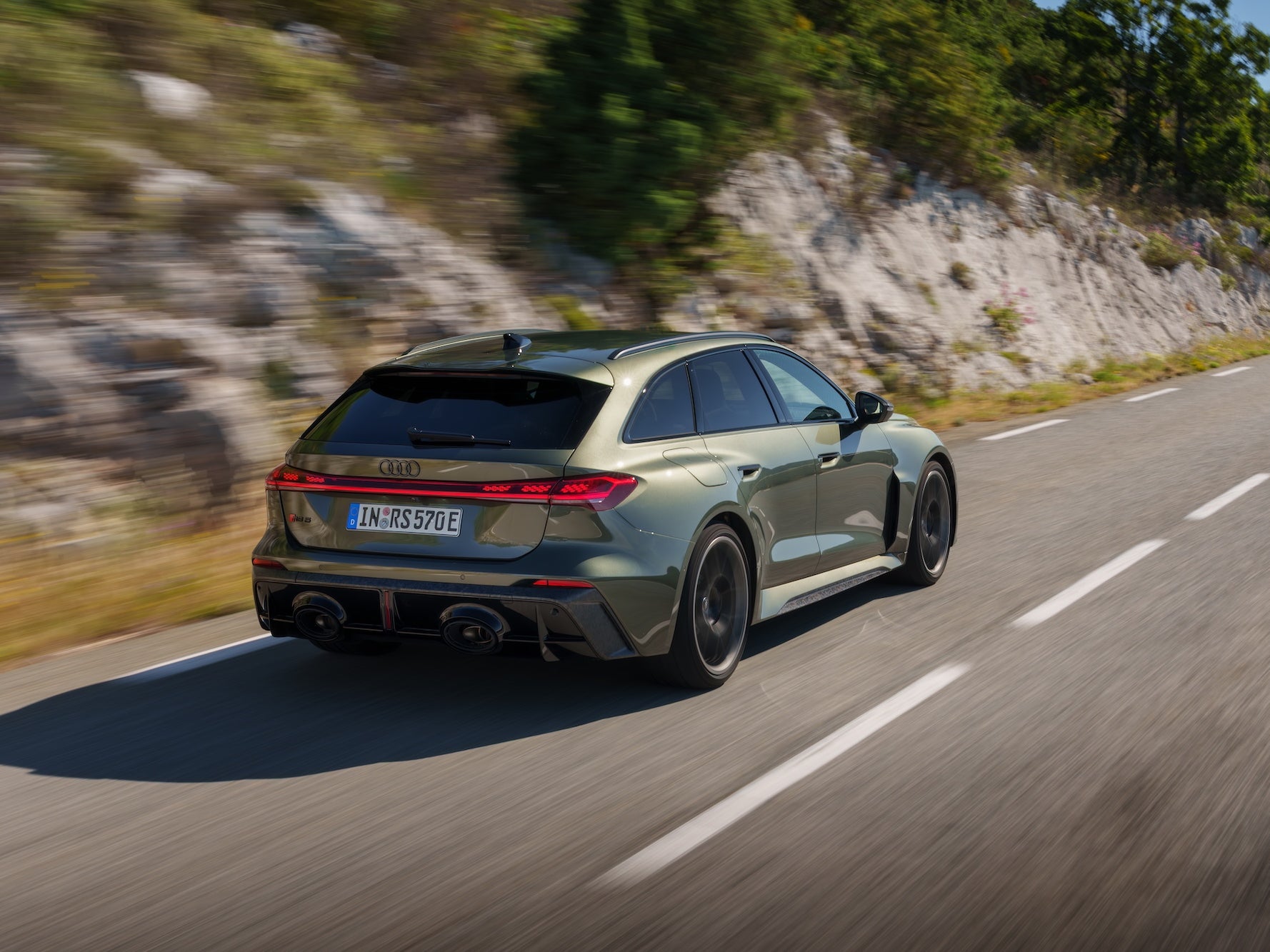
Audi RS models have always looked good, but sometimes the drive hasn’t quite lived up to the looks. You can’t accuse the new Audi RS 5 of that. Audi has taken the standard A5 and beautifully beefed it up, with wider arches, a deeper front end, proper attitude and the sort of stance that makes you look back at it every time you walk away.
It also arrives at a slightly confusing moment in the Audi world. The old A4 has gone, A5 now covers the sort of cars we used to think of as A4s, A6 means something different depending on which bit of the Audi range you are talking about, and then you have the RS versions layered on top. So, yes, it might take a moment to work out where everything sits. But in simple terms, this is the new fast Audi saloon and estate rival for cars like the BMW M3 and M3 Touring.
It also marks a big change for Audi Sport, because this is the first plug-in hybrid RS model. Under the bonnet is a 2.9-litre twin-turbo V6, joined by an electric motor and a 25.9kWh battery, giving a total of 630bhp and 825Nm of torque. That means 0-62mph in 3.6 seconds, which is very fast indeed, while Audi claims up to 52 miles of electric-only running.
So, you can creep around town on battery power, then press the right buttons and turn it into a very quick RS car. But there are compromises. The RS 5 feels heavy, the gearbox can be jerky at low speed, the boot is smaller than in non-hybrid models and the infotainment is too packed and confusing. The huge exhaust pipes look like they should provide a full-on performance-car soundtrack, too, but the noise is a bit disappointing.
Still, when you find the right road and drive it hard, the RS 5 starts to make much more sense. This is a car that gets better the faster and harder you drive it. The problem, of course, is finding somewhere to do that.
How I tested
I drove the Audi RS 5 on the fabulous twisting roads and through tight village streets of southern France, testing its performance, handling, hybrid system, comfort, interior quality and everyday usability.
Audi RS 5: from £90,150, Audi.co.uk
Independent rating: 8/10
- Pros: Stunning looks, huge performance , clever rear axle, 52-mile electric range
- Cons: Heavy, expensive, disappointing noise, confusing infotainment
- Price from: £90,150
- Battery size: 25.9kWh
- Maximum EV range: 52 miles
- Performance: 0-62mph 3.6 seconds, top speed 177mph
Battery, range, charging, performance and drive
The RS 5 uses a 2.9-litre V6 petrol engine with 503bhp on its own, plus an electric motor built into the eight-speed automatic gearbox. Together they produce 630bhp and 825Nm, which is a huge amount for something that still looks, from some angles, like a very serious company car.
The plug-in hybrid system is clever. The battery is big enough to give up to 52 miles of electric running in the saloon, or 51 miles in the Avant estate version, so a lot of everyday driving could be done without using the engine at all. That is a genuinely useful distance, not just a token electric range, and it means the RS 5 can be quiet, smooth and sensible when you want it to be. Charging is AC only, at up to 11kW, with Audi quoting a full charge in around two-and-a-half hours.
That makes the RS 5 much easier to justify than old-school fast Audis, especially for buyers who can charge at home or at work. But the hybrid hardware also adds weight, and you can feel it.
The RS 5 saloon weighs 2,355kg, while the Avant is 2,370kg. Around town, through the narrow village streets of southern France where I tested the car, it feels big and a bit bulky. It is not the sort of car you thread through tight gaps with a dainty flick of the wrists. You are very aware of its width, its weight and the fact that it is not a small car.
For pootling around in standard mode, the ride is firm but fine. Hit the RS button and things firm up to a level of discomfort that’s not great around town, but is more acceptable on smoother, faster roads and especially on a track.
The gearbox can also be jerky, particularly at low speed and when pulling to a stop. That makes the car feel less polished than you might expect from Audi, especially at this price. In gentle driving, the hybrid system and gearbox do not always blend together as smoothly as they should.
But then there is the rear axle. Audi calls the system quattro with Dynamic Torque Control, and behind the long name is something genuinely impressive. I’ll skip the physics lesson other than to say the clever new rear axle can shuffle power between the rear wheels in milliseconds, even when you’re not accelerating, or when you’re braking. In simple terms, it helps the RS5 turn more sharply, feel more stable and find more grip, making it more agile and predictable when you’re driving quickly. And it works brilliantly.
You do have to be driving the RS5 properly to feel the best of it. At normal speeds, the RS 5 can feel a bit heavy and slightly muted. Push harder, though, and it comes alive. There is a huge amount of grip, the steering is direct and the car starts to shrink around you while the levels of grip and agility for a large car are seriously impressive.
The steering doesn’t feel quite as weighty as I’d like, and I expected a little more substance through the wheel of an RS model, but the accuracy is there.
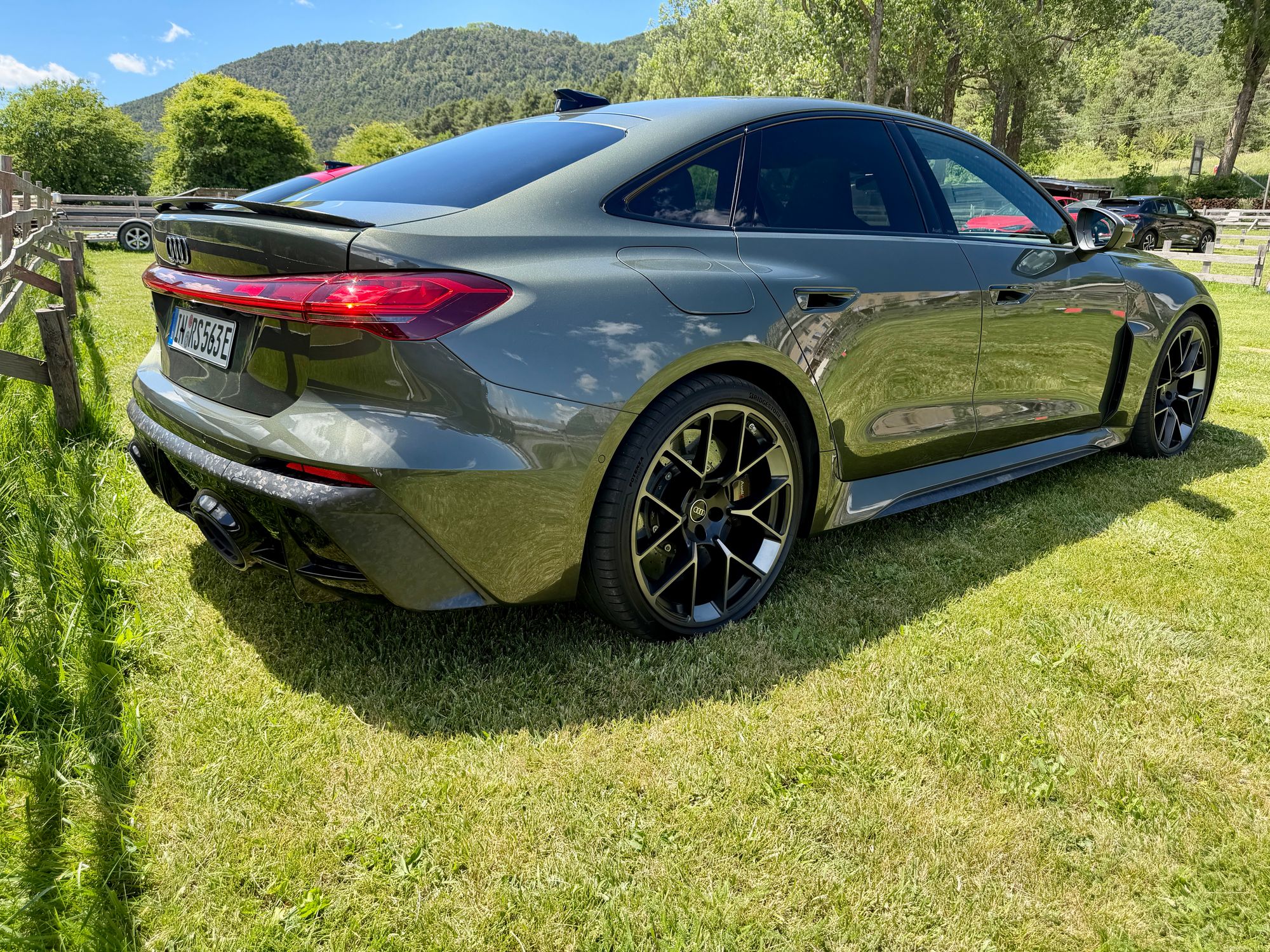
The optional carbon ceramic brakes are hugely powerful, although they can feel a bit grabby, especially when you are trying to drive smoothly.
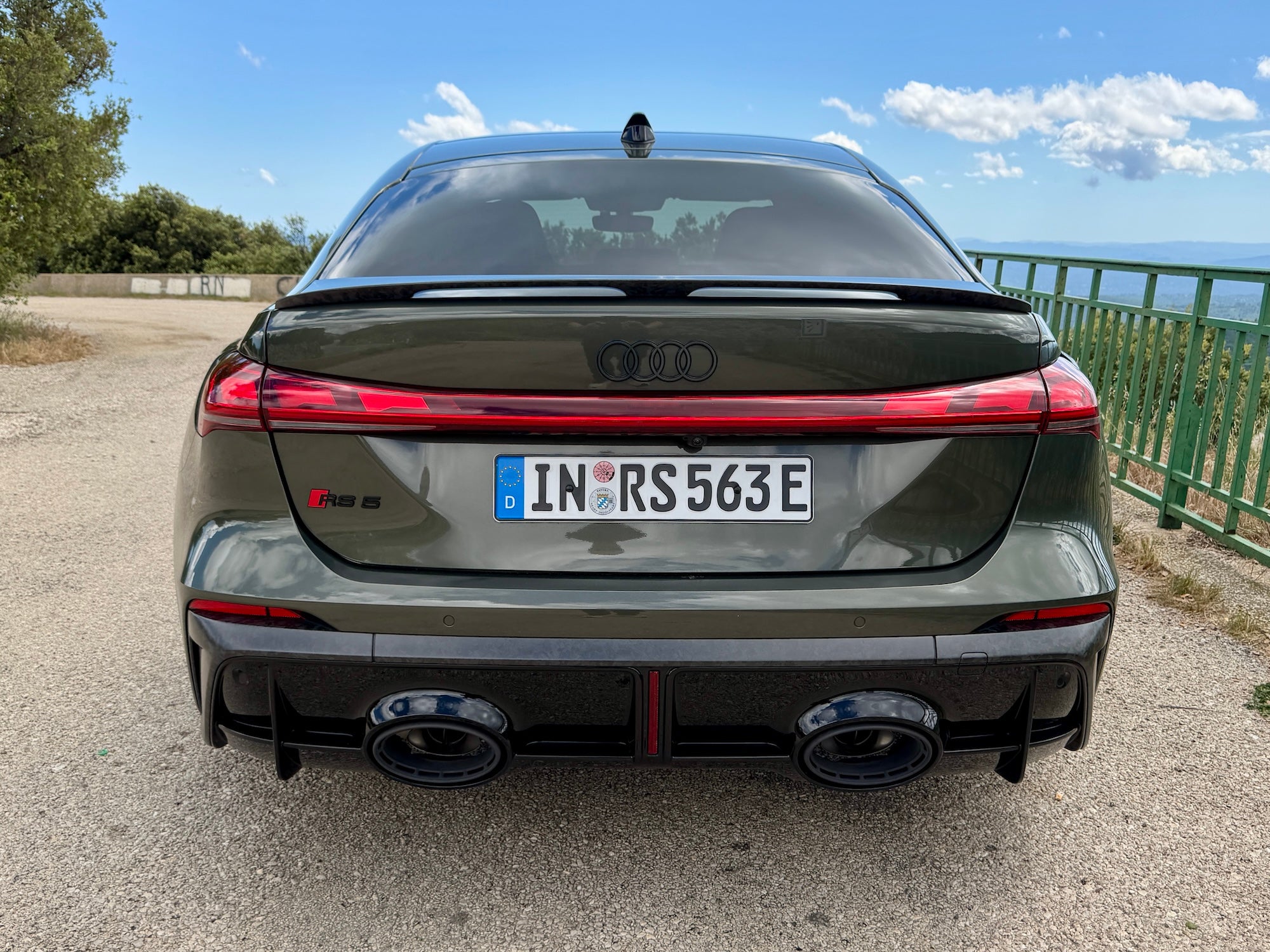
And then there is the noise. The big oval exhaust pipes look brilliant, but the sound is a bit disappointing. It lacks the deep and exhilarating soundtrack that you want from a fast Audi, and inside the car it sounds a bit fake. For something that looks this muscular, I wanted more character
Interior, practicality and boot space
The driving position is excellent. You sit low in the RS 5, almost bath-tub low, with the dashboard and doors rising around you. That gives the car a more serious, sporty feel than you get in the standard A5, and the front seats are superb. They are supportive, comfortable and exactly the sort of seats you want in a fast car that might also be used for long journeys.
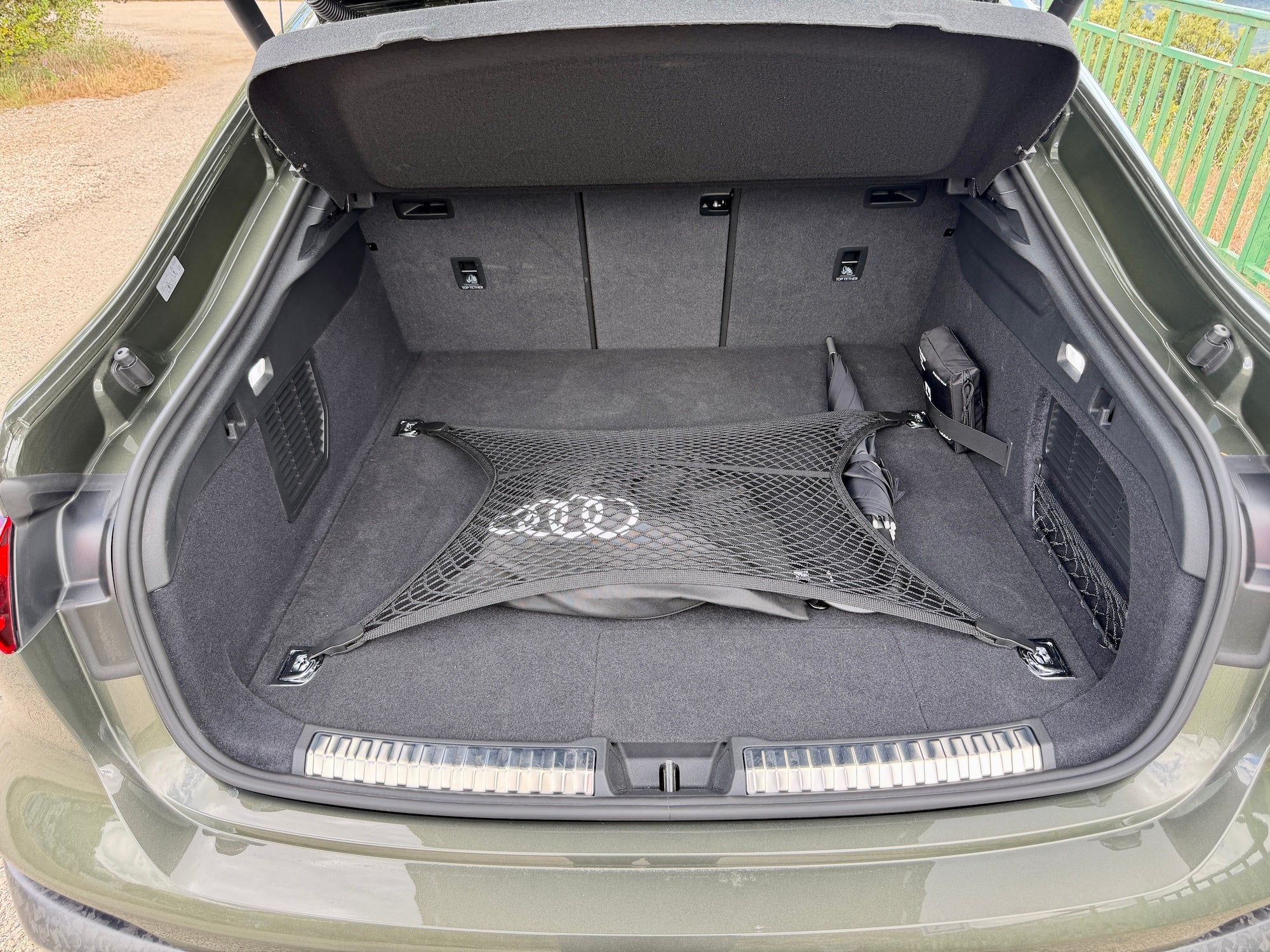
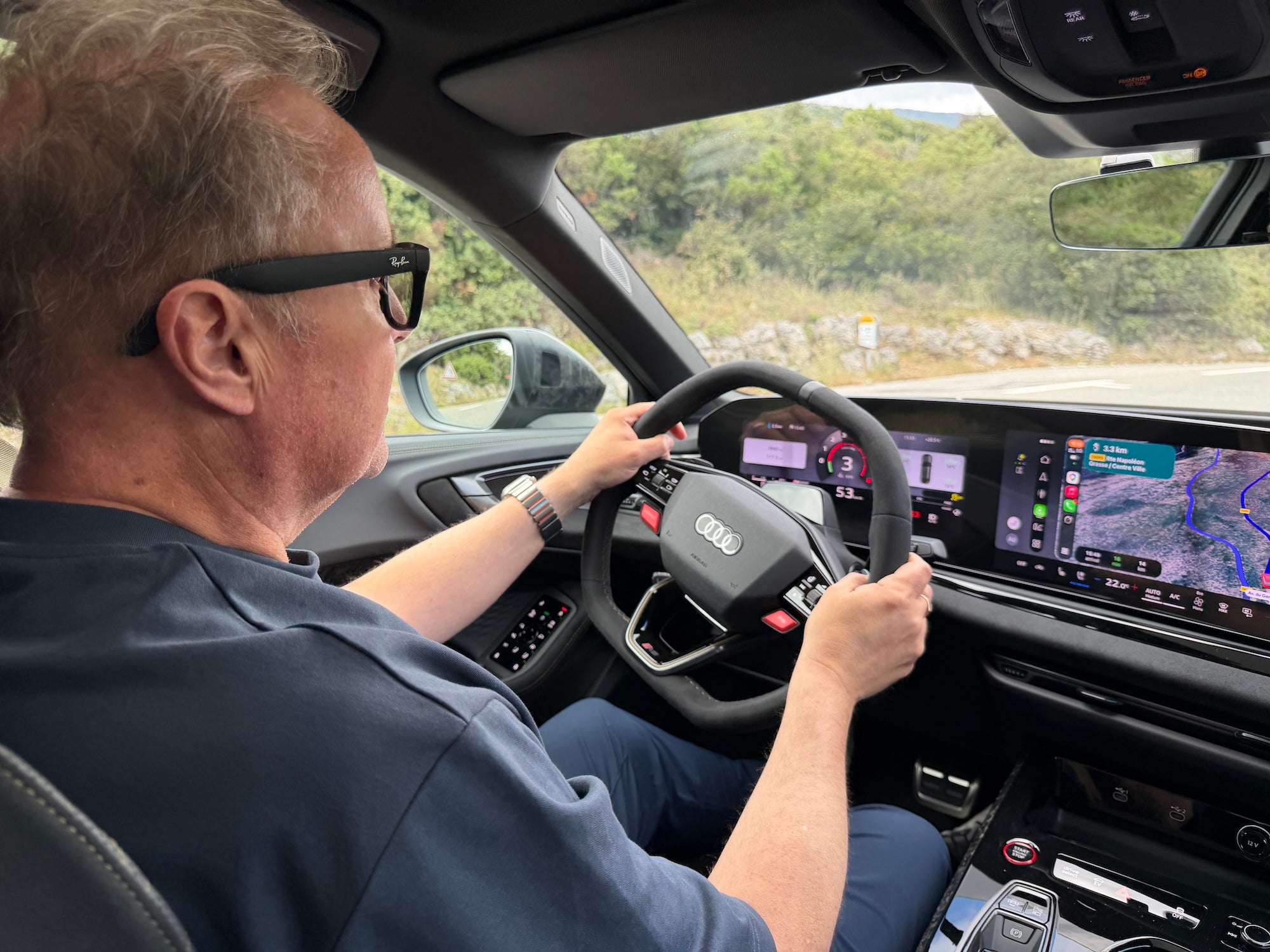
There is decent space up front, too, and the whole cabin feels properly driver-focused. The steering wheel is flat at the top and bottom, there are RS mode controls close to hand and the view out over the swollen front wings is a nice reminder that you are not in an ordinary A5.
Rear space is not quite so generous. Those big RS seats take up room, and adults in the back may feel a bit hemmed in. It is usable, but not as roomy as the outside dimensions might make you think. If you regularly carry taller passengers, it is worth trying the back seats properly before getting too carried away by the lovely front chairs.
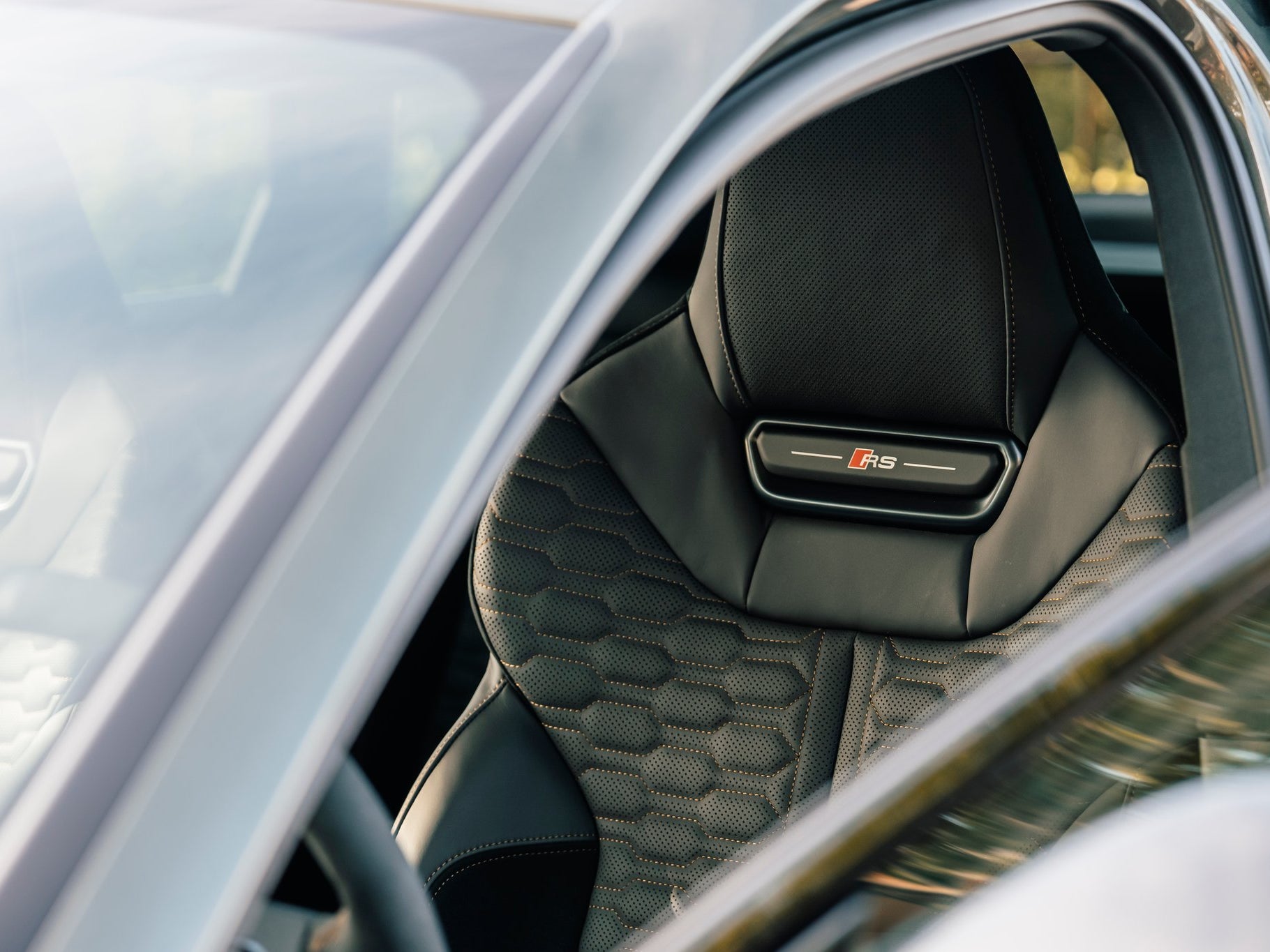
The boot is another area where the plug-in hybrid system takes its toll. The RS 5 saloon has 331 litres with the rear seats up and 1,170 litres with them folded, while the Avant estate has 361 litres rising to 1,302 litres. That sounds useful enough, but it is less than you would expect from a car of this size and shape, and less than you get from non-hybrid versions. The Avant is still the one to have if you want the most practical RS 5, but even that is not quite the load-lugging machine the badge and body shape might suggest.
Interior quality is more mixed than I hoped, too. Audi still does many things very well: the switches feel good, the seats are excellent and the general layout looks expensive at first glance. But the brand’s best interiors used to feel as if every surface had been worried over for weeks. This one does not always have that same depth.
Audi uses suede-effect Dinamica microfibre across parts of the cabin, including on the dash, and it looks good. But press it and there is no soft give underneath. You can tell it is covering a hard, cheap-feeling piece of plastic, and in a car costing close to six figures, that jars. It does not ruin the cabin, but stops it feeling quite as special as it should.
Technology, stereo and infotainment
There is certainly no shortage of technology in the RS 5. In fact, there is probably too much of it.
The main display set-up is Audi’s curved MMI Panorama screen, which combines an 11.9-inch driver display with a 14.5-inch central touchscreen. There is also a 10.9-inch passenger display, a head-up display and plenty of RS-specific information, including G forces, lap times, tyre temperatures, shift lights, hybrid energy flow and all sorts of performance data.
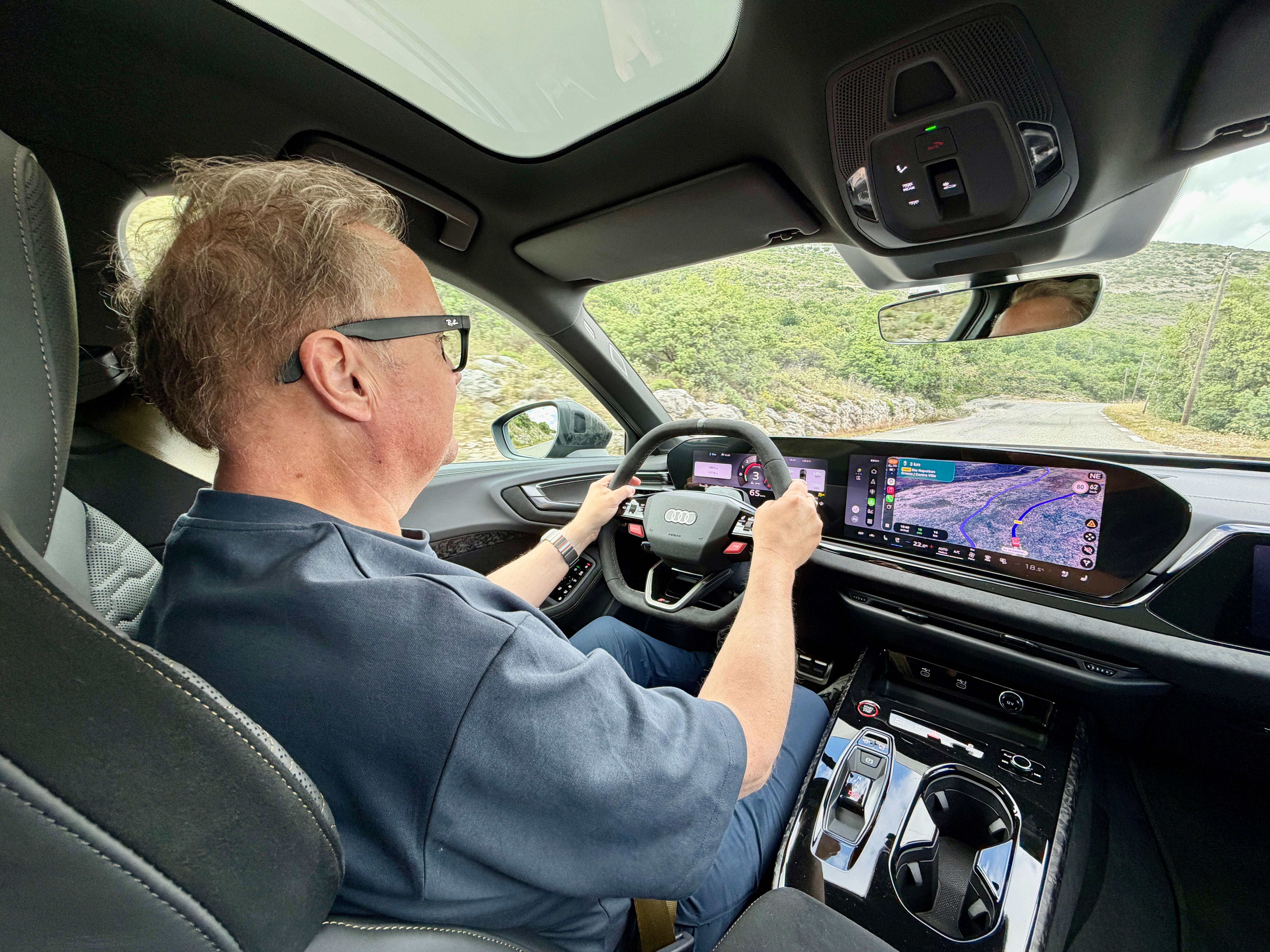
It looks impressive, especially when you first get in. But after a while it starts to feel overstuffed. There are too many menus, too many displays and too many ways to do things. Audi used to be one of the absolute best at making interiors feel logical and beautifully simple. This new system feels like it is trying to do everything at once.
The RS displays are fun if you are on a circuit or in the mood for a proper drive, and the head-up display is useful. But on the road, you sometimes just want to change a setting without being dragged through a digital maze. There is a point where more information stops feeling helpful and starts feeling like clutter, and the RS 5 gets close to that.
That said, there is clever stuff here. The Audi driving experience function can record and analyse driving data, including lap and sector times on track, and the car can show detailed information from the hybrid system and chassis. The passenger screen is handy, too, if your passenger wants to help with navigation or media rather than just sit there watching you prod through menus.
The stereo is strong, with Bang & Olufsen 3D audio as standard and headrest speakers on the top performance Vorsprung model. But overall, the tech feels like Audi has thrown everything at the car and not all of it makes the experience better.
It is not that the RS 5 feels short of equipment. Quite the opposite. It feels packed with it. But the best car tech should make life simpler, not make you feel as if you need half an hour parked at the side of the road to set everything up properly.
Prices and running costs
The Audi RS 5 saloon starts from £89,400, while the RS 5 Avant estate starts from £91,300. Move up to Carbon Black trim and you are looking at £95,485 for the saloon and £97,385 for the Avant. The top performance Vorsprung models cost £107,485 and £109,385 respectively.
That is a lot of money, even for a fast Audi. The RS 5 is quick, beautifully engineered in places and packed with technology, but it is still very expensive. Audi has thrown the kitchen sink at it, plus a very clever rear axle, a plug-in hybrid system, huge performance, masses of grip and all the digital kit it could squeeze into the cabin. Even so, more than £100,000 for a fully loaded Audi RS 5 is a serious amount to ask.
The plug-in hybrid system helps running costs on paper. Audi quotes CO2 emissions from 87g/km for the saloon and 89g/km for the Avant, with official fuel economy of 74.3mpg and 72.4mpg respectively. As ever with a plug-in hybrid, those figures depend hugely on how often you charge it.
Do lots of short trips and use the electric range properly, and the RS 5 could be surprisingly sensible to run. Being able to go for up to 52 miles on electric power alone is a big bonus, especially for commuting, school runs or local trips. Drive it hard on petrol power, as many RS buyers surely will, and the economy will look very different.
That is the split personality of this car. It can be a quiet, electric-running Audi for everyday use, then a 630bhp performance car when you find the right road. The issue is that the extra hardware needed to make that happen also brings some of the compromises: weight, gearbox awkwardness, reduced boot space and a feeling that the car is not always as clean and simple as the best RS models used to be.
The verdict: Audi RS 5
The Audi RS 5 looks fantastic and has a genius rear axle that makes it come alive when pushed hard, but it also feels heavy, pricey and slightly compromised.
Audi RS 5 rivals:
- BMW M3/M3 Touring
- Porsche Panamera
- Mercedes-AMG C 63 S E Performance
FAQs
How long does it take to charge?
The Audi RS 5 charges at up to 11kW on AC power, with Audi quoting a 0-100 per cent charging time of around two-and-a-half hours. There is no DC fast charging, but with a plug-in hybrid battery this size, that should not be a problem for most owners.
How much does it cost – is it worth it?
Prices start from £89,400 for the RS 5 saloon and £91,300 for the Avant, rising to £109,385 for the top performance Vorsprung estate. It is seriously expensive, but Audi has thrown the kitchen sink at it, including plug-in hybrid tech, a clever rear axle, huge performance and loads of kit.
Does Audi replace batteries for free?
The RS 5’s plug-in hybrid battery is covered by Audi’s high-voltage battery warranty of eight years.
Why trust us
Our team of motoring experts have decades of experience driving, reviewing and reporting on the latest EV cars, and our verdicts are reached with every kind of driver in mind. We thoroughly test drive every car we recommend, so you can be sure our verdicts are honest, unbiased and authentic.
With more than 30 years of experience, Steve Fowler is one of the UK’s best-known automative journalists. Steve has interviewed key industry figures, from Tesla’s Elon Musk to Ford’s Jim Farley, and is a judge for both Germany’s and India’s Car of the Year Awards, as well as being a director of World Car of the Year. When it comes to electric vehicles, Steve reviews all the latest models for The Independent as they launch, from Abarth to Zeekr, and he uses his expert knowledge of car buyers' needs to provide a comprehensive verdict.