Something that keeps me wanting to exercise is acquiring and developing fitness skills. I first really experienced how satisfying it is during my years at a CrossFit gym, where my training built towards achieving certain skills or addressing weaknesses.
While not everyone is like me—some people just want to work out occasionally for general fitness or weight management—few are completely immune to the satisfaction of achieving a physical feat that was once beyond them. I’ve seen it firsthand with the people I train.
I’ve recently gone through a really satisfying deep core progression that I wanted to share with Fit&Well readers.
Around 18 months ago I started rehabbing a bulging disc in my lower back, working with a specialist.
For the first six months, my routine focused on foundational moves like the dead bug and high-plank positions.
I progressed to more unstable planks, lifting one hand or foot at a time.
Eventually I moved on to the bear hold—the starting point of the progression I want to tell you about.
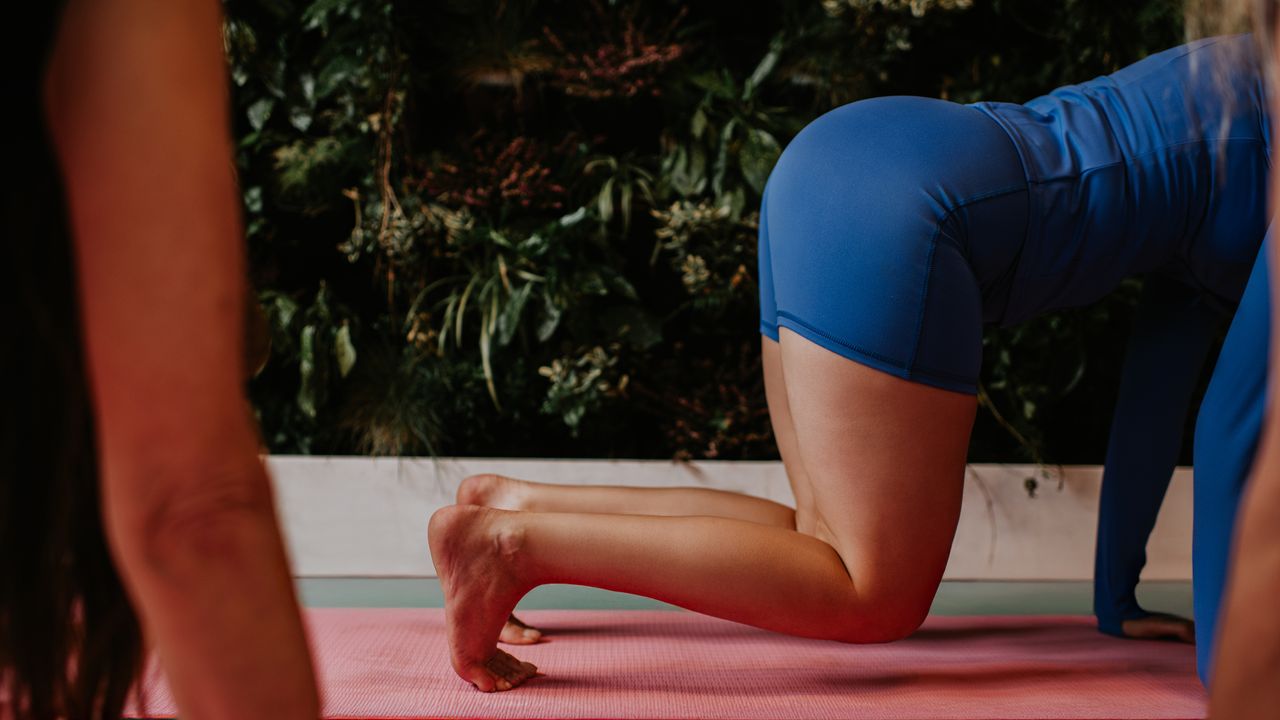
It’s an isometric (static) exercise on your hands and toes, with your knees held a few inches above the floor, holding your hips steady and keeping your back in a neutral position. It’s an exercise that challenges your pelvic stability and core strength on both sides of your body.
The bear hold proved highly effective in rebuilding my deep core muscles, which are essential in stabilizing the spine for my long-term recovery.
After building this foundation, I added bear hold shoulder taps and stuck with them for another few months.
Now I’ve graduated to unilateral instability: single arm/leg and opposite limb reaches.
It took me months of patient work, but the positive effect it’s had on my deep core is undeniable.
Here’s more detail on what I did, in case it inspires you to progress your core work too. Don’t rush through the progressions, master each one before graduating to the next one.
My bear hold progression plan
Start by mastering the bear hold, working on it until you can comfortably maintain stability for three sets of 30 to 40 seconds.
After that, I recommend progressing to bear hold shoulder taps as an intermediate step, which introduces three points of contact and teaches your body to resist rotation.
From there, you can move onto a unilateral variation. These variations force your core to fight rotational forces—so if you lift your left arm, you’ll feel your right obliques fire up to keep your hips level.
The ultimate test is lifting opposite limbs simultaneously, not only requiring strength and hip stability but neural coordination too—that’s synchronized coordination between your brain, nervous system and muscles for smooth, controlled movement.
1. Bear hold
Sets: 2-3 Time: 30-40sec
How to do it:
- Start on your hands and knees with your shoulders over your wrists and hips over your knees.
- Tuck your toes and raise your knees a few inches off the floor.
- Press your palms into the floor activating your upper back, and engage your deep core.
- Hold this position for time, maintaining stable hips and a neutral neck throughout.
2. Bear hold shoulder tap
Sets: 2-3 Reps: 12 each side
How to do it:
- Start on your hands and knees with your shoulders over your wrists and hips over your knees.
- Tuck your toes and raise your knees a few inches off the floor.
- Press your palms into the floor activating your upper back, and engage your deep core.
- Raise your right hand to tap your left shoulder, then return it to the floor.
- Repeat on the other side.
- Continue alternating shoulder taps while maintaining control and stability through your hips and back.
3. Single arm/leg bear hold
Sets: 2-3 Reps: 5-6 each side Hold: 3-5sec
- Start on your hands and knees with your shoulders over your wrists and your hips over your knees.
- Tuck your toes and raise your knees a few inches off the floor.
- Engage your lower core and press your palms into the floor to keep your back and hips stable and level.
- Raise your left arm and extend it in front of you, aiming toward shoulder height.
- Hold briefly, then lower and repeat on the other side.
- Repeat the sequence with your legs, extending each leg behind with control.
Trainer tip: Keep your shoulders directly above your palms—as they tend to slip back—for maximum core and back engagement.
4. Opposite limb bear reach
Sets: 2-3 Reps: 5-6 each side Hold: 2-3sec
- Start on your hands and knees with your shoulders over your wrists and your hips over your knees.
- Tuck your toes and raise your knees a few inches off the floor.
- Engage your lower core and press your palms into the floor to keep your back and hips stable and level.
- Once stable, slowly extend your left arm forward and your right leg back.
- Hold for a few seconds.
- Lower with control and repeat on the other side.
Trainer tips: If your hips start swaying, return to the single arm/leg bear hold.