Get all your news in one place.
100’s of premium titles.
One app.
Start reading
The Guardian - UK
The Guardian - UK
Environment

IUCN red list of threatened species 2009

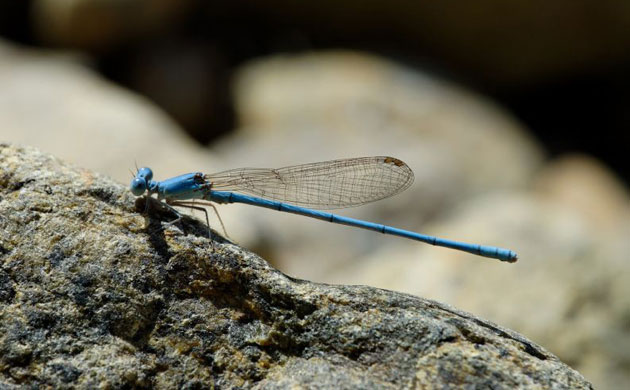
IUCN Red List: Threatened Species 2009 : Arabicnemis caerulea
Powder blue damselfly (Arabicnemis caerulea). A southern Arabian species known from Yemen, north-east Oman and the north of the United Arab Emirates. Drought, water extraction activities by humans (drainage, over-irrigation of crops) and pollution all threaten this species. The increasing human population in the region is likely to have a negative impact on this species as more pressures are placed on freshwater resources over the next ten years Photograph: Robert W. Reimer/UICN
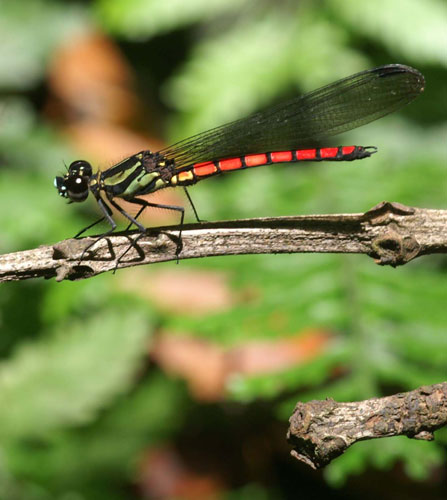
IUCN Red List: Threatened Species 2009 : Giant Jewel
Giant jewel (Chlorocypha centripunctata). Known from very few areas in south-east Nigeria and south-west Cameroon, this species is likely threatened by forest destruction Photograph: Kai Schuette/IUCN
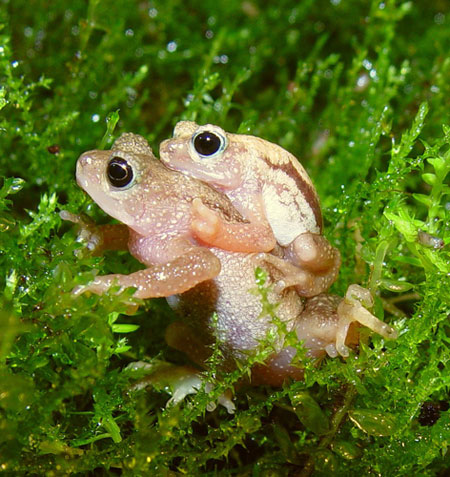
IUCN Red List: Threatened Species 2009 : Kihansi Spray Toad
Kihansi spray toad (Nectophrynoides asperginis). This toad was described in 1999, and in last year’s red list it was assessed as critically endangered, although it was acknowledged that the species may already have disappeared from the wild. This year it is formally declared extinct in the wild. The species was only known from the Kihansi Falls, in the Udzungwa Mountains, Tanzania, where it was formerly abundant, with a population of around 17,000 animals. The population showed natural fluctuations in size: it was at a high in May 1999, dropping to lower numbers in the course of 2001 and 2002, and at a high again in June 2003 when the total population was estimated at 20,989 individuals. However, since then the population has gone into steep decline Photograph: Tim Herman/IUCN
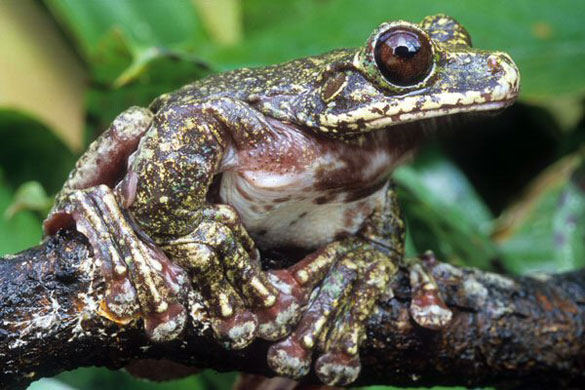
IUCN Red List: Threatened Species 2009 : Rabb’s Fringe-limbed Treefrog
Rabb’s fringe-limbed treefrog (Ecnomiohyla rabborum). This newly described treefrog (described in 2008) enters the red list as critically endangered. It is known only from central Panama, where it occurs in tropical forest canopies. In 2006, the chytrid fungus Batrachochytrium dendrobatidis was reported in the area where this species is known to occur. Only one individual has been heard since the chytrid fungus was detected. There is also some ongoing forest clearing within the species' range for the development of luxury holiday homes, although it has not yet reached critical levels. This species has been one of several collected for captive breeding efforts (a total of five individuals, including one female have been collected from the wild for this). So far, however, attempts at captive breeding have not produced positive results Photograph: Brad Wilson/IUCN
IUCN Red List: Threatened Species 2009 : Panay Monitor Lizard
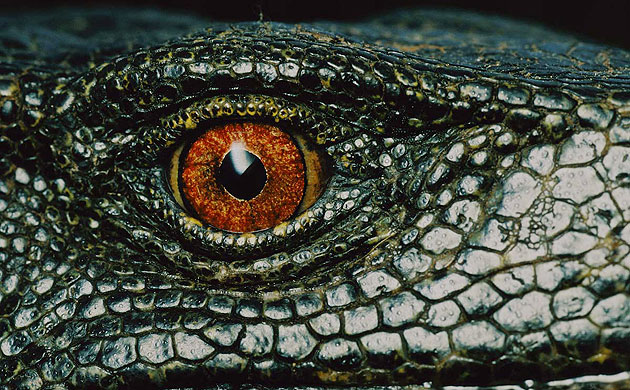
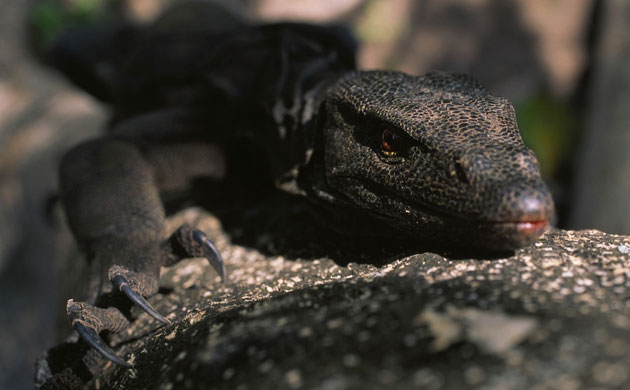
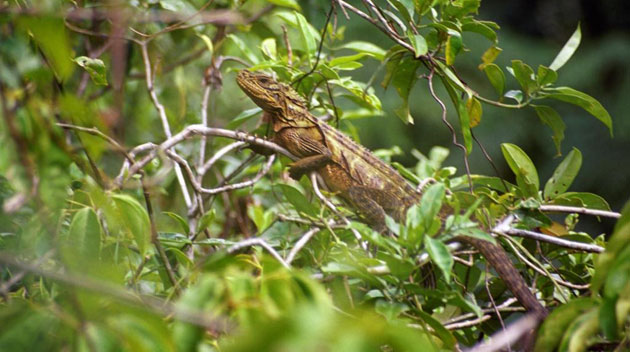
Panay monitor lizard (Varanus mabitang). Endemic to the island of Panay in the Philippines, this rare species occurs in large trees in primary lowland tropical moist forest. The species feeds on fruit. The loss and degradation of lowland forest habitat through conversion of land for agricultural use and logging operations is a threat to this lizard. The species is also hunted by humans for food and overhunting is a serious threat to the remaining population. It enters the red list as endangered Photograph: Tim Laman/NG/IUCN
IUCN Red List: Threatened Species 2009 : Panay Monitor Lizard
Panay monitor lizard Photograph: Tim Laman/NG/IUCN
IUCN Red List: Threatened Species 2009 : Queen of the Andes
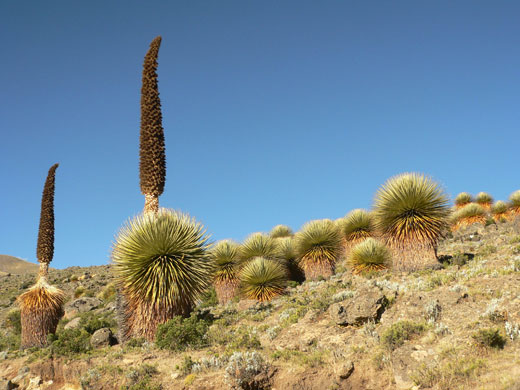
Queen of the Andes (Puya raimondii). This plant occurs in the Andes of Peru and Bolivia. Thanks to a single enormous subpopulation, which could represent most of the world’s population of this plant, the population size may number 800,000 individuals. Bolivia is estimated to have 30,000-35,000 plants. This speices produces seeds only once in about 80 years or more before dying, and although a mature plant will produce 8–12m seeds, inclement montane conditions at the time of dispersal, which may also affect pollinating insects, can result in few if any germinations. Moreover, seeds in less than ideal conditions can begin to lose germinating ability after a few months and are also susceptible to damping-off. Because of these factors, a century-old plant may not reproduce at all and will, botanically, have lived in vain. This risk is exacerbated by global warming whose effects on Peru’s glaciers are well established Photograph: Antonio Lambe/IUCN
IUCN Red List: Red List of Threatened Species:  Gorgeted Puffleg
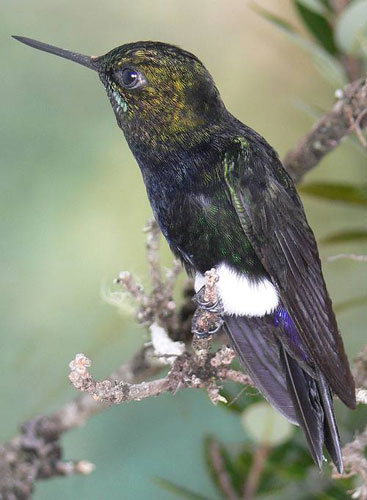
This Gorgeted Puffleg (Eriocnemis isabellae) entered the IUCN Red List in 2009 as Critically Endangered. The species is known from south-west Colombia, where it occurs in a tiny area of the Serran’adel Pinche. The global population is not known but is presumably very small given that the area of suitable habitat available for this species is thought to be less than 10 km2, and it is suspected to be decreasing as elfin forest habitat is converted for agriculture and illegal coca plantations. The primary threat to this bird is the shifting of the agricultural border towards remaining primary forests, causing a loss of vegetation cover, contamination of watersheds and soil degradation. Illegal coca cultivation is a major threat due to the lack of governmental presence, with 8.3 % of potentially suitable habitat reportedly damaged annually by coca cultivation. Photo © Alex Cortes. Photo supplied by BirdLife International. Photograph: Alex Cortes/IUCN
IUCN Red List: Red List of Threatened Species:  Lear's Macaw
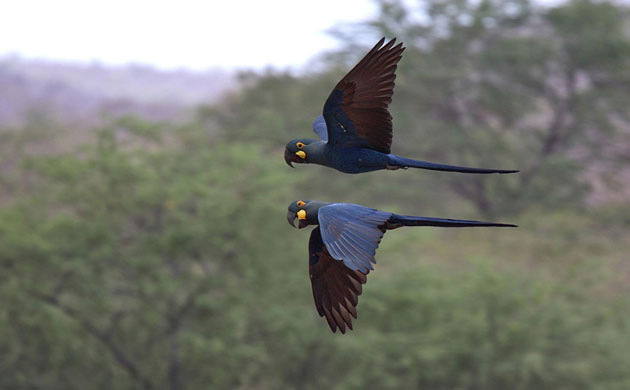
Lear's Macaw (Anodorhynchus leari) is now steadily increasing in numbers due to intensive conservation action and this resulted in the species being downlisted from Critically Endangered to Endangered in 2009. The population size is now considered to have been more than 250 for at least five years. The species had been known for at least 150 years from trade birds before a wild population was found in 1978. Two colonies are known, at Toca Velha and Serra Branca in Brazil. Hunting is still a threat to the species; in 1992-1995, around 20 birds were caught and sold to smugglers and in 1996 at least 19 birds were taken. The macaw's main food source, licurí palm, has been vastly reduced by livestock grazing, and a major fire could now easily eradicate most of the food supply for the population. Birds are occasionally persecuted for foraging on maize crops when palm nuts are scarce. Hunting for food and wildlife products are potential threats. Photograph: Andy and Gill Swash/IUCN/PA
IUCN Red List: Red List of Threatened Species: Bactrian Camel
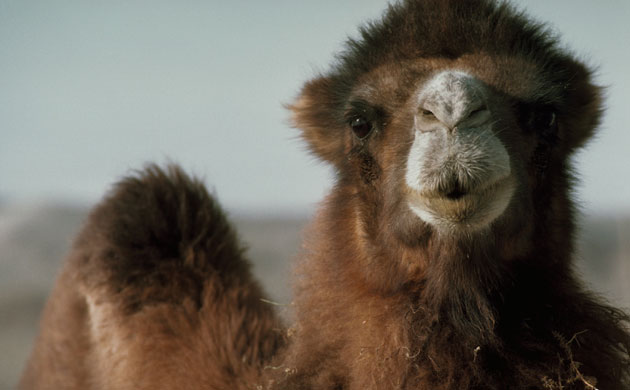
A Bactrian Camel in China. Photograph: Keren Su/Corbis
IUCN Red List: Red List of Threatened Species: Lowland gorilla
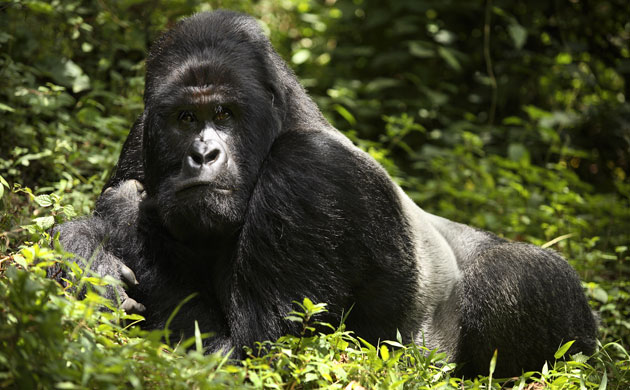
An endangered mountain Silverback Gorilla rests in the forest on September 30, 2006 in the Virunga National Park outside Goma, DRC. Only about 380 of these Gorillas can be found in the DRC. The Dian Fossey Gorilla Fund International runs programs to save the endangered mountain Gorillas. Dian Fossey started the research of these Gorillas in 1967 and many of the Gorillas are monitored by staff on a daily basis. They are endangered because of war, lack of protection, and loss of habitat, poaching and disease. ThereÕs only about 6-700 mountain Gorillas the Virunga mountain range shared by DRC, Rwanda and Uganda. Photograph: Per-Anders Pettersson/Getty Images
IUCN Red List: Red List of Threatened Species: Sidamo Lark
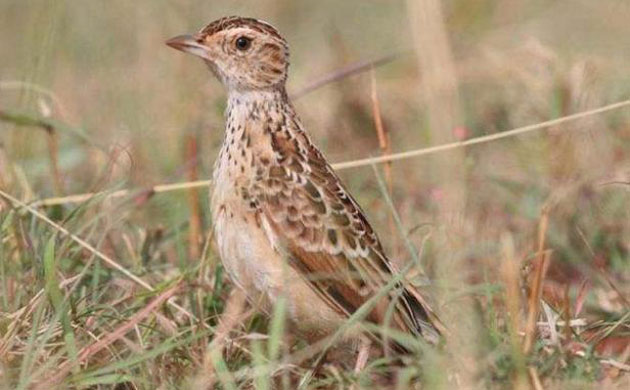
The Sidamo Lark (Heteromirafra sidamoensis) is endemic to Ethiopia, where its grassland habitat is being lost and degraded by human activities. Shrub encroachment into grasslands has probably been exacerbated by the fire suppression that has been enforced in the area since the 1980s. Refugees from drought-stricken and tribal conflict areas are increasing the already dense human population, and nomadic pastoralism is being replaced by permanent cultivation, which is the principal threat to the species. A watering point has been developed in the core of this bird's range, resulting in concentrations of livestock and consequent disturbance, overgrazing and trampling. The degraded grassland leaves no real cover for the species, potentiall leading to high predation of females on the nest, reducing breeding success to zero. Continuing declines in population size and habitat resulted in the species being uplisted to Critically Endangered in 2009. Photograph: Greg Davies/BirdLife International/IUCN/PA
IUCN Red List: Red List of Threatened Species: golden lion tamarin monkeys
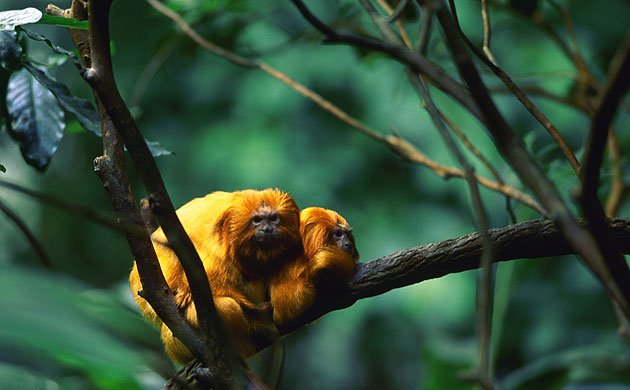
Two golden lion tamarin monkeys (), native to the tropical forests south of Rio de Janeiro, huddle together on the branch of a tree. Photograph: Philip Marazzi/Corbis
IUCN Red List: Red List of Threatened Species: golden lion tamarin monkeys
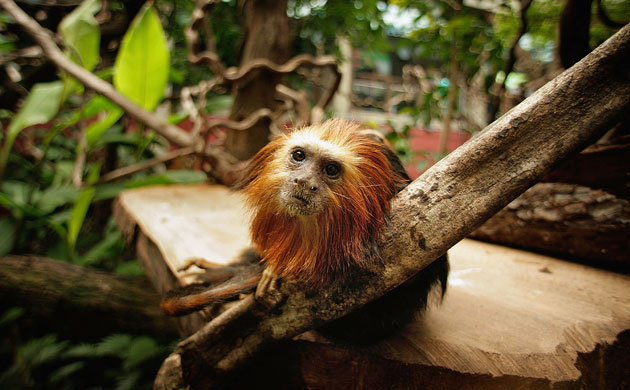
A Golden-headed Lion Tamarin monkey sits in a tree at London Zoo's new exhibit 'The Clore Rainforest Lookout' opens on May 24, 2007 in London. Photograph: Peter Macdiarmid/Getty Images
IUCN Red List: Threatened Species 2009 : Panay Monitor Lizard
Panay monitor lizard (Varanus mabitang). Endemic to the island of Panay in the Philippines, this rare species occurs in large trees in primary lowland tropical moist forest. The species is a highly specialized frugivorous monitor lizard (i.e. it feeds on fruit). The loss and degradation of lowland forest habitat through conversion of land for agricultural use and logging operations is a threat to this lizard. The species is also hunted by humans for food and overhunting is a serious threat to the remaining population. It enters the Red List as Endangered. Photograph: Tim Laman /IUCN
IUCN Red List: Red List of Threatened Species: The Pungu
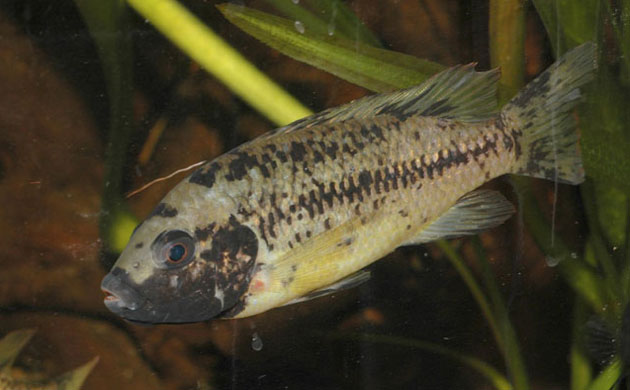
The Pungu (Pungu maclareni) is a Critically Endangered fish endemic to Lake Barombi Mbo, in Cameroon. It lives near the lake bottom in the shallow water of the lake shore and feeds on benthic invertebrates. Females brood their eggs in their mouths. Lake Barombi Mbo is at risk from the effects of introduced crustaceans and fishes, water pollution, and siltation due to local deforestation and water extraction for agriculture and domestic use, all of which pose a threat to the Pungu. Fluctuations in the lake level have impacted fish breeding sites. The Pungu is also collected for the aquariam trade. Photograph: J. Albering/Fishbase
Sign up to read this article
Read news from 100’s of titles, curated specifically for you.
Already a member? Sign in here
Related Stories
Top stories on inkl right now
One subscription that gives you access to news from hundreds of sites
Already a member? Sign in here
Our Picks
Fourteen days free
Download the app
One app. One membership.
100+ trusted global sources.