ITV’s Don’t Blame the Council, which documents Wigan council’s profit-driven response to central government’s deep cuts, promised a refreshing change to perceptions of councils. It did not deliver, at least not to a local government worker like myself.
There is a common view that local government haemorrhages money, and people in receipt of benefits are the bête noire of the nation. Bringing the two together made for perfect, if misleading, television fodder. I work for a local council, and I was unimpressed and unconvinced by the programme’s depictions of council staff wasting time, the lack of respect for the public and unfathomable management-speak. The “Benefits Street” treatment ITV has given councils is unfair and unrepresentative; at best, it’s a contrived hatchet job on a sector trying to survive in the age of austerity.
Don’t Blame the Council, which aired on 23 June, begins with the story of Terry Dunn, who started as a paver with the council and is now director of environmental services. His rise through the ranks is inspirational, but as he starts explaining his garlic bread screensaver (a nod to northern comedian Peter Kay) it starts to feel like rehashed satire of ineffective local government employees.
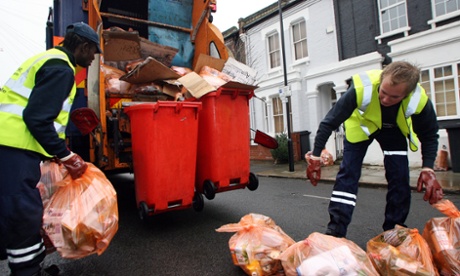
Refuse collection staff bear the brunt of the criticism: portrayed as lazy and feckless, they clock off early, sleep in their vans and play darts during working hours. Public-sector workers, when compared with their private-sector counterparts, are often considered less hardworking , erring on the “life” side of the work-life balance. I do wonder why the stereotype remains when there are tech firms that encourage their employees to play ping pong and Xbox during the working day. Regardless, I know from my own experience that for every indolent council officer, there are thousands more working unpaid overtime to get the job done. Many of my colleagues know the weekend security access codes better than their spouses’ birthdays.
The episode repeatedly plays on cliches of council staff. A council officer covertly follows dog-walkers through parks and, much to their bemusement, gives them raffle tickets if they scoop up their dogs’ poop. This Stasi-esque portrayal of local government workers prying into the lives of ordinary citizens plays on a perception that is not only false but definitely not scaleable in local government. That the grand prize-winning goes awry because the officer cannot find the right address attempts to play into the inept-local-government-bureaucrat stereotype.
To its credit the programme does acknowledge that frontline and back office staff are expected to take on more and different roles and the pressure this puts on them. Drainage investigative officer Tommy Robinson tells us how, under the efficiency agenda, he was slapped with a new job title and told to multi-task despite not having the support he needs around him. A project manager has to take time off work due to the pressure of delivering a lucrative and nearly impossible profit-making contract for the council.
Deliberate editing means the word “profit” is used more often than “people” during the hour-long warts and all expose. It makes for uncomfortable viewing to hear council staff describing the drive for efficient services as “sweating assets” and constantly referring to residents as “customers”. There is nothing wrong with local government having a desire for responsible commercialisation, but it cannot lose sight of the people at the heart of what we do. This risks losing what little good reputation we have with the public – something local government really doesn’t need at the moment.
Talk to us on Twitter via @Guardianpublic and sign up for your free weekly Guardian Public Leaders newsletter with news and analysis sent direct to you every Thursday.