The question of to what extent the BBC should compete directly with ITV has already become integral to discussions with the government on the new royal charter and licence fee settlement. However, the opposite proposition – if and how ITV should shadow the BBC – has arisen since the earliest days of the commercial network and should be part of the chat over the plates of birthday cake marking the passing of 60 years since the launch of Britain’s first commercial broadcasting network.
While debate over the shape and purpose of the BBC is inevitably more frequent and urgent – because political attitudes so directly affect what the Corporation can do and be – it is ITV that has undergone the most marked evolution in the calculation of what the broadcaster exists to do.
In 1955, the founding figures of Granada TV – Sidney Bernstein on the management side and Denis Forman in the editorial division – explicitly envisaged the company as a British Broadcasting Corporation of the more northerly parts of the island: they achieved a “northern powerhouse” long before George Osborne started using the phrase.
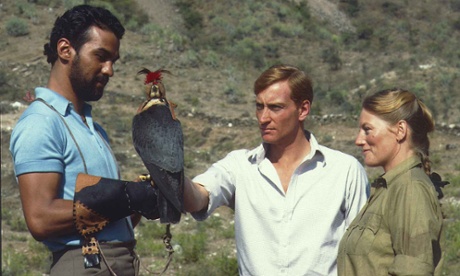
Granada’s World in Action (1963-98) was deliberately an answer to the BBC’s Panorama, and one that, in many weeks and years, got the best of the exchanges. In the early 80s, Granada pointedly created lengthy adaptations of mid-century literary classics – Evelyn Waugh’s Brideshead Revisited and Paul Scott’s The Jewel in the Crown – that were pointedly the sort of thing that viewers expected to see on the BBC. The shock of seeing them on the other side drove executives at Television Centre back to the library.
One aspect of this public service substitution was down to luck: Laurence Olivier, the greatest actor of the day, happened to be the brother-in-law of Granada’s managing director, David Plowright, and so brought his TV King Lear to Manchester and made himself available for Brideshead and a series based on JB Priestley’s Lost Empires.
Most adoptions of the BBC remit, though, resulted from judgement. Crucially, Granada felt free to challenge the British establishment more than its older rival, enabled by royal charter, usually would. Granada was the first to cover a British by-election (Rochdale in 1958), the BBC having decided that reporting on it would fall foul of election-reporting restrictions, and devoted several documentary and then drama-documentary episodes of World in Action to establishing the innocence of the “Birmingham Six”, falsely accused of being IRA bombers. This editorial edge is still to be found in News at Ten, produced by ITN, which remains at least as sharp and smart – and sometimes more so – than its much more lavishly funded and staffed BBC counterparts.
And, while it was the Lancastrian franchise that operated most consciously as a shadow-BBC, several of the other early holders of licences in ITV’s regionally federated structure also had commissioning policies that would not have dismayed the BBC’s founder, Lord Reith.
In 1962, Associated-Rediffusion, the original ITV contractor for London, broadcast, at 9.45pm, a production of Electra by Sophocles, in Greek without subtitles. Jeremy Isaacs, who ran the later London weekday provider Thames, secured 13 national 9pm slots in 1976 for Bill Brand, a detailed and serious examination by Trevor Griffiths of the ideological crises of a new Labour MP. Subsequently, Thames so enraged the Thatcher government with the documentary Death on the Rock, which investigated the killing by the SAS of suspected IRA terrorists in Gibraltar, that the company was punished by having its franchise taken away.
The network that inherited the audience from Thames on Friday nights, London Weekend Television, was extremely adept at Saturday night populism – with its Cilla Black double of Surprise Surprise and Blind Date – but, especially when Michael Grade was controlling its programmes, often went mind-to-mind with the BBC, which has, for example, never produced a BBC1 arts programme that achieved the quality and longevity of Melvyn Bragg’s The South Bank Show, provided by LWT to the ITV network between 1978 and 2010. Grade’s network also made six new plays by Alan Bennett and three by Dennis Potter, in seasons that included a key work by each writer: Bennett’s Me, I’m Afraid of Virginia Woolf and Potter’s Cream in My Coffee.

Although the Bernsteins, Isaacs, Forman and Grade were all men of intelligence and culture – Isaacs and Forman both ran the Royal Opera House – it would be naive to believe that their commitment to highbrow programming was entirely from intellectual conviction.
Strictly regulated – first by the Independent Broadcasting Authority and then the Independent Television Commission – the companies risked losing their franchises if they failed to balance public service with private profits, and were helped by having, for several decades, only one direct rival in BBC1.
The overall Thatcher policy towards broadcasting, though, was to make ITV less like the BBC – by increasing competition and reducing regulation – while making the BBC more like ITV by introducing new judgments of value-for-money and audience reach.
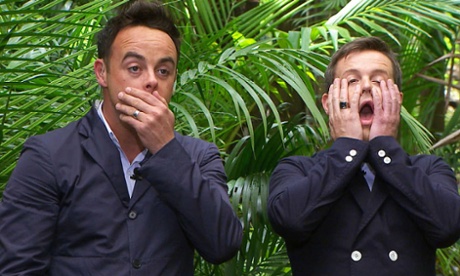
So, while the ghosts of the Bernsteins might be appalled by the domination of the present-day schedules by The X Factor, Britain’s Got Talent and I’m a Celebrity … Get Me Out of Here, the dynamics of ITV have been completely changed by a maxi-channel, deregulated environment. The current ITV Director of Television, Peter Fincham, would be failing in his obligations to both viewers and shareholders if he ran Greek-spoken Sophocles in peak-time or commissioned six plays by Caryl Churchill.
The programming brief has also been alternated by Channel 4 having taken over the role of being a home for the sort of work that the BBC might be too nervous to make: such as the bold drama The Government Inspector, about the late weapons expert Dr David Kelly, and a cheeky recent film about the Germanic background of the Duke of Edinburgh’s family.
ITV’s entertainment-heavy emphasis will look even more sensible if the current culture secretary, John Whittingdale, follows in his settlement with the BBC the hints in his recent speeches and a green paper that the Corporation should largely leave populist formats to the commercial network.
But, regardless of what happens to its competitor, ITV’s first challenge during its seventh decade is to replace the Simon Cowell talent franchises that seem to be coming to the end of their value and to find a Sunday night drama banker in succession to the departing Downton Abbey. Its shorter length fictions have also perhaps become too dependent on bio-dramas: Cilla, The Lost Honour of Christopher Jeffries.
There has also been a cost from the loss of the original structure of ITV as a college of regional forces, which was seen at its best in Granada turning northern subjects, such as Coronation Street, into national and even international brands. With ITV now essentially a single London-run conglomerate, this local input has been diluted.
Although some of ITV’s biggest hits are set outside of London – Downton Abbey in Yorkshire and Broadchurch in Dorset – the shows are produced respectively by London-based independents Carnival Films and Kudos. As a result, they cannot have the depth of regional identification that came when Yorkshire TV made the Yorkshire-set The Beiderbecke Tapes for ITV or Scottish Television produced the Caledonian soap opera Take the High Road.
ITV doesn’t have to negotiate any sort of formal charter with the government or Ofcom but, to ensure a happy 65th and 70th, its bosses should perhaps sit down informally to decide what the network’s role should be once the BBC’s purpose is decided.