
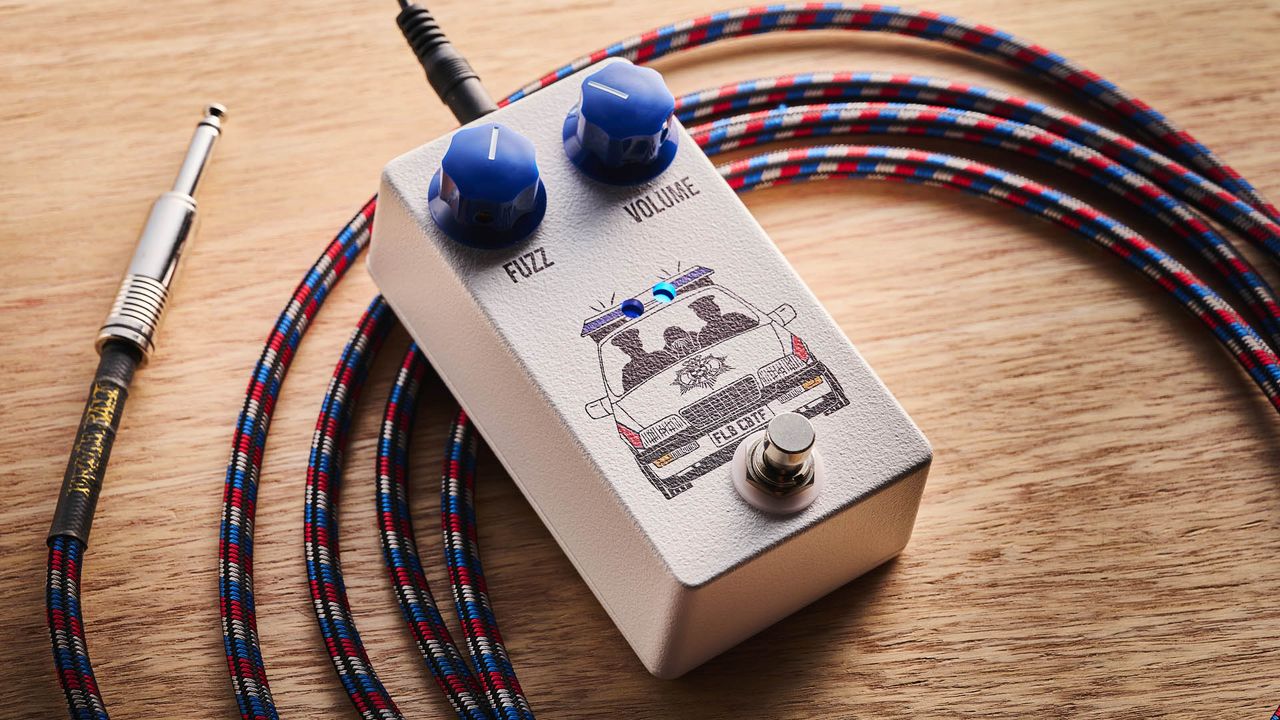
What is it?
Named for the Supergrass song of the same name, the Caught By The Fuzz is a two-knob op-amp fuzz from Andy Ilgunas's Funny Little Boxes – the UK operation that has already given us the delights of the 1991 overdrive, Jerry Cantrell-inspired Dirt and QOTSA-aping Skeleton Key. Each launching at a wallet-friendly £99.
Caught By The Fuzz is supposed to emulate kind of lo-fi distortion sounds used on Supergrass tracks throughout their career. However, if you're not a Supergrass fan, fear not. It's far from a one-trick pony, despite its simple layout.
Specs
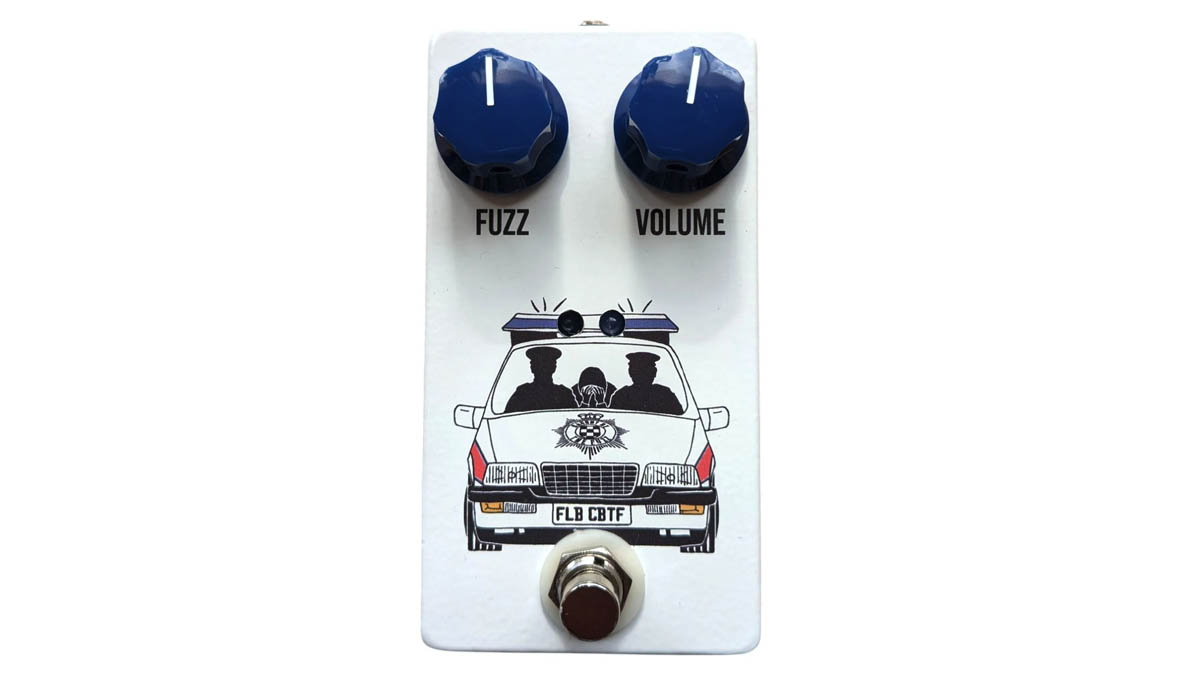
- Price: $132 | £99 | €112
- Type: Fuzz pedal
- Controls: Fuzz, Volume
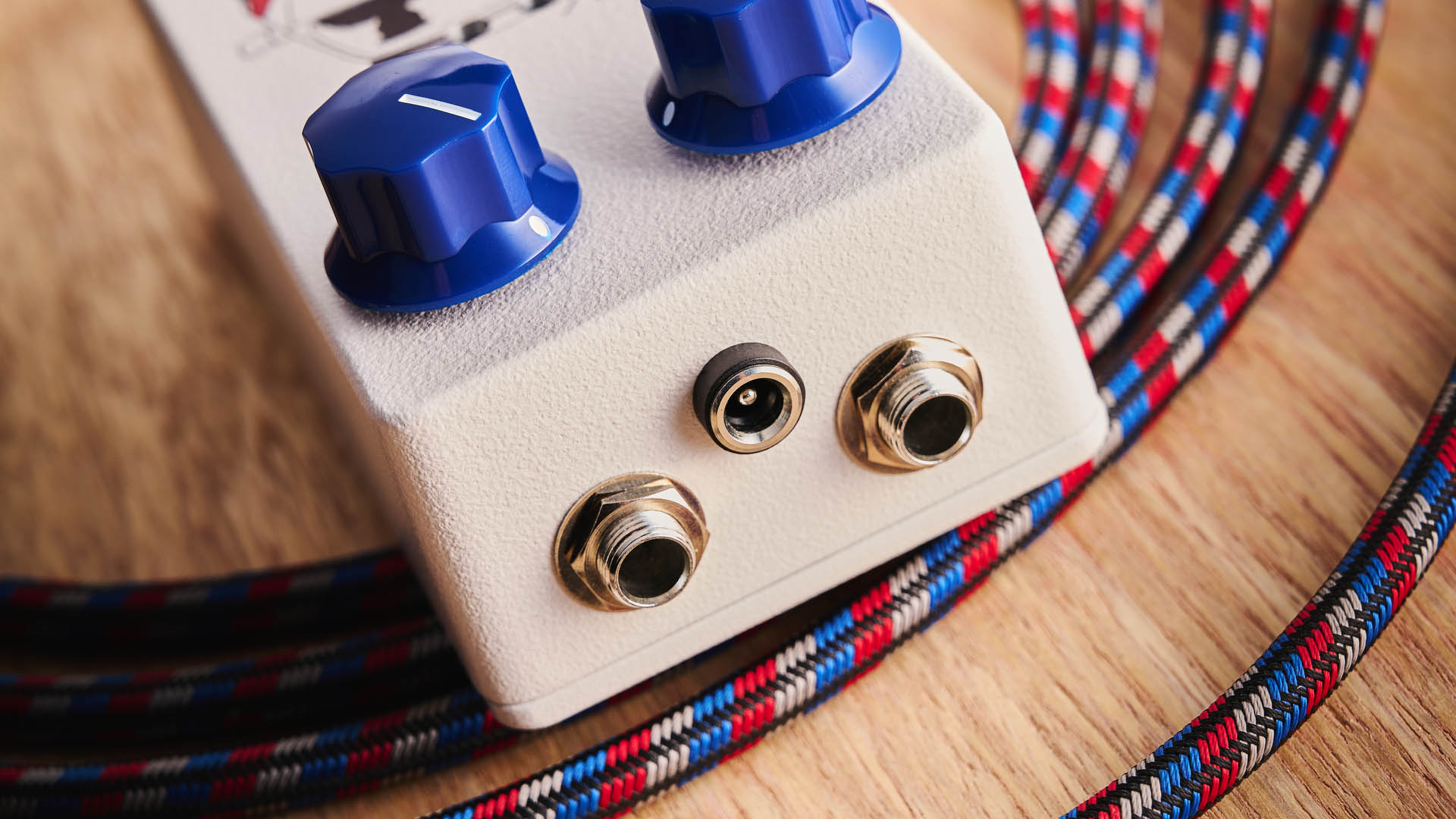
- Connectivity: Input, Output, Power
- Bypass: True
- Power: 9V DC Centre-negative, 11mA
- Dimensions: 65 x 40 x 121 mm
- Weight: 275g
- Contact: Funny Little Boxes
Build quality
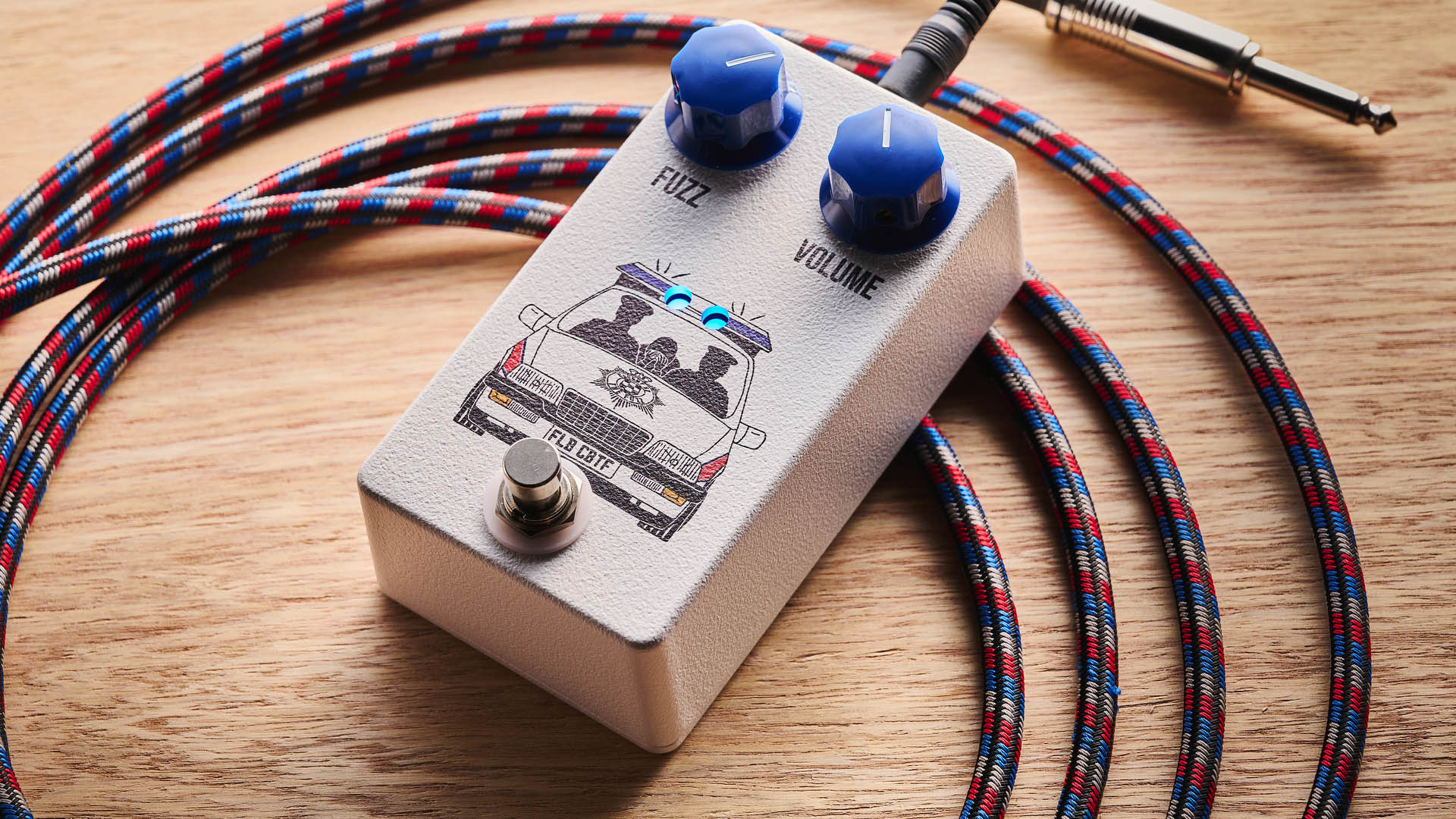
Build quality rating: ★★★★½
For a pedal at this price point that's made in the UK, the Caught By The Fuzz is quite impressive.
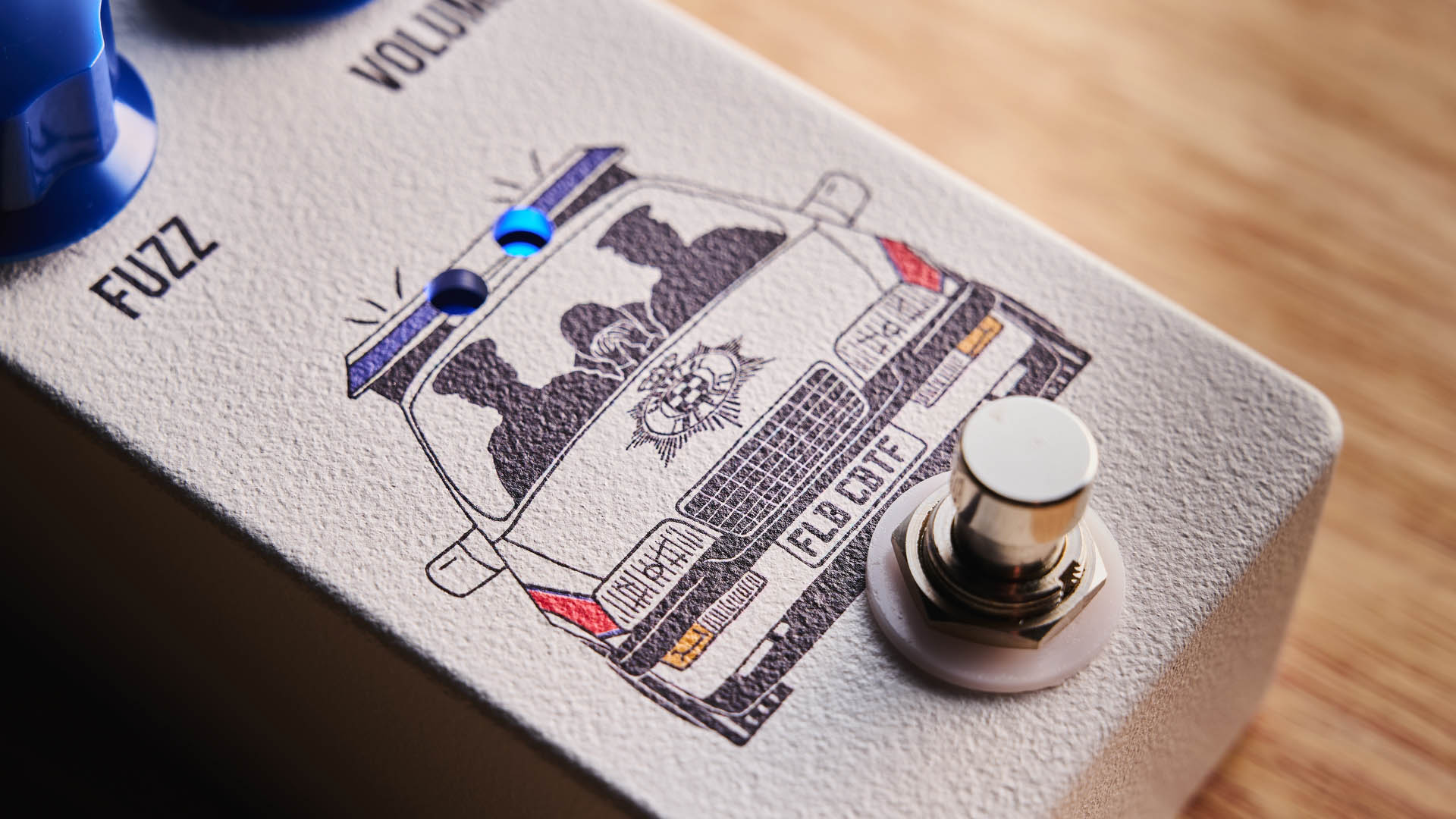
Yes, it's just a two-knob fuzz, but it has great artwork, a solid build and a neat pair of oscillating blue lights.
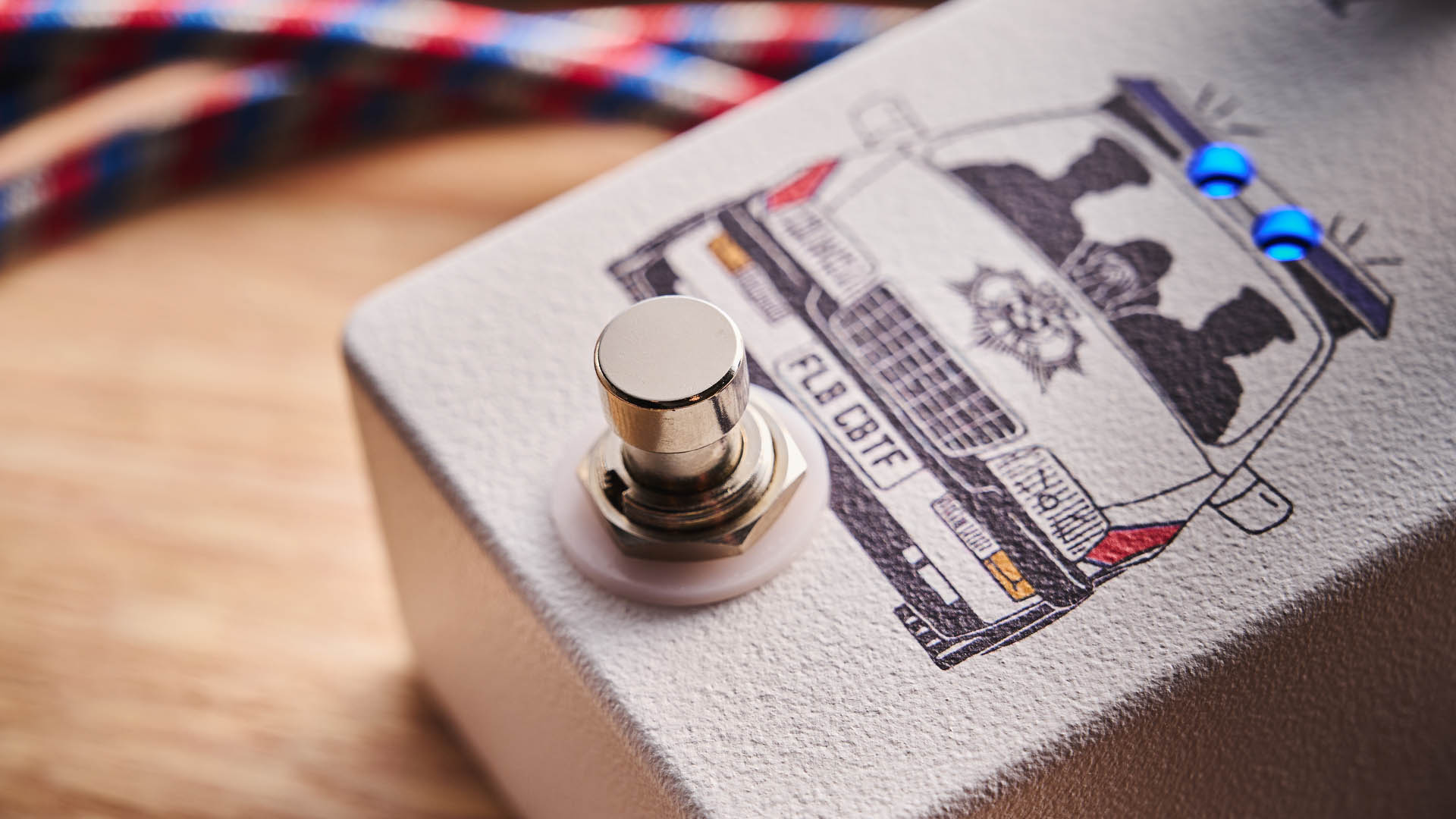
Still, given that the Supergrass track this is named for hardly has the most memorable guitar tone, it's hard to avoid the conclusion that the idea for the lights came first and the name came later.
Popping off the rear plate reveals a tidy, mainly SMD circuit with neat off-board wiring. There's an obligatory in-joke, as well as credits for the art and other design work, which is nice.
Usability
Usability rating: ★★★★★
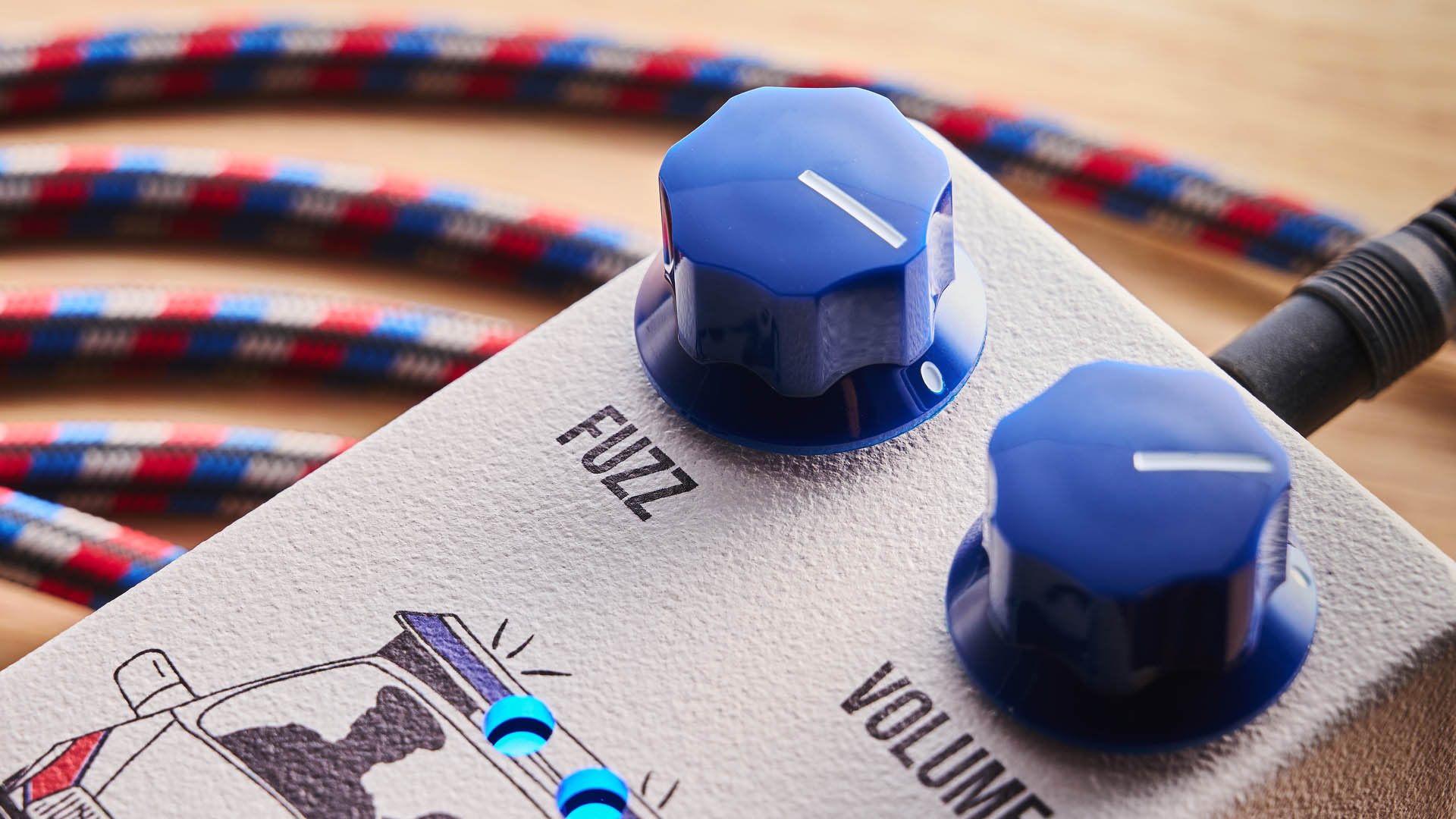
The CBTF pedal is as simple as can be. With two knobs there's not much to go wrong, especially since it has such good voicing. Compared to other two-knob op-amp dirt boxes, it has a wider range of useful sounds and few to no unusable settings.
Sounds
Sounds rating: ★★★★★
As already mentioned, the Supergrass song Caught by the Fuzz is hardly widely regarded as a memorable track in terms of guitar tone. Gaz Coombes has used various overdrives and distortions in his career, including a Marshall Shredmaster and Boss Blues Driver.
At the lowest gain positions the CBTF is a fully clean op-amp boost. Even so, it works best as a dirty boost, adding some pleasant overtones to the clean signal
Neither of these are what the CBTF pedal is. It's a simple op-amp-based unit that has much in common tonally with pedals like the MXR Distortion+ or DOD 250. Generally, fuzz pedals tend to rely on clipping their amplifier (typically a transistor) stage to get their blown-out sound, but some use diodes, like the Big Muff.
Here the voicing is very much that where an op-amp clipping is the dominant drive tone. If I had to guess, there's perhaps also some diode clipping with silicon diodes. With the gain wide open, with multiple pickup types it is almost indistinguishable from a Distortion+, albeit with much higher output. This makes it more interactive with a tube amp, if you have one in your rig.
Pulling the gain all the way back, you eventually get no signal. This is a clue to the circuit's novelty, since that isn't what happens with the Distortion+ family tree. What this means is that at the lowest gain positions the CBTF is a fully clean op-amp boost. Even so, it works best as a dirty boost, adding some pleasant overtones to the clean signal.
Even if you're not a fan of the op-amp clipping found on simple units like this, the CBTF has settings that should make you smile.
Moreover, there's a lot of range where it can be used as a dirty boost, and here it excels when stacked with other pedals. The extra volume gain on tap compared to other similar pedals is a bonus if you're pushing the power tubes of a tube amp.
That said, I can't see this being the only dirt box on a pedalboard. Instead, it's probably best used as a versatile second stage, used flexibly as either a boost or a fuzz as the situation demands.
Verdict
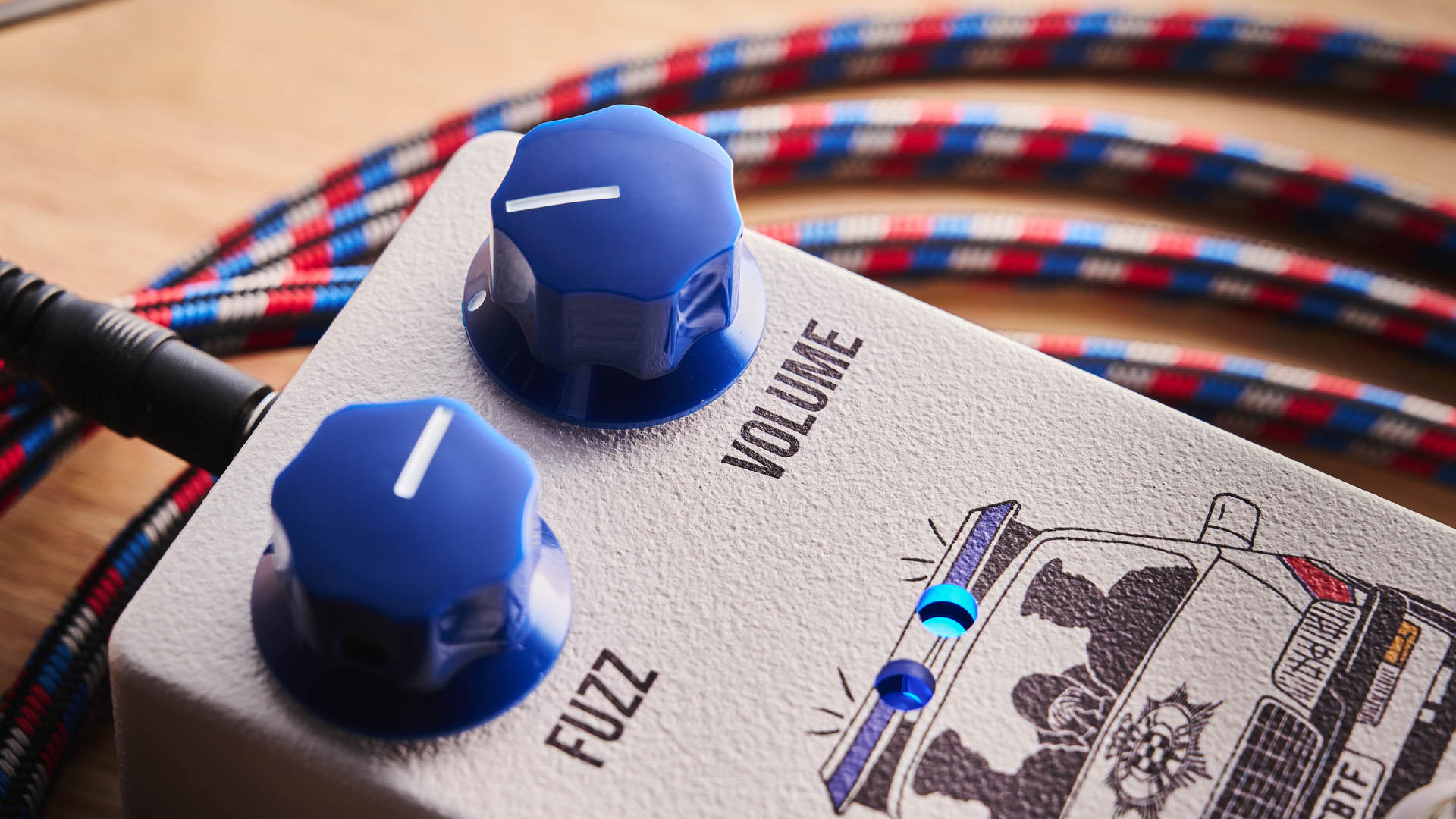
Its simplicity is a selling point
The CBTF is an affordable gain pedal with a wide range of tones on offer. Its simplicity is a selling point. Lacking EQ options, it stacks well with other pedals, and can be used as everything from a boost to a fuzzstortion.
MusicRadar verdict: Given the price point of this pedal, the fun graphics, and the fact that it’s designed and built in the UK, it's hard to find fault. Even just used as a boost pedal for stacking, it could find a place on many pedalboards.
Test |
Results |
Score |
|---|---|---|
Build quality |
Tidy circuit with tidy off-board wiring and you have have got to love any pedal with flashing lights. |
★★★★½ |
Usability |
Two knobs, no EQ, it could not be easier to dial in a sound. |
★★★★★ |
Sounds |
Excellent as a dirty boost, fuzzstortion, as a fuzz, and it stacks well. |
★★★★★ |
Overall |
More versatile than you might think, and a lot cheaper too, it's a good value, fun but serious option. |
★★★★★ |