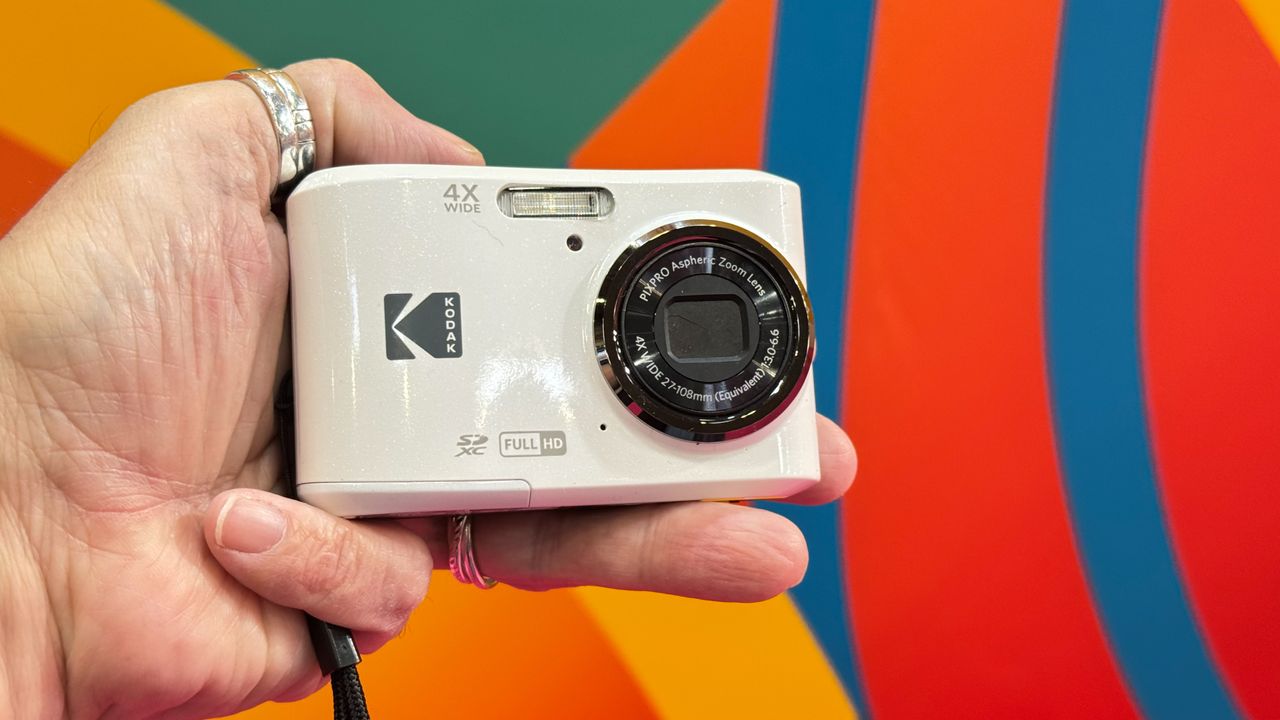
As much fun as the likes of the Camp Snap 2 or Kodak Charmera cameras are, they’re just that; a bit of fun. Slightly more expensive models, including the zoom-equipped Kodak Pixpro FZ series, or the Yashica City compact camera range, are likewise best viewed without too much of a critical eye. They’re fine for what they are: affordably priced snapshots with basic operation and feature sets, the kind of ‘stack them high, sell them cheap’ digital compacts we were awash with 15 years ago, before the smartphone boom persuaded most of the major players to simply stop making compacts.
For a while until relatively recently, if you wanted a new standalone camera to use instead of your smartphone, it was still quite a jump to the likes of the Ricoh GR IV series, the Canon PowerShot G7 X Mark III or an interchangeable mirrorless camera, which, it felt to me, were starting to get prohibitively expensive. And ever further from the reach of the simply curious, but non-expert photographer.
But the Kodak brand, or rather its JK Imaging Ltd global licensee, kept point-and-shoot cameras going at a time when, as it seemed to most other brands and consumers, compact cameras were dead. It slowly carved its own niche when most were looking the other way. Its offerings may not be five-star critical recommendations – far from it – and yet it now regularly tops the bestsellers’ list.
The above being said, I’ve still never felt the need to ‘hold my nose’ when using a pocket money-priced ‘retro’ compact. Because the very reason such snapshot cameras appealed in the early 2000s to early digital photography adopters is still the case today; albeit to a greatly reduced audience than in their mid 2000s to 2010s heyday.
A point-and-shoot camera was what you once owned before moving on to a bridge camera, and then on to a DSLR. And next, when we were told the future was mirrorless, we swapped over to a smaller-format interchangeable lens cameras.
My point is that basic snappers were – and, I believe, will again prove to be – gateway drugs to more serious photographic gear. And, hopefully, the photographers of the future with it.
It’s still quite a jump from phone snapping to interchangeable lens photography. So don’t cut out, or sneer at, whatever bridges the gap, even when that camera is a basic point-and-shooter.
Check out our guide to the best point-and-shoot cameras