
The Belgian Grand Prix brought yet another disappointment for Aston Martin in a season that has already been miserable for the Formula 1 team. Lance Stroll failed to see the chequered flag after suffering a clutch failure and two-time champion Fernando Alonso finished last – humiliated, two laps down, and unable to challenge even Valtteri Bottas in Cadillac's brand-new works team.
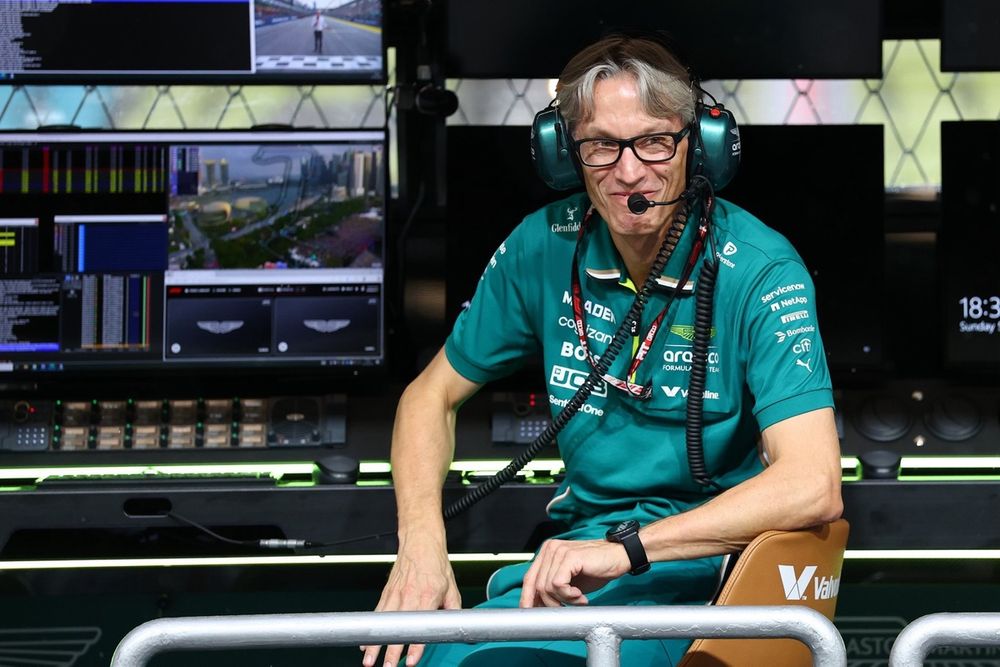
On Sunday evening, Aston Martin trackside chief Mike Krack held his customary media debrief after the race. The atmosphere was subdued – as it has so often been this year. Yet there was also a sense of optimism, as the team is on the cusp of rolling out its first major upgrades of the year – a B-spec car that features an aerodynamic and chassis overhaul ahead of an updated Honda power unit due after F1’s summer break.
"We will have to see. For us, [what's] most important is that we go back racing," said the Luxembourg engineer, because it has been a while since Aston Martin was truly racing against genuine rivals. Stroll has had a point-less season so far this year, and Alonso narrowly picked up a point for 10th place in Monaco after a slew of penalties were applied.
"We have not [been racing] over the last events,” Krack added. “It was very difficult to keep up with the midfield. And whatever it's going to bring, I think going racing is the most important for everyone."
That optimism is based on the comprehensive upgrade package developed under technical mastermind Adrian Newey, which is due to make its debut at this weekend's Hungarian Grand Prix. Paddock rumours suggest the changes could be worth as much as two seconds per lap. However, the gap is so severe that even if that estimate proves accurate, Alonso would still have qualified second-last at Spa – exactly where he ended up with the outgoing chassis.
Describing Aston Martin's Hungary package as merely an "upgrade" may actually undersell the scale of the changes. The British team had to submit a revised chassis for another FIA crash test due to the wide-reaching nature of its changes.
Asked whether that meant completely new monocoques had been built, Krack replied: "Yeah, I think it's quite extensive. As he was saying, the main things are obviously aerodynamic and weight. And to achieve that, you have to do a lot of things. And everything has been achieved that we wanted."
He added: "The period that we had now with no upgrades for very long is now over. So, it looks good for the future. And we are just all looking forward to Budapest and see what we have."
It will be a pivotal weekend in more ways than one: for team owner Lawrence Stroll, who is desperate for confirmation that assembling a high-profile team around Newey was not a costly miscalculation, and for Newey himself, whose reputation will inevitably be judged on the performance of this package.
Finally, it will be key for Alonso, who will soon turn 45 and must eventually decide how much longer he wants to put himself through Formula 1.
One relationship that has noticeably improved in recent weeks is the one between Aston Martin and engine partner Honda. After the disastrous start to the season, Aston Martin publicly aired its frustration over the team's lack of competitiveness, directing much of the criticism at its new partner.
But now, however, there appears to be a growing realisation that Honda cannot be blamed for everything. Nor is there much to gain from tearing the partnership apart in the media. After all, Honda's Formula 1 history shows that while success has sometimes taken longer than expected, it has almost always arrived in the end.