What is it?
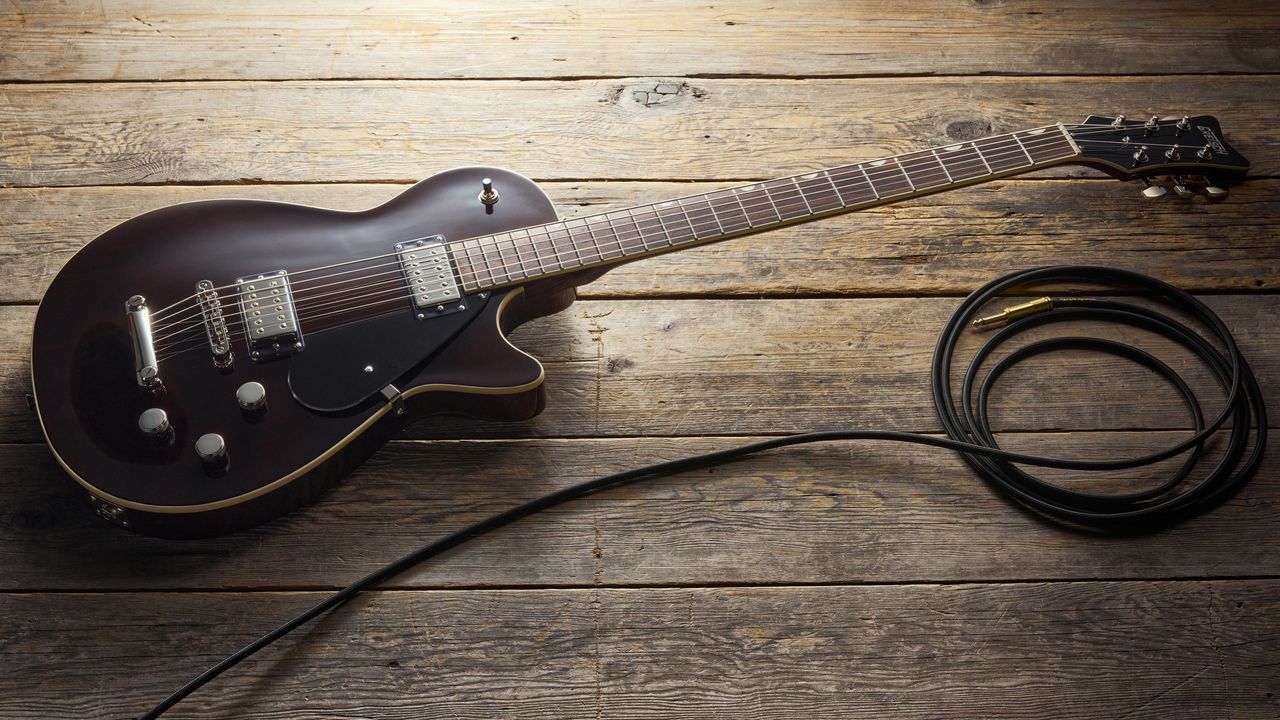
The Gretsch Electromatic Jet Baritone (not to be confused with the G5260 Electromatic Jet Baritone) is an ultra-long scale baritone guitar, coming in at a positively humongous 29.75-inch scale length. Despite being designed for surf and rockabilly, the Gretsch baritone has been effectively hijacked by heavy guitar players, largely thanks to Eric Bickerstaffe of shoegaze-metal chameleons Loathe.
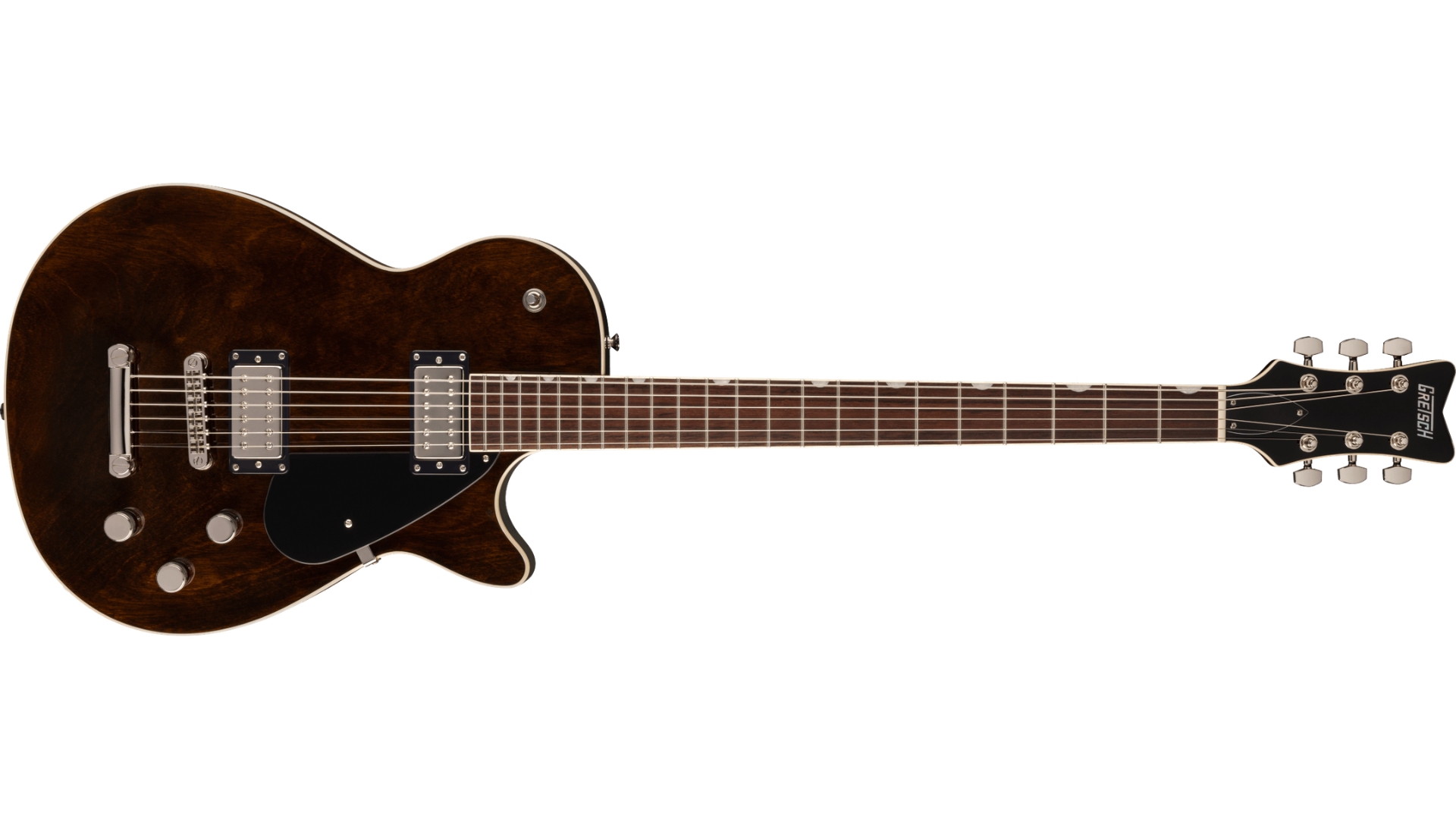
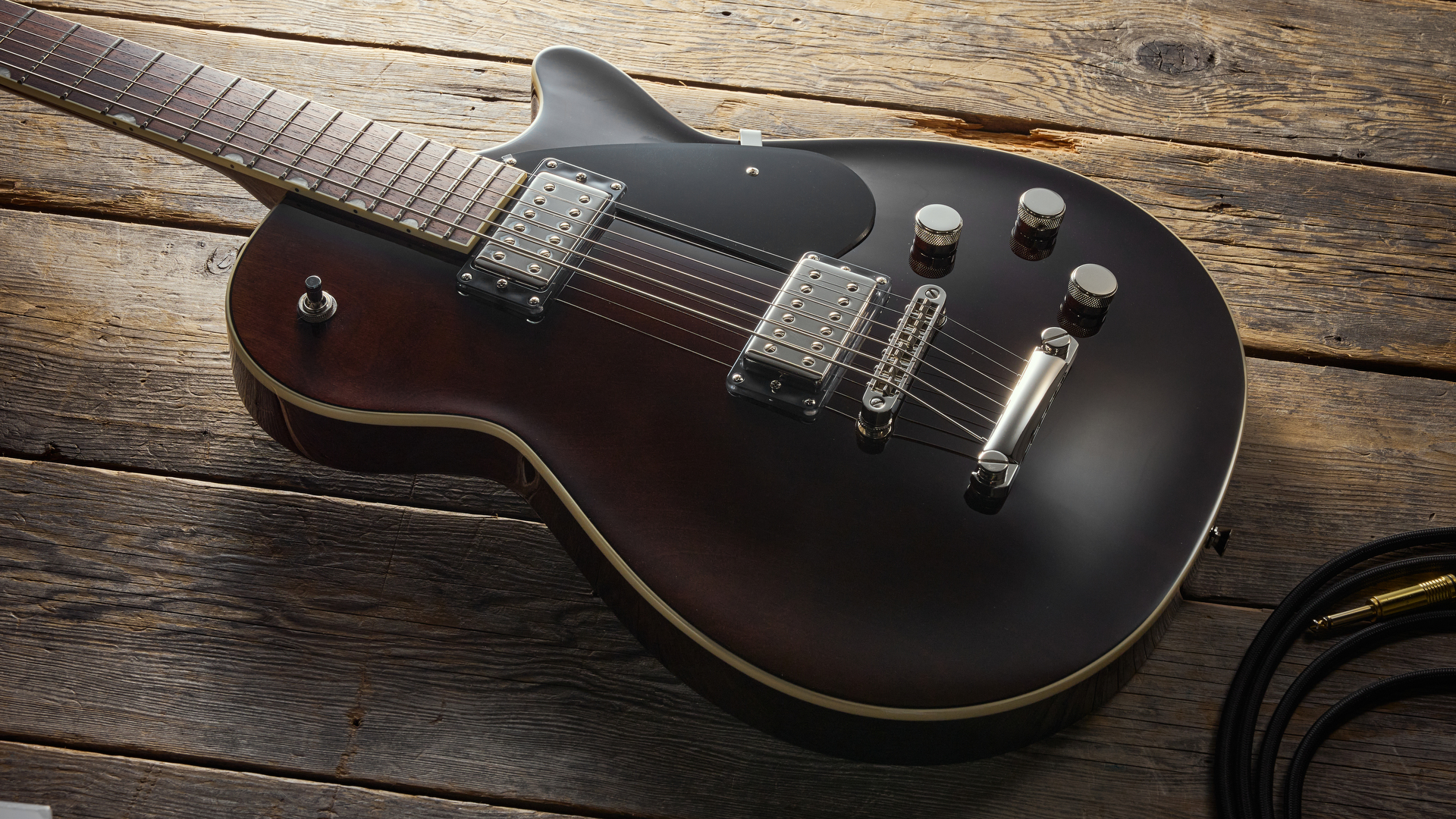
Today’s review model differs in quite a few ways from the guitar that Bickerstaffe tunes an octave down to E with a .105 gauge guitar string, though. The solid mahogany of the G5260 body has been replaced with a chambered mahogany and a carved maple top. It’s more sculpted for comfort and has a rounded neck heel on the treble end for more comfort in the upper fret registers.
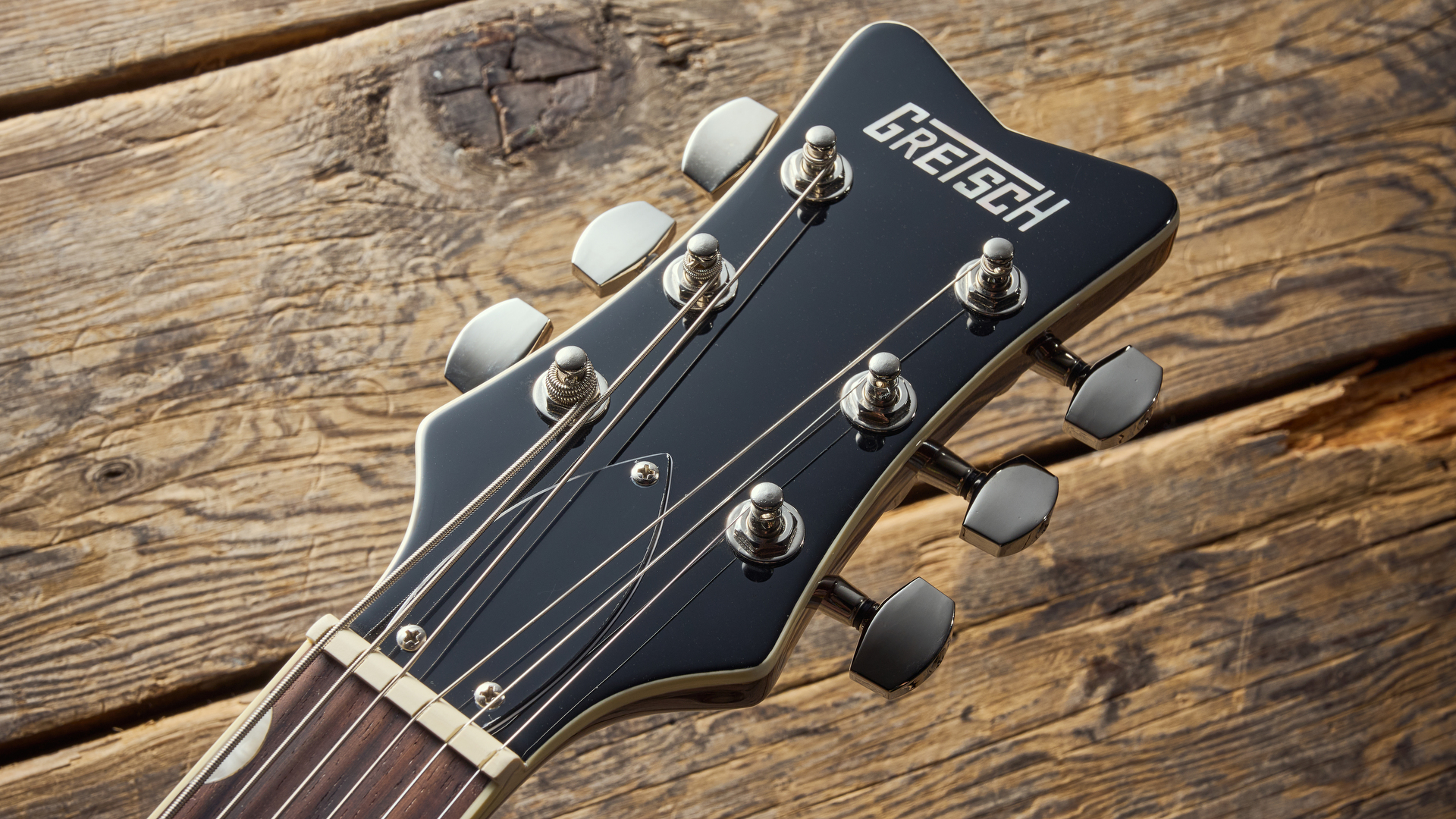
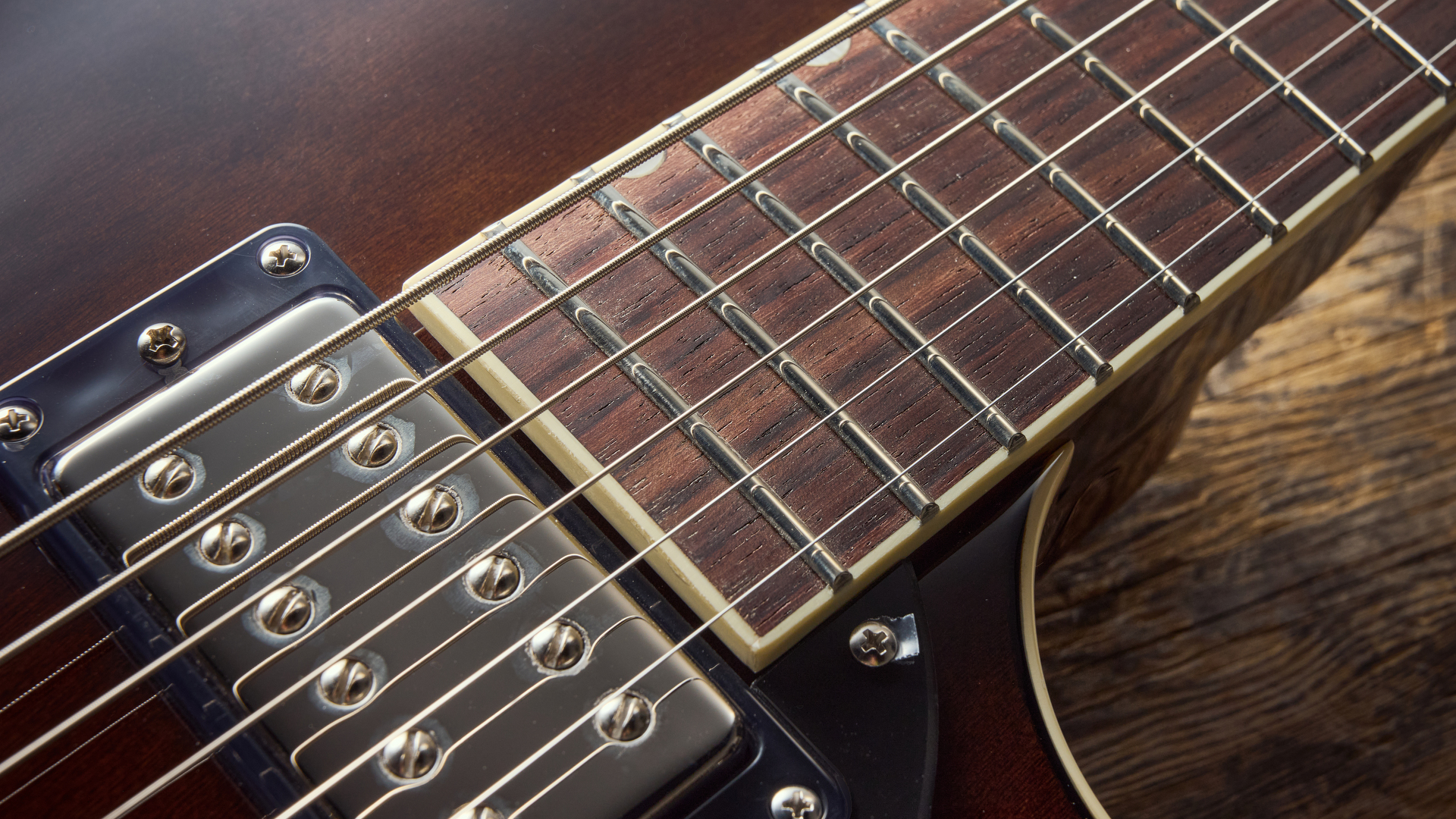
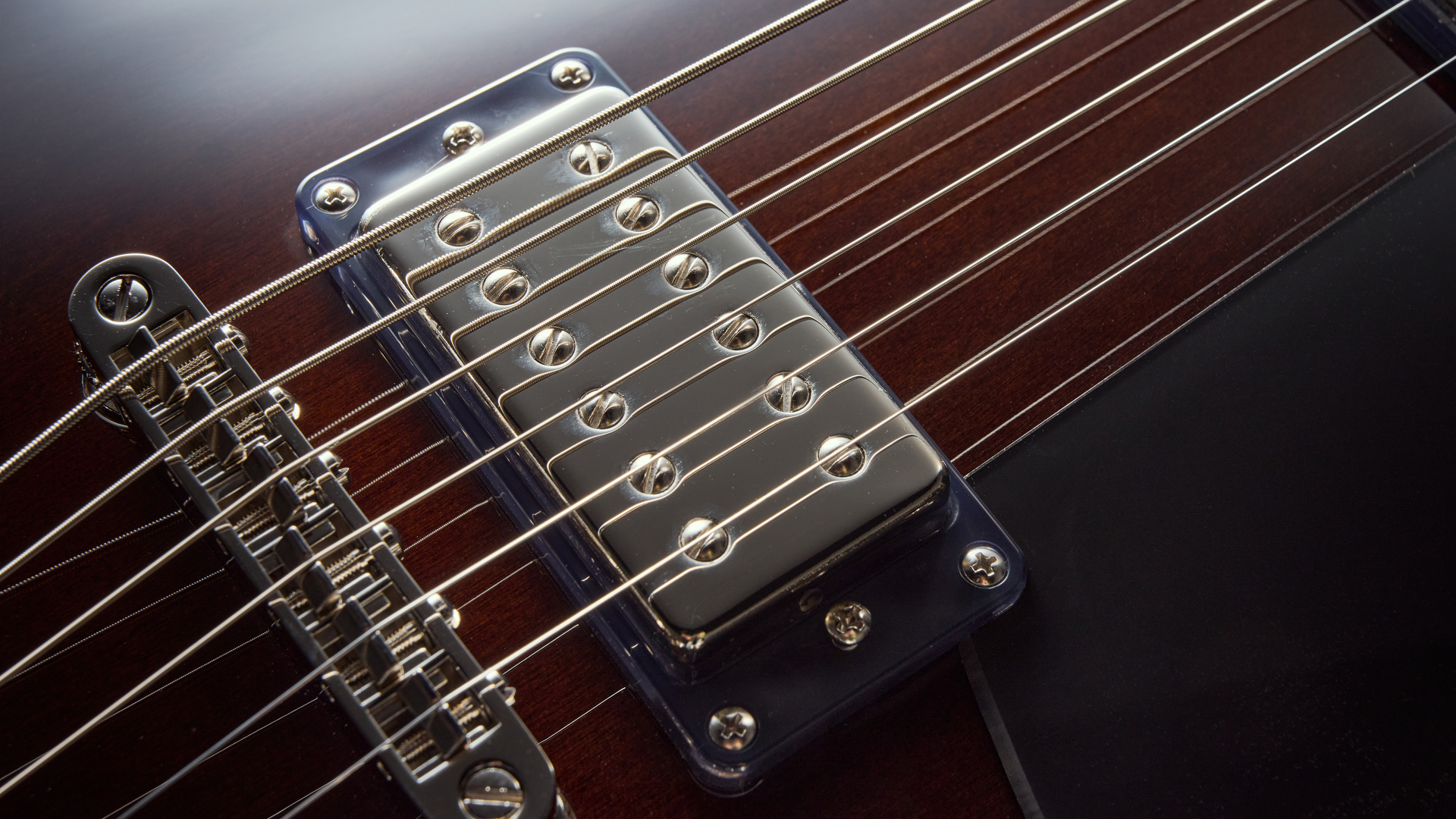
The mini humbuckers of the G5260 are also gone, replaced with dual PureVolt Twin 6 humbuckers, which both feature 12 individual adjustable pole pieces. The electronics have also been upgraded, with the addition of a treble bleed circuit on the volume knob and a push-pull control for coil splitting.
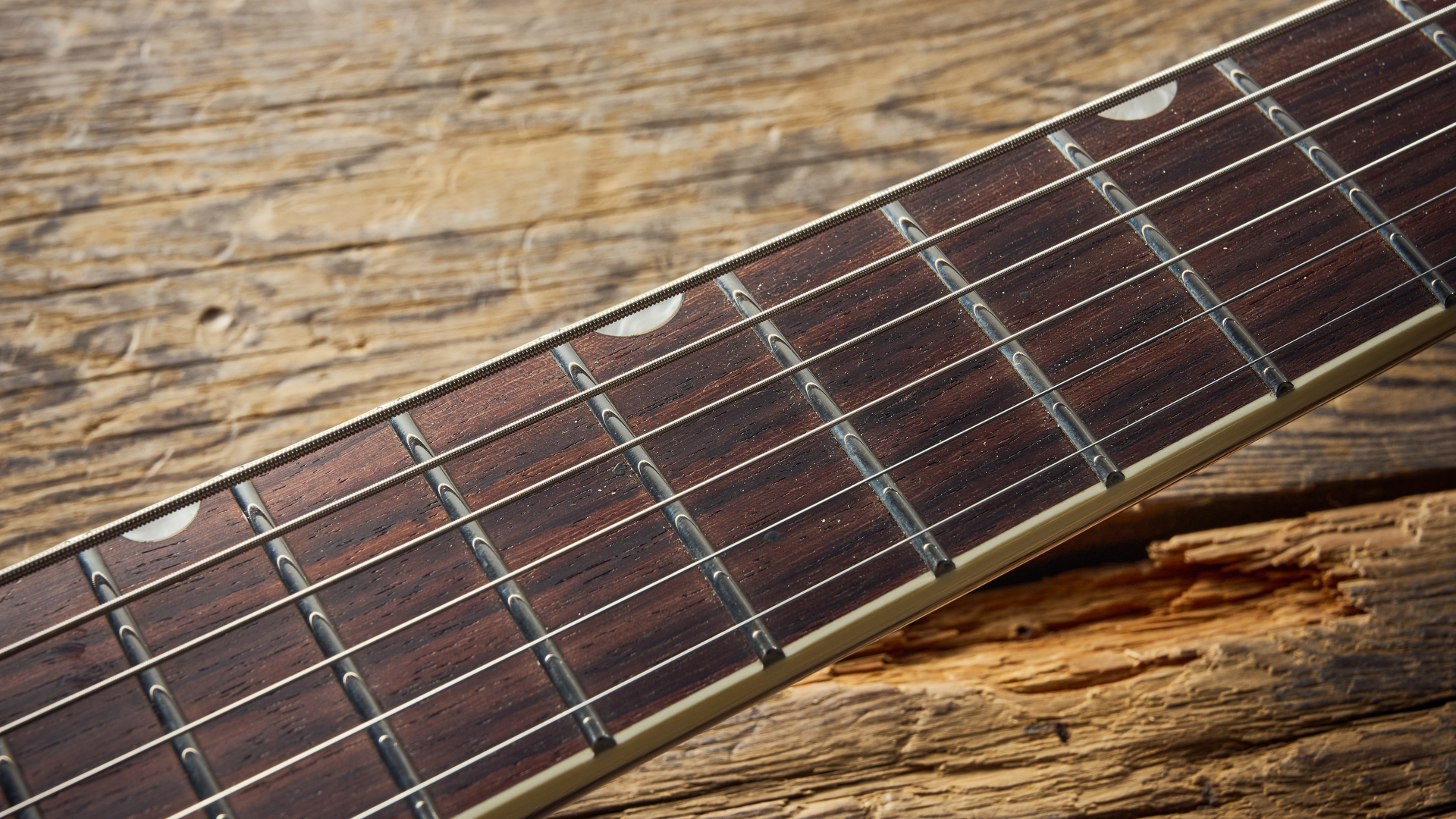
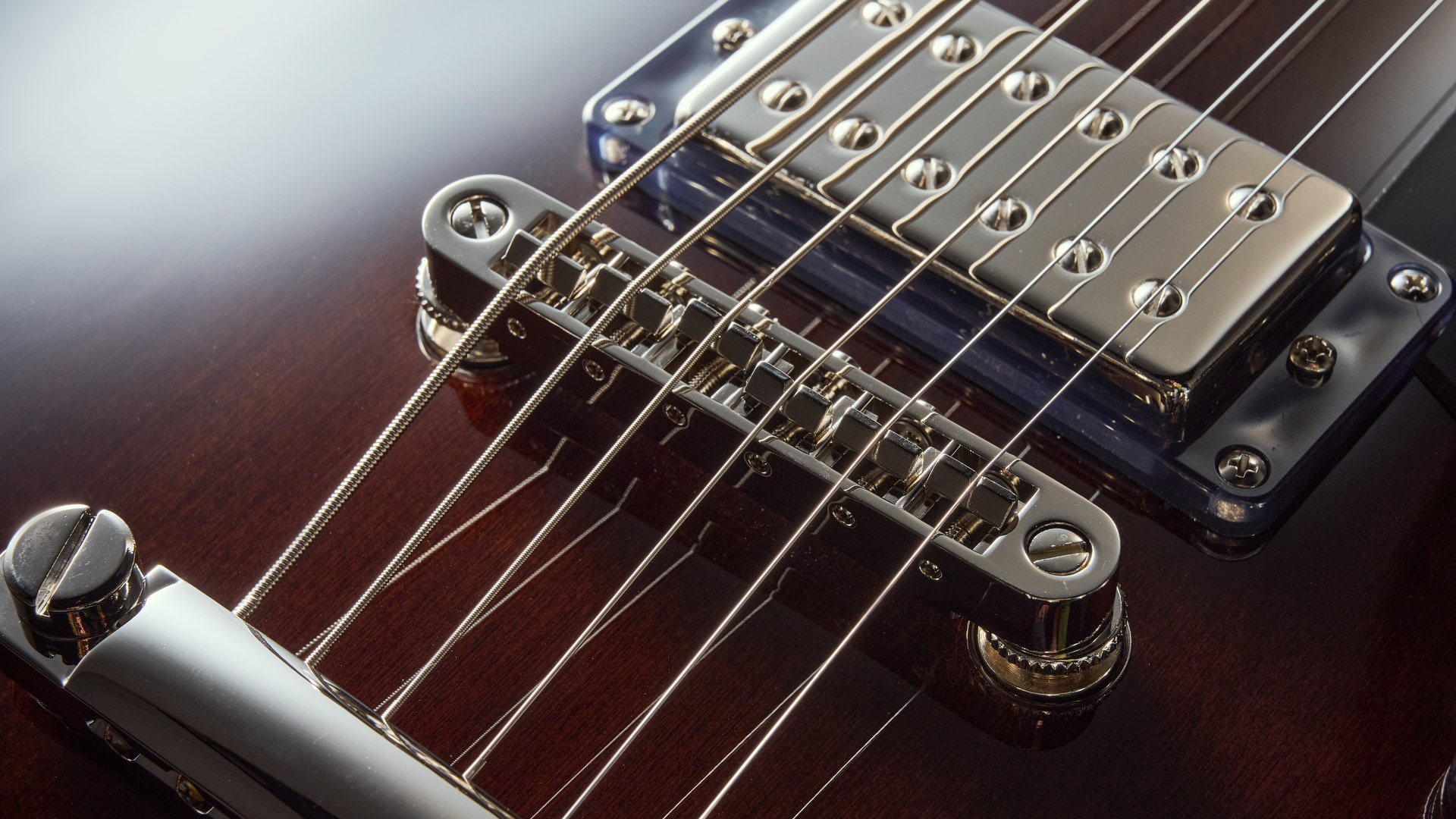
The neck profile has changed as well, with the G5260s' thin ‘U’ profile making way for a performance ‘C’ shape. The fretboard wood is bound rosewood, with 22 medium jumbo frets and pearloid classic neo-thumbnail inlays. Both feature adjusto-matic bridges, but the V-stoptail is now a more usual, straight stop tail. Both have die-cast tuners in a 3x3 lineup on the headstock.
Specs
- Launch price: $699.99 | £549 | €599
- Made: China
- Type: Six-string baritone electric guitar
- Body: Mahogany with carved solid maple top
- Neck: Maple/performance ‘C’
- Fingerboard: Bound rosewood
- Scale length: 29.75”/ 756 mm
- Nut/width: Graph Tech NuBone / 42.86 mm
- Frets: 22, medium jumbo
- Hardware: Die-cast sealed, adjusto-matic with stop tail
- String spacing at bridge: 51.7 mm
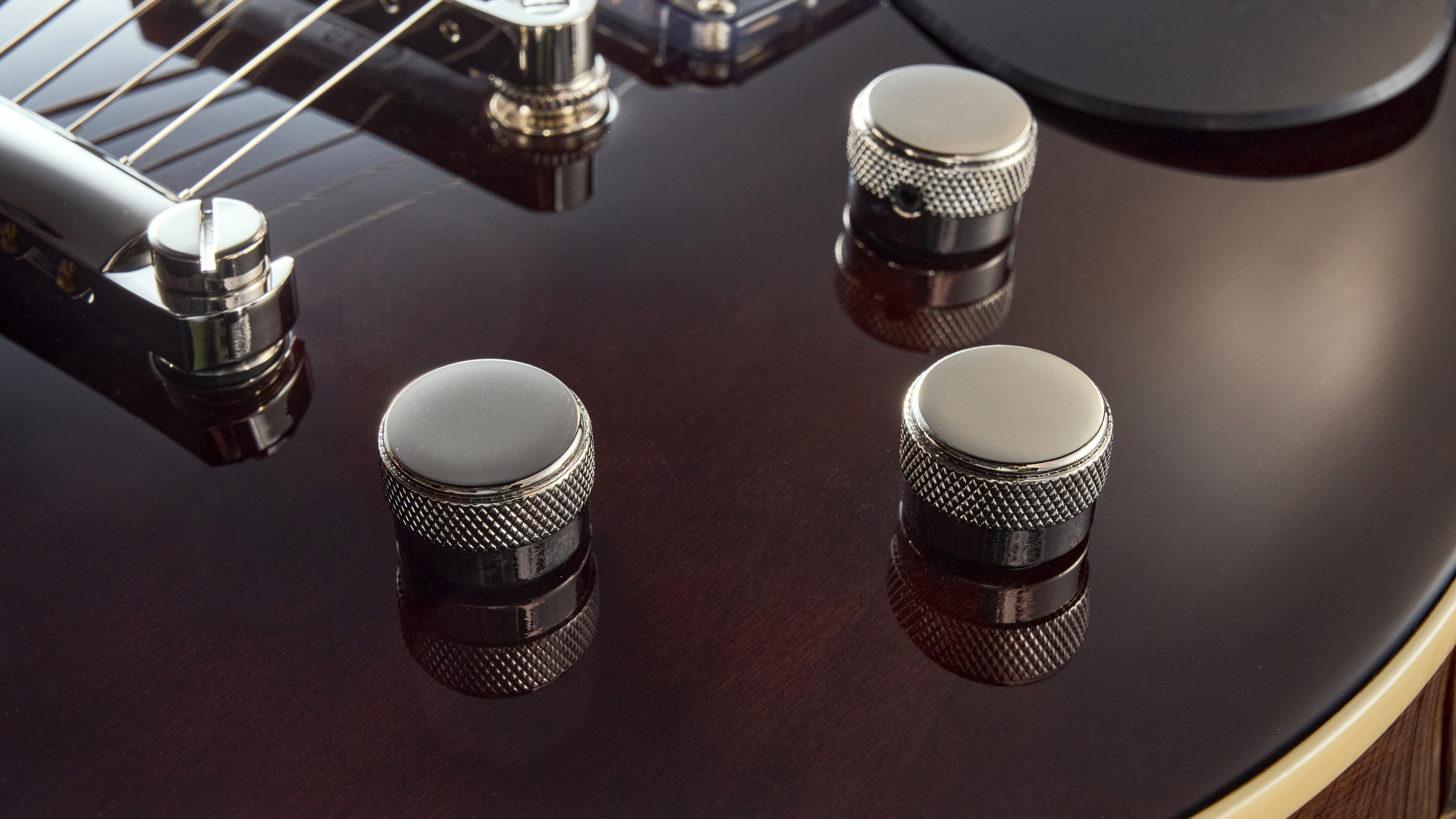
- Electrics: 2x PureVolt Twin Six humbuckers, master volume with treble-bleed, tone 1 (neck pickup), tone 2 (bridge pickup), push-pull on each tone control splits bridge and neck pickups respectively, 3-position toggle switch
- Weight: 9lb/4.1 kg
- Left-handed options: No
- Finishes: Imperial Stain
- Case: No
- Contact: Gretsch
Build quality
Build quality rating: ★★★★½
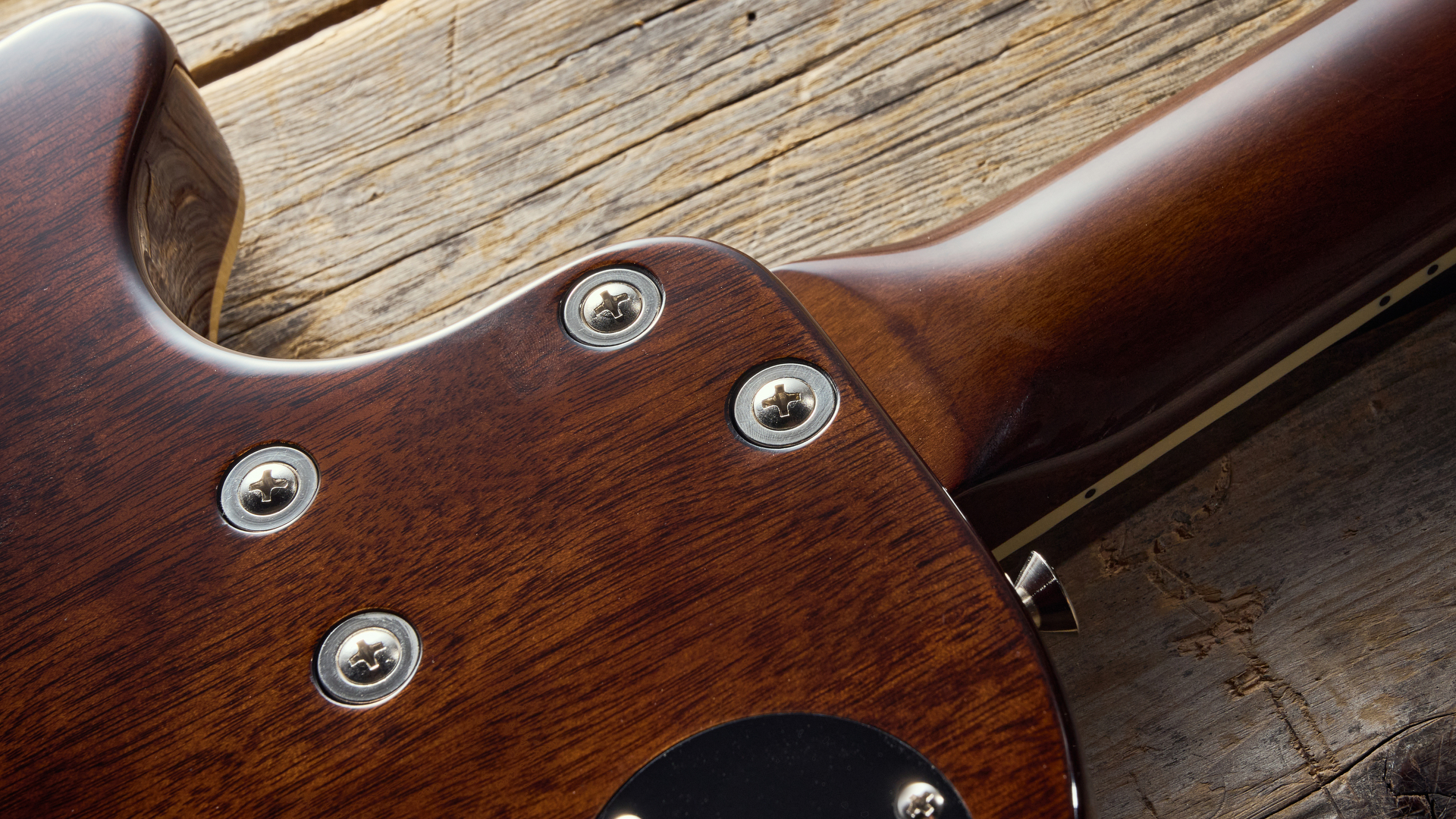
The Electromatic Jet Baritone is ridiculously long for a guitar. Even the box it comes in is supersized to account for the additional scale length, and out of curiosity, I place it next to my Jaguar short-scale bass guitar, which ends up being not that much longer than the Gretsch. I have to take great care moving it around my home studio, not to clang the headstock, and even then, I still managed to knock it off a few things.
Thankfully, there was no damage done, and the overall build quality is very good. A close inspection reveals barely a hair out of place, with the only thing I could spot being some light marks on the fretboard where it terminates by the neck pickup. Other than that, it’s an exquisitely put-together instrument.
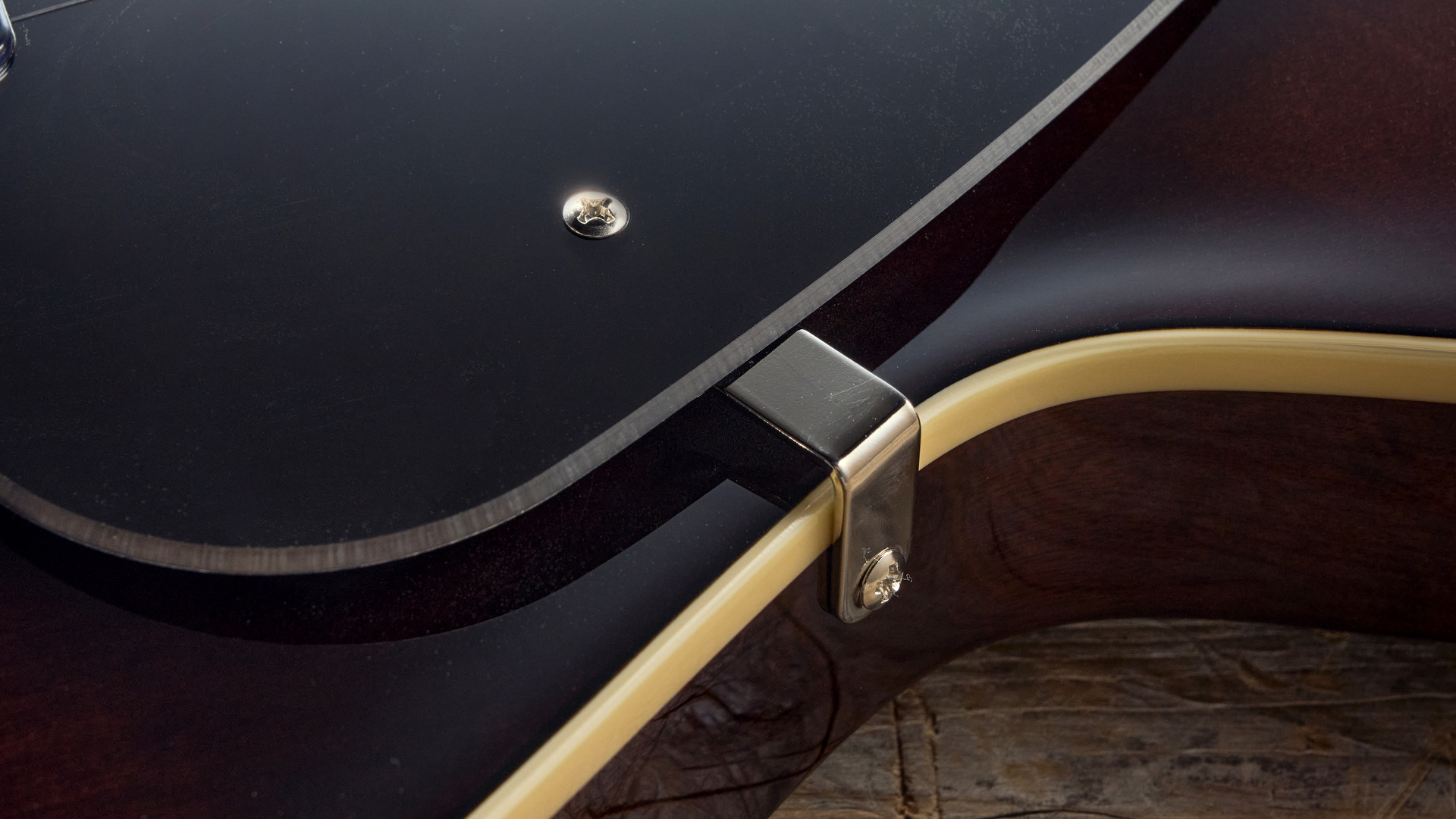
It’s really good looking too, in my opinion. The carve of the solid maple top is gorgeous, and the aged white binding is really nicely applied. The body features some very slight comfort contours on the back of the body, with a very shallow belly cut and even a small carve where the guitar sits on my knee.
Placing it on my scales, it comes in at 4.1kg (9lbs), which, while brawny, isn’t quite as heavy as the Sterling by Music Man StingRay Baritone I tested a few months back
The Imperial Stain finish on my test model is very dark, looking more like a gloss black in certain lights. That also means that it picks up dirt and dust very easily, and after one playing session in the current UK heatwave, there was a very obvious sweat mark where my picking arm draped over the body.
Placing it on my scales, it comes in at 4.1kg (9lbs), which, while brawny, isn’t quite as heavy as the Sterling by Music Man StingRay Baritone I tested a few months back. Still, when sitting down at my home studio desk and moving it in and out of my D’Addario desk neck cradle, I definitely feel that extra weight.
Playability
Playability rating: ★★★★½
I regularly play a baritone in a metal band, but this feels absolutely massive in my hands
Sitting down to play, that scale length makes its presence immediately felt. I regularly play a baritone in a metal band, but this feels absolutely massive in my hands. Out of curiosity, I Google the average hand size for men in the UK, which comes out at 7.6 inches. Mine measures at 7.5, so it’s fair to say that if you have a below-average hand size, you could well struggle with the size of this instrument.
It means that some chord stretches are difficult. Fretting a Loathe-inspired Bmaj7/G# chord is pretty much impossible for me, even after a few days of adjusting to the size of the instrument. It’s fine for your more bread-and-butter open chords, though, and riffing feels really nice on it out of the box.
The neck profile is pretty slim for a baritone
The stock strings are 13-65, which is a little lighter on the bass end than what I’m used to. It means I can’t hit any Loathe-style downtuning, but I can take it down to drop G. It makes bending at the opposite end relatively easy, too, and I can get a full tone bend without too much difficulty, despite the huge scale length and increased gauge size versus a standard electric guitar. Beyond that, it does get considerably harder, however, so be prepared to practice if you want to nail those Gilmour-inspired two-tone bends on this.
The neck profile is pretty slim for a baritone. It feels more like a ‘D’ than a ‘C’ to my hand, and makes fast riffing and lead legatos really slick feeling. The gloss finish isn’t sticky, and with a nut width of 42.86mm, it doesn’t feel gargantuan when playing open or barre chords, no matter where I am on the neck.
Sounds
Sounds rating: ★★★★☆
Plugging it into my audio interface and loading up the Neural DSP Nolly guitar plugin, my first port of call is to see how it djents. I drop tune the low string all the way down to E, and attempt to play some of my favorite Sikth riffs on it. It holds its tuning surprisingly well here, despite the string flapping around all over the place, but despite my best efforts, it’s way too inconsistent, so, ambitions curtailed, I go back to drop A for some high-gain riffing.
On settings that are usually quite saturated on my other humbucker-equipped baritones, here it sounds more like a hot, vintage-style humbucker rather than something you’d typically hear in modern metal
It’s chug city with a modeled 5150 and a Tube Screamer-style overdrive pedal pushing the front end. The humbuckers are in that medium output level, which means they stay really clear and articulate despite the low tuning. Playing open chords even on the heavily saturated preset, it’s remarkable how clear everything stays. Moving to some octaves with a drone string throughout, I can hear every string, no matter where I’m playing on the neck.
It won’t be for everyone. If you like that ultra-compressed, effortless active pickup feel of a more usual metal guitar, this might be a little too organic for you. On settings that are usually quite saturated on my other humbucker-equipped baritones, here it sounds more like a hot, vintage-style humbucker rather than something you’d typically hear in modern metal. I don’t mind that at all, but it’s worth noting for those who prefer that type of sound. The low end is also very well behaved, so there isn’t an overload of it even when I crank the bass knob on the amp.
It sounds fantastic with single note riffs on the low A
Switching to the neck humbucker, it’s a little less articulate when I play open chords, and lower output than the bridge sound. Cranking up the gain and the bass, I’m straight into lumbering doom power chords territory. It sounds fantastic with single note riffs on the low A, and moving into some lead work and adding a little reverb delivers a fantastic lead guitar sound, with plenty of thick warmth that still manages to sound very clear and defined.
This guitar can be set to coil split individually on each humbucker, so my first instinct is to split the bridge humbucker, leave the neck as is, and move to the middle position of the toggle switch. I switch to the Neural DSP Tone King plugin on my tried and trusted clean setting with a touch of spring reverb and tremolo, and the resulting tone adds a little of that Strat out-of-phase sound, with a bit of honkiness to it. It’s less noticeable with open chords, but as I move higher up the neck, there’s a plinkiness that creeps in.
It’s a cool feature, and adds a lot of different tonal options as you can combine single coil with humbucker sounds, just use the split coils on their own, and have both humbuckers in split coil mode. The sounds are less useful when playing high gain, but for those clean sections or recording, there are a lot of options here.
Moving into some more measured playing, the pickups feel a lot darker with a mid-scooped amp tone and no mid boost pushing the front of the amp. I feel the need to turn up the treble a bit to get them to cut better, and it’s even worse on the neck pickup. They end up coming across so dark that I switch to another plugin, Archetype Cory Wong X, to see if I can eke a brighter sound out of them. Using the baritone guitar specific preset, I have to crank the mids, treble, and presence knobs to get a really bright sound. It sounds great once I get there, but it takes some work.
Verdict
It’s interesting then, because it seems this guitar has been aimed more at the metal crowd than traditional baritone sounds. Under high gain, I found the tones to be incredibly inspiring, articulate, and powerful. It behaves brilliantly with drop tuning, and it’s got plenty of gutsy midrange to power through a full band setup. It can absolutely djent and chug with the best of them. It’s also incredibly versatile thanks to the clever switching of the individual split coil mode on each humbucker.
It means it’s not a clean machine unless you start cranking the treble and presence knobs
If you’re after that Spaghetti Western baritone sound, though, I don’t think this is the guitar for you. With clean tones, the pickups end up sounding really dark due to a combination of scale length and the vintage-leaning voicing of the pickups. It means it’s not a clean machine unless you start cranking the treble and presence knobs, which comes with additional side effects.
It will be a very difficult guitar to handle for smaller players or those with smaller hands. The scale length is massive, and even for an experienced baritone player, I found more complex chords hard going on its behemoth span. Despite this, it’s super fun to play for open and barre chords, lead work, and single note riffing, thanks to the slim neck profile and reasonable nut width.
Guitar World verdict: For high gain and metal players who want to downtune, this is a great option if you don’t fancy a 7 or 8-string guitar. The articulate pickups mean it delivers incredibly well when it comes to anything heavy. It’s a tale of two halves, though, because I found the clean tones to be quite lackluster. It means that for players who want the classic baritone experience, I recommend looking elsewhere.
Test |
Results |
Score |
|---|---|---|
Build quality |
Incredibly well put together, but rather heavy and long. |
★★★★½ |
Playability |
The scale takes some getting used to, but overall a great playing experience. |
★★★★½ |
Sounds |
The high-gain stuff was great, but I wanted more from the cleans. |
★★★★½ |
Overall |
A great baritone guitar if you’re focused on chugging drop-tuned riffs. |
★★★★☆ |