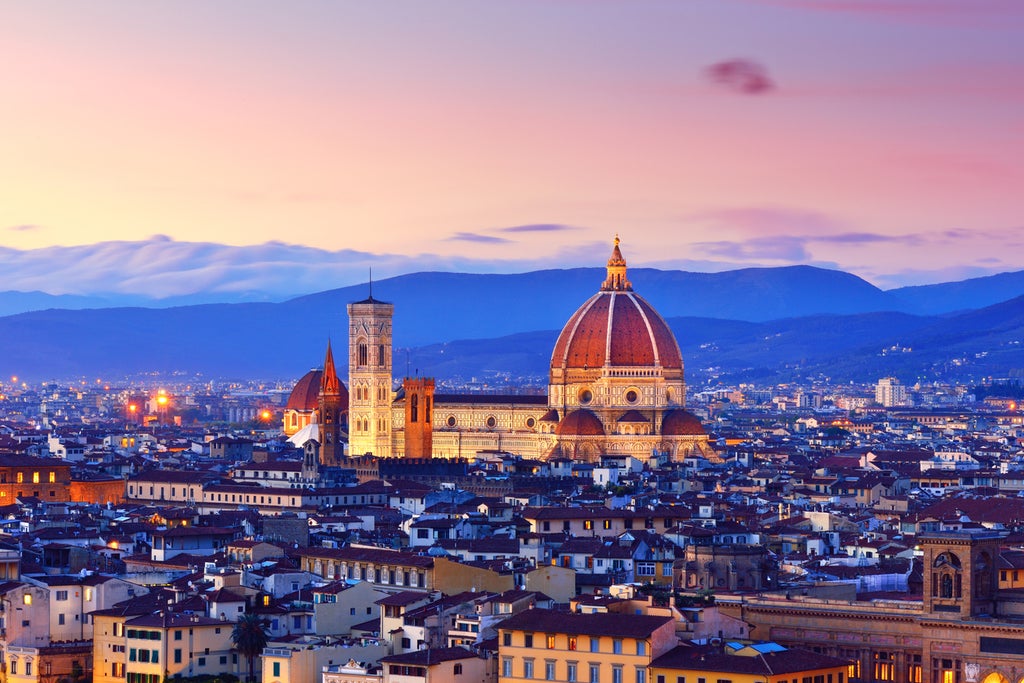
Italy is still open to British travellers, but the rules for entry have changed several times - not to mention the Covid-related guidance once in the country.
Like many nations, including Austria and Germany, Italy has embraced the use of vaccine passports - in Italy this is called a “super green pass”, but essentially amounts to a QR code proving that you’ve had at least two doses of the coronavirus vaccine.
On top of which, Italy still splits its 20 regions into colour-coded zones - red, orange, yellow and white - depending on how high the risk of Covid infection is at present, with different rules attached to each category.
As of 10 January, 15 regions are categorised as yellow, while five are the lowest-risk, white.
So what does all this mean for your next trip?
Here’s everything you need to know about booking a holiday to Italy.
Can UK travellers visit Italy?
Yes, although only fully vaccinated people can avoid quarantine.
At present, the rules are that double-jabbed travellers with proof of vaccination, a passenger locator form and a negative result from a PCR test (taken within 48 hours of travel) or antigen test (within 24 hours) may arrive in Italy and explore without quarantining.
Those who have not been fully vaccinated must provide the same form and test result and notify the Prevention department municipality they are travelling to of their trip - on arrival they must self-isolate for five days in their accommodation and take a further PCR test or antigen test on day five, emerging from quarantine only if they receive a negative result.
Those with fewer than two jabs are also asked to use private rather than public transport to reach their destination in Italy after arrival.
It’s important to note that, from February 2022, Italy is set to stamp a validity period of six months on proof of vaccination, meaning that if your second dose was given more than six months ago, you will need a booster vaccine in order to be considered fully vaccinated and for your NHS pass to remain valid for use in Italy.
Those under the age of 18 may avoid quarantine if travelling with a fully vaccinated parent or guardian, while children under six are exempt from the testing requirements.
What’s the Covid situation on the ground?
As of the week of 10 January, Italy is seeing a surge in Covid-19 cases, albeit with fewer daily recorded cases than the UK.
Like the UK, Italy saw a spike in Covid cases in the two weeks after Christmas.
In the week to 9 January, Italy reported a seven-day average of 158,409 cases (the UK’s average for the same week was 177,113).
The Italian government recently passed a decree making it mandatory for all over 50s to get the vaccine.
“We want to slow down the curve of contagion and encourage Italians who have not yet been vaccinated to do so,” said prime minister Mario Draghi in a statement.
“We are working in particular on the age groups that are most at risk of being hospitalised, to reduce pressure on hospital to save lives.”
What are the Covid-related rules in holiday destinations?
Vaccine passports
Due to the current surge in cases, from 10 January visitors across Italy will need a “super green pass” vaccine passport - essentially, proof of having had two vaccine doses - to access most public venues and modes of transport.
This replaces the former “green pass” which enabled locals to access restricted venues with either full vaccination or a recent negative Covid test result or proof of recent recovery.
This means those who have not been fully vaccinated are essentially excluded from most venues and gatherings in Italy.
An NHS Covid Pass QR code can be used as a super green pass in Italy.
From February, as outlined above, your Covid Pass will need to show that your most recent vaccine dose was given within the past six months in order to be deemed valid.
The full list of venues you will need a super green pass to enter is as follows:
- All restaurants and bars, outdoors and indoors
- All public transport, including domestic flights, high-speed trains and local buses
- Hotels
- Ski lifts
- All indoor and outdoor swimming pools and gyms
- All indoor and outdoor spas and thermal baths except for “essential rehabilitation or therapeutic treatments”
- Museums, exhibitions and cultural venues, including libraries
- Celebrations relating to religious or civil ceremonies
- Fairs, festivals, conventions and conferences
- Theme parks
- Indoor and outdoor cultural, social and recreational centres
- Games rooms, betting rooms, bingo halls and casinos
This essentially amounts to a lockdown for unvaccinated people, very similar to Germany and Austria’s “2G” rules around vaccination.
Colour-coded regions
While Italy’s ski resorts remain open, the government has also changed the risk categories of some of its tourist areas.
The country has a system of four colour-coded zones: red, orange, yellow and white, denoting the risk of Covid infection.
From the end of August until December, all regions were colour-coded white, the lowest-risk category.
However, as of 10 January, 15 regions including the Aosta Valley, Tuscany, Emilia Romagna and Abruzzo are categorised as yellow, meaning most venues are open as normal, but the super green pass is required for the majority of indoor venues and activities.
Lazio (home to Rome), Lombardy, Sicily and Veneto are also on the 15-strong list of yellow zones.
There are currently no orange or red zones in Italy, although local media reports suggest that the region of Trentino may soon be moved to the orange list.
Orange restrictions include not being able to move around the country outside of your municipality, curfews from midnight to 5am, and venues such as restaurants, bars, museums and theatres being closed.
Red restrictions involve all shops and venues other than pharmacies and supermarkets being closed, with people only allowed to leave their homes for work, health reasons, to go to a place of worship or to take exercise once a day.
Mask-wearing in Italy
The Italian government tightened its rules around mask wearing on 23 December 2021 with a nationwide mask mandate.
At present, you must wear a mask at all times when out in public, or risk facing a fine of up to €450.
On top of this, you must wear a safer FFP2 mask in certain situations: on flights to and from Italy; at any kind of performance or sporting event (indoor or outdoor); and on public transport. Eating and drinking has also been banned at large scale events such as sports matches and concerts.