Trends may go round in cycles, but the last time leather was this in favor with designers was 20 years ago, seen on battered Chesterfield sofas, the more distressed the better. Now, however, it's soft, smooth, faultless. Often the color of caramel, but if not that exact tone, always with caramel's same silkiness, playing into the overall desire for sensual, sophisticated schemes that make the people in them feel smart.
"Leather is very sexy, very refined if used correctly," says the designer Enass Mahmoud, founder of Studio Enass. "I didn't use to be a huge fan of it, but the number of ways it's now available in, and the huge leap forward in quality, make me feel suddenly much more drawn to it. Used on walls, it gives you a subtle hint of texture, while, as an upholstery fabric, it's quietly luxe. When you see upmarket leather in a room now, you instantly know you're somewhere you're going to be able to relax."
And leather 2.0 is popping up everywhere as an interior design trend. "We like to incorporate leather into every scheme if we can," says Louise McGarry, creative director of Studio Braw. "Layering textures is always something we strive to do in any project to create a sense of depth, and leather helps do just that. It is particularly great on a vintage chair, stool, or bench."
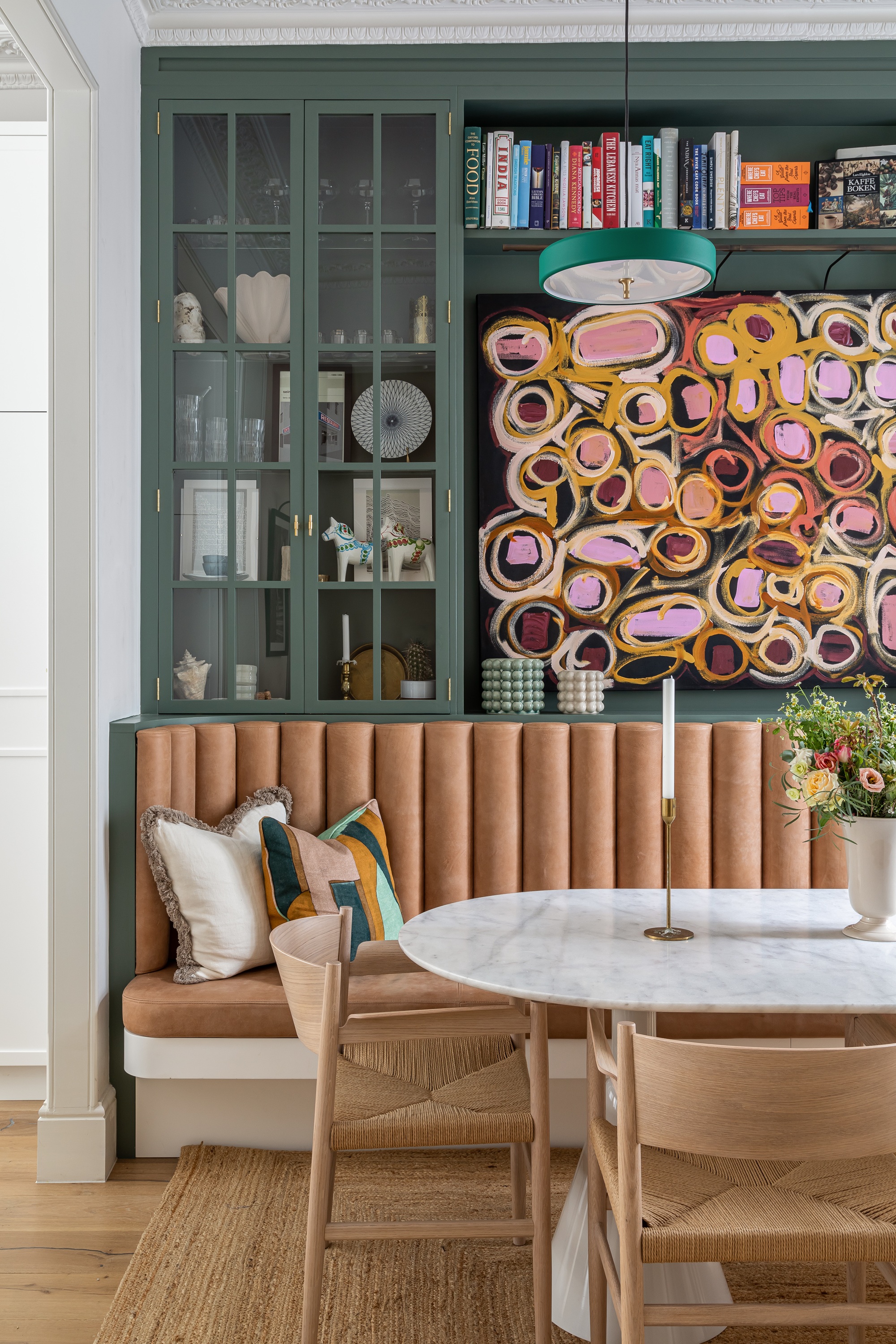
The most common ways designers are using leather? To cover banquette seating, built into the corners of kitchens to create cocooning spaces for family and friends to nestle into. But it's not just a style choice — it has a practical application, too. "We opted for leather for this banquette seating [above right] as it is a high traffic area, where the family tends to eat nearly every meal," says Louise. "So, whatever we chose had to be durable and, more importantly, wipeable. For the same reason, leather is great for bar stools that get lots of use in a busy family home."
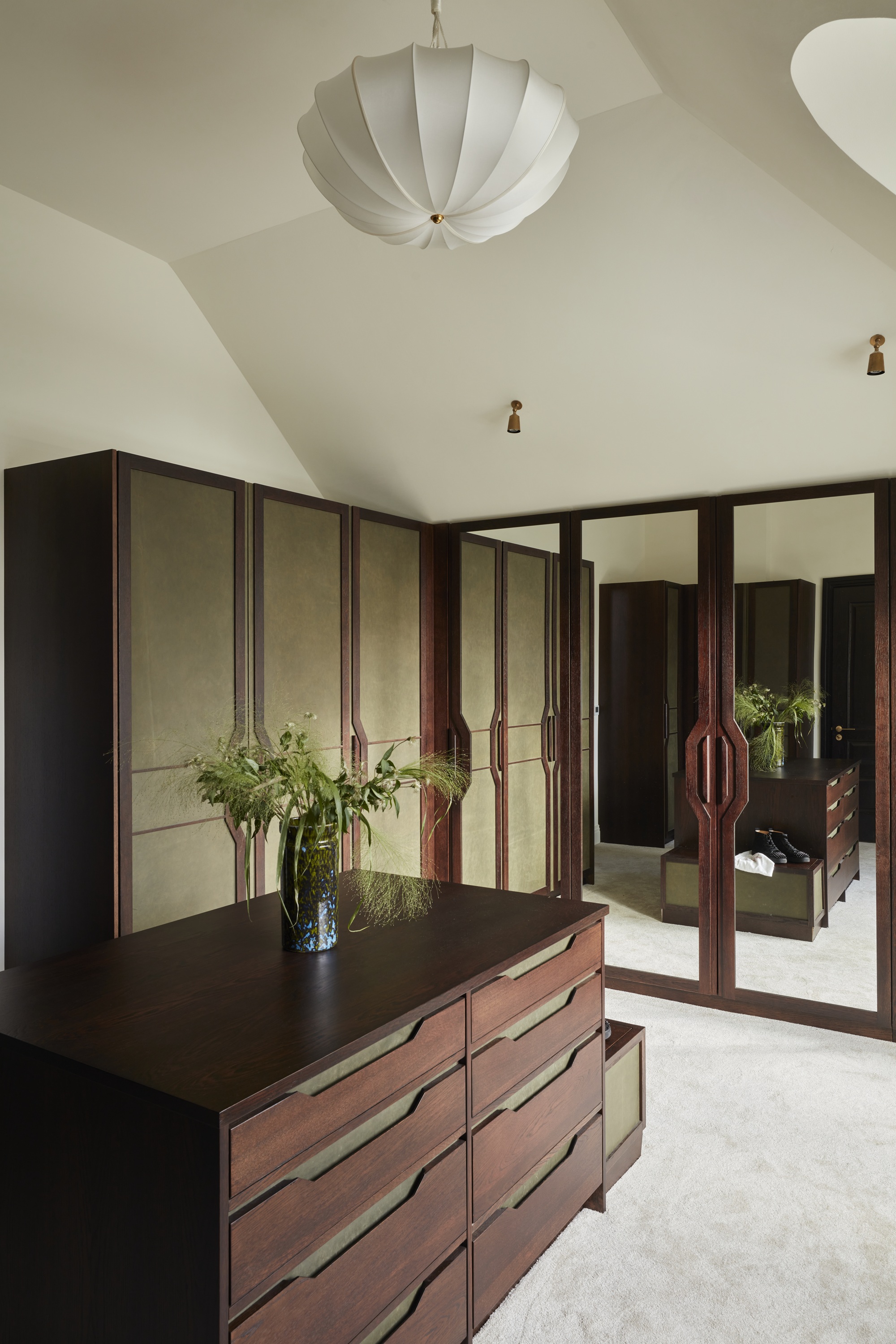
Supple and strong, designers are also harnessing leather for everything from curtains to joinery panels, using it as a surprise element that elevates the overall space with its unexpected opulence.
"Using leather adds an honest, tactile quality that celebrates the craftsmanship of bespoke joinery," says Sarah-Jane Allen, founder of Deslyn Studio, who used hides as panels on cupboards in a bedroom, above. "The natural flex and movement of the leather adds authenticity to the detailing while being softer and more comfortable to touch. And, due to the position of this dressing room between the bedroom and en-suite, the characteristics of the leather help to absorb the sound, so it's functional too."
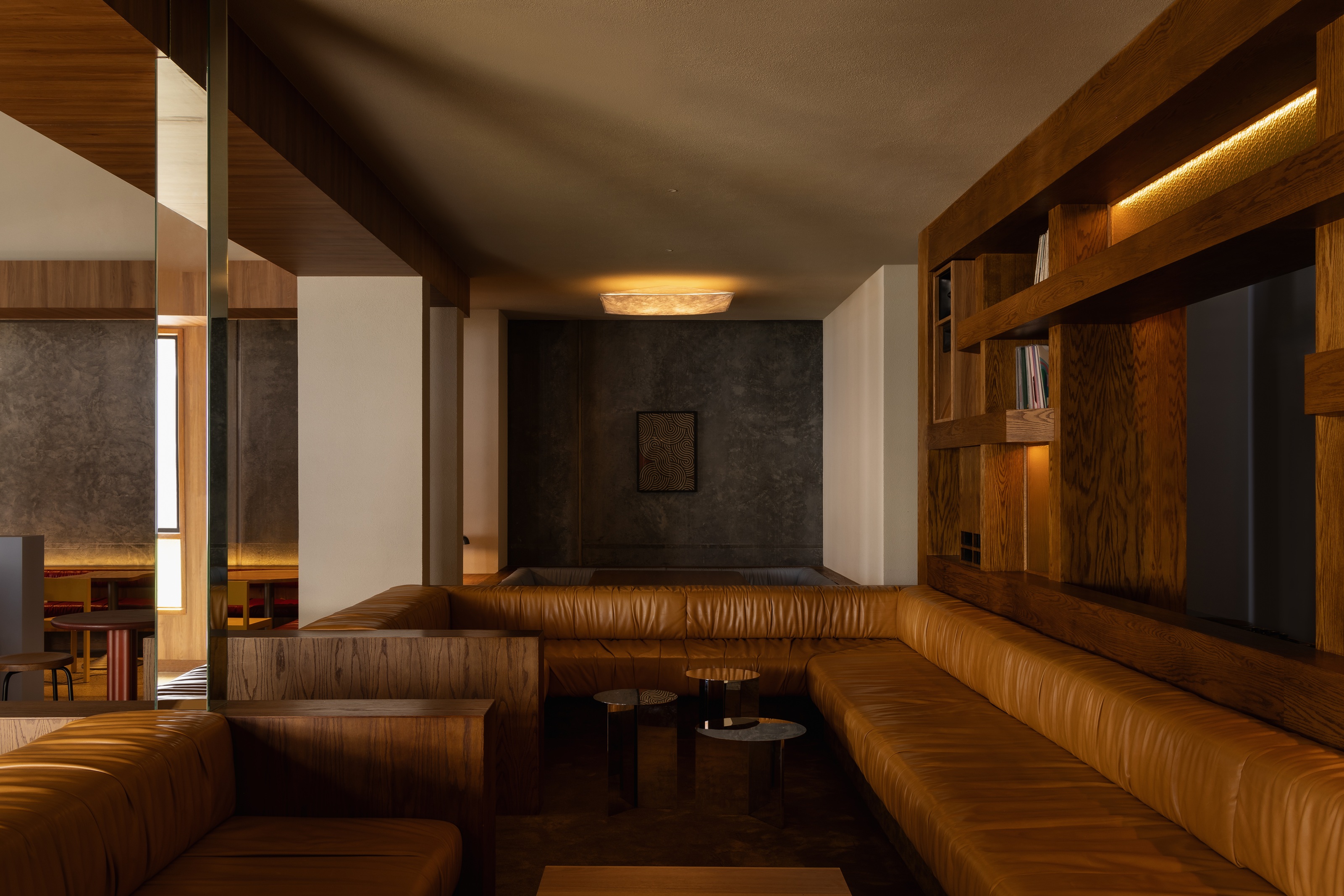
Of course, this fabric trend is not for the steadfastly vegan among us, but for anyone who eats meat, the use of leather is to be encouraged. Were it not turned into decor (or clothes), then it would otherwise go to waste.
For those who don't, you might want to skip the trend entirely before you head into 'pleather' territory. There may, however, be some alternatives open to you. "We don't work with faux versions of leather in the traditional sense," say Austin Carrier and Alex Mutter-Rottmayer of design studio Hommeboys, "but we are super interested in and inspired by true innovation within the material, like the work being done by Mycoworks with Reishi mushroom leather. From both an aesthetic and sustainability perspective, we always lean toward organic materials within our designs, so it's exciting to see truly viable options like these start to come to market."
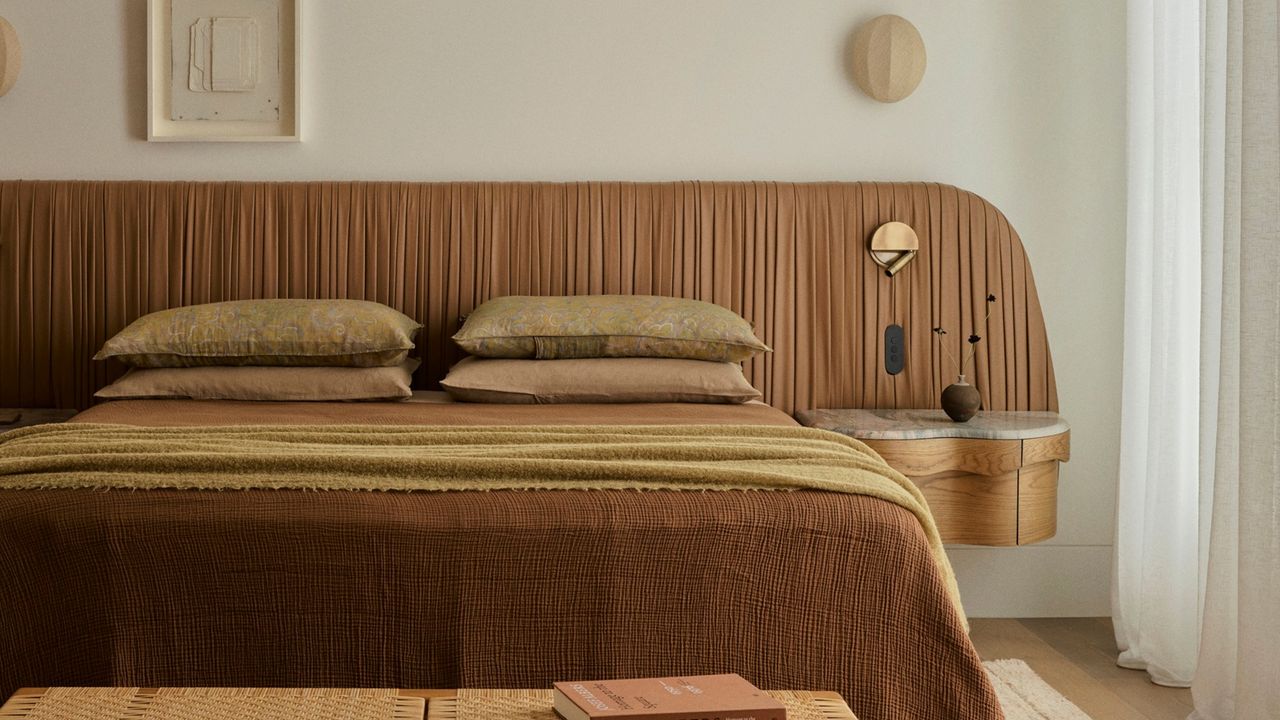
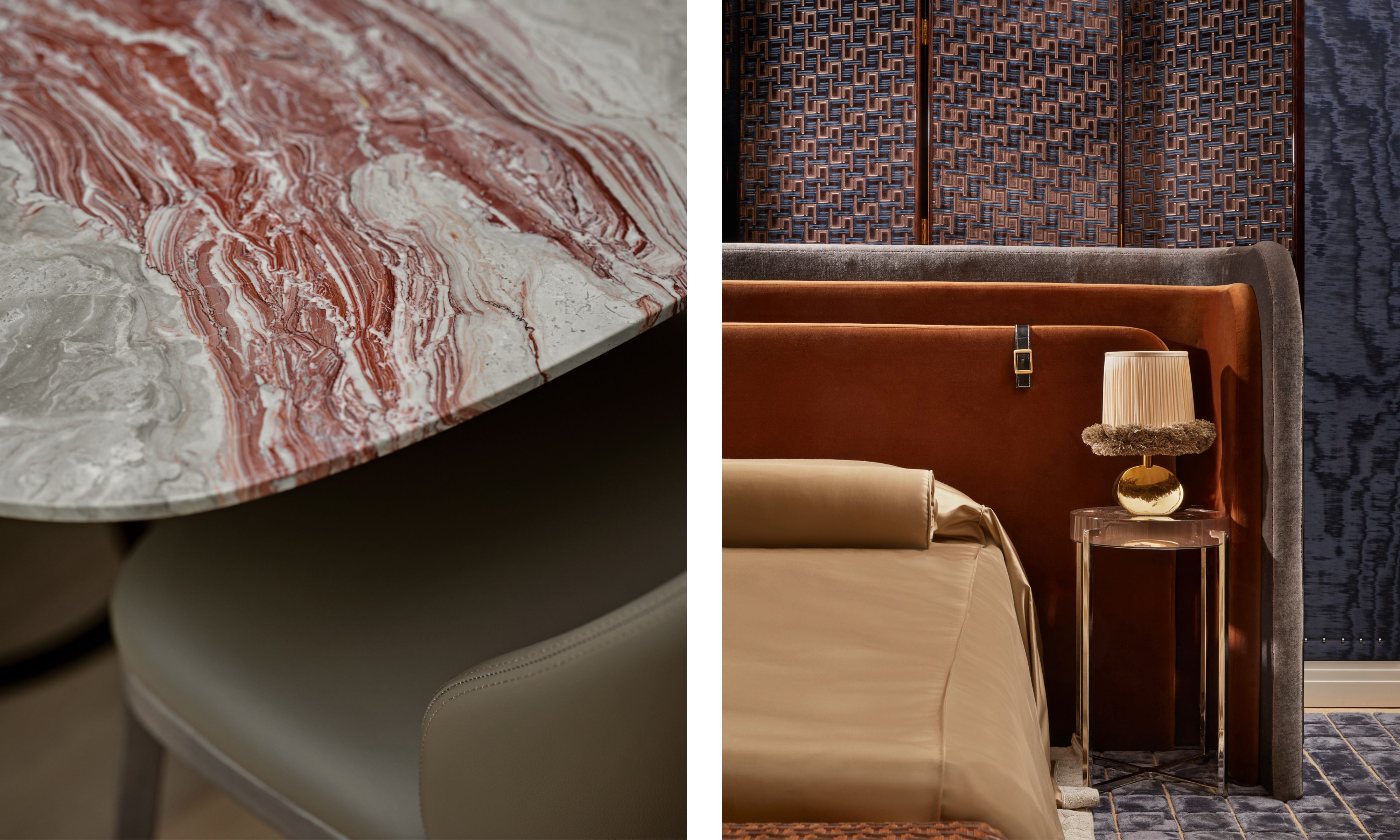
And while covering a whole banquette in leather can seem expensive and an upheaval, there are smaller ways to buy into the look. Designer Sophie Paterson likes to utilize its tactility for bar-shaped handles, while designer Brian Woulfe chose it as a 'timeless' contrast to marble for chairs around a dining table (below left), and Tolu Adeko added leather straps to a mohair headboard (below right). "I love playing with contrast, so the softness of the mohair against the leather adds a tailored finish and a little moment of tension that makes the piece feel considered," Tolu says.
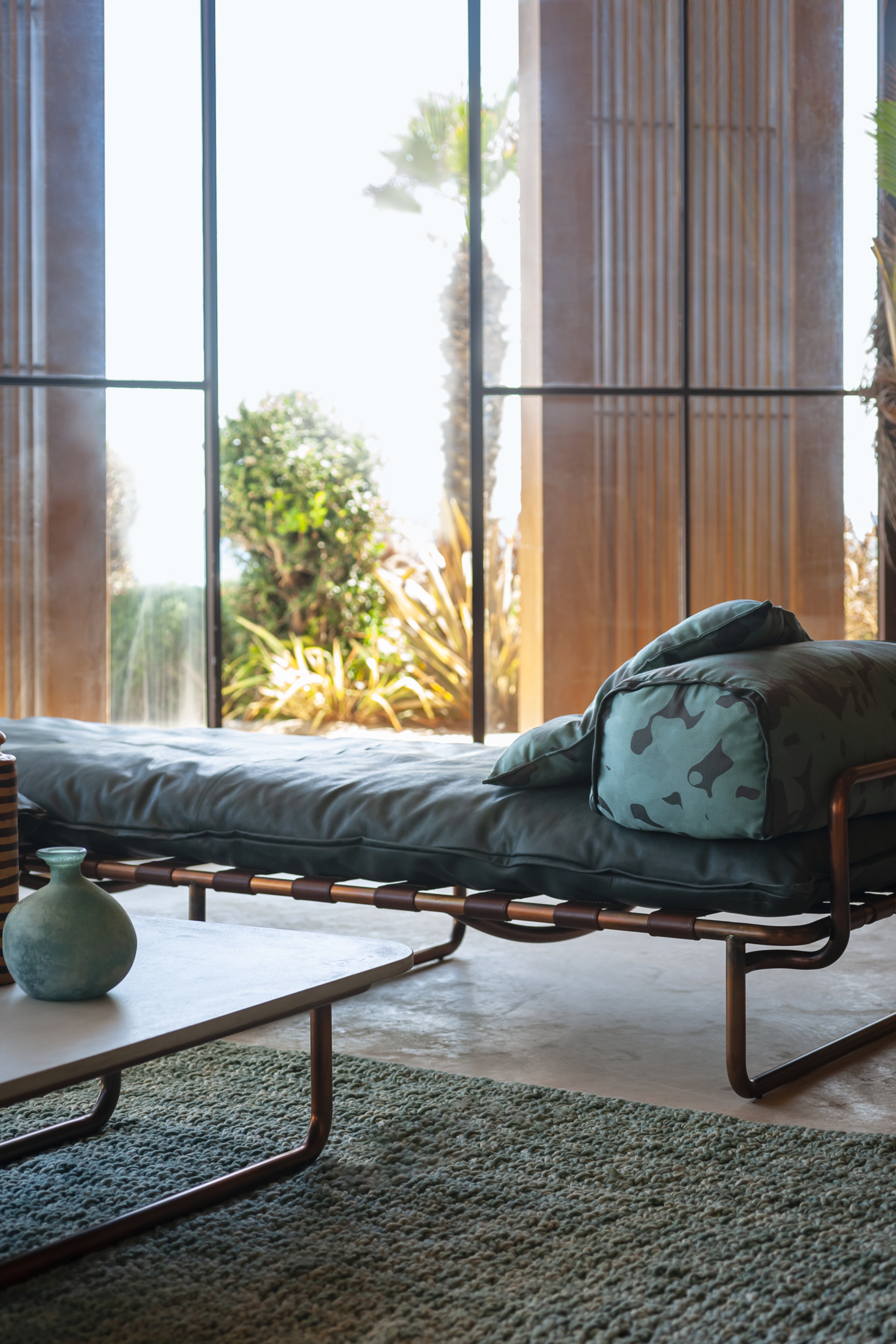
And then, there is the rich mix of leather furniture and home decor accessories to buy. Italian design brands do it well, of course, choosing the best quality materials to cover the Arizona daybed by Paola Navone for Baxter (below left), which are so durable they can be used both indoors and out, and the backs of the Gingko XL chair at Porada, a rich juxtaposition to the gleam of the brand's signature Canaletta walnut frames.
Essentially, leather is a shorthand for the sort of effortless elegance that suits the zeitgeist, a material to touch, lie back on, or feel cosseted by.