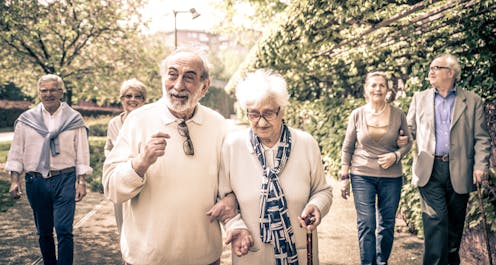
By now, you may be aware that Canada’s seniors recently crossed a significant threshold. Statistics Canada announced for the first time ever that people over 65 now officially outnumber children under 15.
The story is similar all over the world.
Historians will say one day that this global shift in demographics was one of the most important events of the 21st century. Indeed, it’s certainly a triumph of public health and modern medicine. For many, though, this shift is seen as a problem — and that’s a perception that needs to be corrected.
It’s true, of course, that getting older has its share of challenges and limitations. But we have come to look at aging as a set of physical symptoms, organ by organ, illness by illness, grimly tallying the personal, social and financial burdens they impose on families and societies, as if aging were merely an issue of decline and loss.
The perception of what it means to be in one’s 60s, 70s, 80s and 90s has not kept pace with modern medicine, and neither have our ways of optimizing the extra years that modern public health and medicine have given us.
If we stop looking at aging only in terms of loss and dependency, we can learn to capitalize on its promise by investing in age-friendly communities with integrated services.
Time to promote optimal aging
We need to invest in research that’s focused on interventions and strategies that promote optimal aging and promise better health, higher quality of life, improved dignity and greater financial and social security — not just to older adults, but to all generations.
If older adults as they age can live independently and safely in their homes of choice with the right community, transportation, social and health-care systems in place, we all benefit. We benefit from their expertise and contributions to younger generations. The economy benefits, and society as a whole benefits.
Age-friendly communities and neighbourhoods mean lower reliance on private transportation and easier access to exercise and social engagement opportunities. Evidence shows that people who are more active, mobile and connected with other people not only stay healthier longer, but are more productive members of our community.
We need to reform our approach to caring for the aging population by bringing care closer to where they live, where it also costs less to deliver and does more good. That care should involve neighbours and other volunteers who look out for one another because they understand how damaging and deadly social isolation can be.
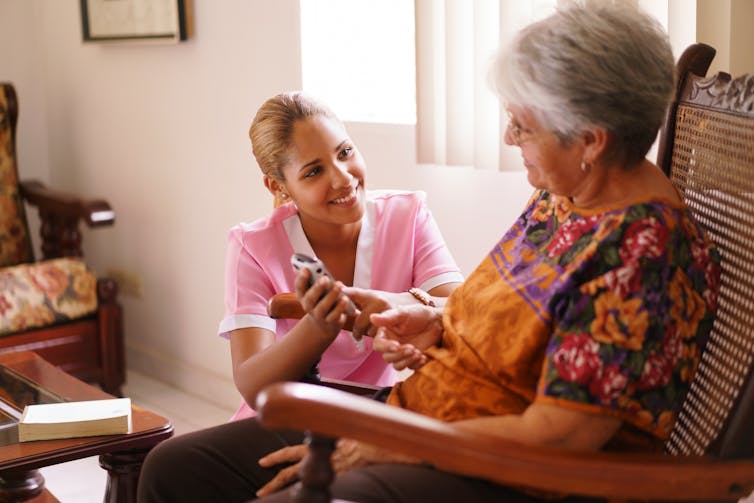
Of course, it’s important that we improve how we manage the health of older adults. We need to have more community and home-based care that is responsive to the health and social needs of our aging population and reserve more expensive hospital-based care for those with more complex needs.
It’s time to reimagine aging as an asset, rather than a burden, for our communities.

Parminder Raina receives funding from organization such as as CIHR, CFI and European Union. He is Professor in the Department of Health, Evidence and Impact, Scientific Director, McMaster Institue for Research on Aging, Labarge Centre for Mobility in Aging, Lead PI Canadian Longitudinal Study on Aging, Canada Research Chair in Geroscience and Labarage Chair in Optimal Aging
This article was originally published on The Conversation. Read the original article.