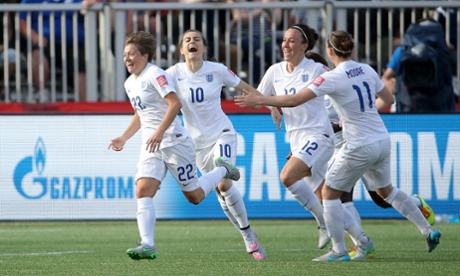
While the domestic football season is back underway with a bang, it’s the image of women’s football that has had the biggest positive impact this summer.
This conclusion emerged from Arc London’s analysis of five high profile football properties as we looked to identify which is the most commercially exciting for brands in the UK. We researched consumer perceptions of the Fifa World Cup and Women’s World Cup, the Premier League, Football League Championship and the UEFA Champions League.
The Women’s World Cup performed extremely well, no doubt due to the hype and excitement generated by the England team, who earned a bronze medal in Canada this summer.
Some of the specific highlights from our SponsorDNA analysis around the Women’s World Cup include: 91% agree that the event is gaining in popularity and 86% say that the event provides good role models for children.
In contrast, the Champions League, Premier League and Championship scored much lower, with 48-53% agreeing that they provide good role models.
The Fifa World Cup, however, was the lowest scoring property in terms of providing role models for children, with only 33% thinking so – a score likely linked to the recent media stories surrounding Fifa.
Of the 14 categories measured, the Women’s World Cup scored highest in half of them: trust, innovation, inspirational, global, family friendly, British and momentum. The Champions League scored highest on affinity, quality and joint highest for democracy.
The Premier League scored highest on unique and ethical, and joint highest on democracy, while the Championship scored highest on local – most likely due to perceptions of greater accessibility among fans. While the Fifa World Cup performed strongly on many event dimensions, such as quality and global, it did not outperform any of the other four properties in any dimension.
As the men’s game attracts greater investment and therefore sponsorship, will we finally see more brands step into women’s football to capitalise on the positive positioning of the game?
Traditionally, rights holders have simply sold women’s rights as bolt-ons as part of the bigger men’s game deals to help ensure funding for the women’s game. However, energy firm SSE has already capitalised on this trend to become the first-ever major sponsor of the Women’s FA Cup, the most popular cup competition in women’s football in the UK.
Look out for more of these dedicated sponsorships as the women’s game grows.
Liam Hopkins is account director at Arc Sponsorship
This advertisement feature is brought to you by the Marketing Agencies Association, sponsors of the Guardian Media Network’s Agencies hub





.jpg?w=600)