As the rain starts to fall on the usually busy Cornmarket in central Oxford, scuttling students and boozy Friday night revellers head for cover, leaving the street mainly deserted. But one smiling blonde, umbrella aloft, stays put. In front of her is a young man, hood up against the rain, and as he talks she listens.
Ann is a Samaritan, one of 21,000 volunteers across the UK, who give up time every week to listen to people who find themselves in extreme distress. Although better known for its phone helpline, which launched in 1953, Samaritans is increasingly doing outreach work, speaking to people on busy streets, A&E departments or festivals.
The approach is gentle; it might just be a smile, a wave and a reassurance that the volunteer is not after money. “Amazingly, no one has ever told me to eff off,” says Ann, who is 45 and has lived in the city for 13 years. “From the first time I did this I absolutely loved it – it felt meaningful from the first time and it has every time since. You know, for some people we will be the first friendly face they have seen all day – we’re raising awareness about the work we do among groups who are less likely to call us, and letting them know we are there if they need us.”
The Samaritans, which was the first phoneline of its kind to offer help to people in moments of trouble, is one of nine mental health charities the Guardian and Observer are supporting as part of their 2014 Christmas Appeal.
In 2013 the charity answered 5.23 million calls – one every six seconds – the highest for five years. Last year, one in six calls mentioned financial worries, up from one in 10 in 2008.
Today it also answers calls by email – with an increasing number coming from North America – and by text, as well as by phone or face-to-face. But it is also looking to overhaul its telecommunications system to make it fit for the 21st century, introducing a fully freephone number and an instant messaging service.
The Samaritans, which is run by volunteers – from the board to the phones – offers a lot of bang for your buck, says Stephen Hoddell, who has volunteered at the charity for 41 years and now acts as its chair. Calls cost an average £3.83 compared with around £12 in other organisations; a local branch might help 20,000 people a year, and costs around £40,000 to run.
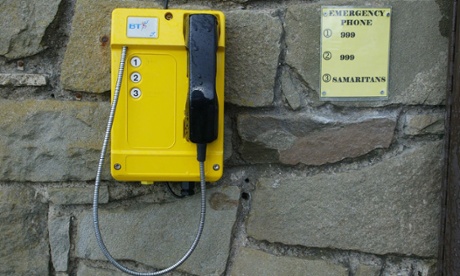
“We are impressively cheap, but we offer a high-quality service,” says Hoddell. But with more calls than ever, and mental health services struggling to cope, the Samaritans needs extra funding to ensure someone is always there to answer a call. “The Samaritans is a really important part of a civilised society – I’d like people to support if they can, think about volunteering as a Samaritan, or just think of us when they might need support themselves.”
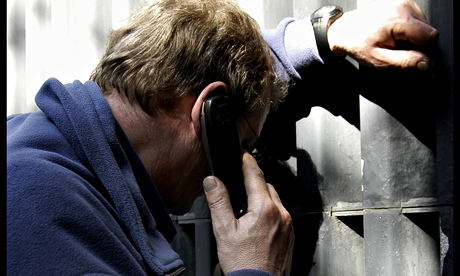
Those who have used the Samaritans in their darkest hour have little doubt about the value of the service. Duncan Irvine was 21 and struggling to cope with his mother’s mental illness and the secret of being gay when he picked up the phone. After a failed attempt to kill himself he was wandering around Edinburgh and saw a poster in a phone box. “At the end nothing had been solved, he didn’t tell me what to do, but he allowed me to just express how I felt, and even talk about the suicide,” says Irvine, now 67. “But somehow sharing my feelings just let me see things more clearly.” After moving to London some years later, he joined the Samaritans. “It’s the best thing I’ve ever done, and I think most volunteers would say that,” he says.
Not making judgments and allowing people to share their darkest thoughts is a vital part of being a Samaritan, says Hoddell. “We take people’s distress seriously and don’t try to tell them what to do,” he says. “I have spoken to people who were quite adamant that they could not go on, and by the end of the call had changed their view. You float home after those calls, but it is emotionally quite exhausting.”
Emma Kitchener, who is now 27, only became aware of the Samaritans after its outreach team came to her university. “I spent a massive period of my life, from 13-19, in darkness and I had no idea they were there,” she says. “If I had known sooner, I really think my life could have been different.”
She called when she was feeling sad but before sinking into a deep depression. “For me, calling on a bad day could stop it becoming a couple of bad days, or a week or a month. I have good friends, but some of these thoughts are so difficult that there is a level of filtering – you don’t want to be completely honest because you don’t want them to feel bad or hopeless. The Samaritans are just there to listen, that gives you space to be honest with yourself.”
To say thanks, Kitchener, who now works as a psychological wellbeing practitioner, ran the London Marathon in 2011, then climbed Mt Kilimanjaro five days later. “I wanted to push myself to the point where I wanted to give up and then push on through – and raise money for the Samaritans,” she says. “They are a lifeline to people who want to give up, but they can help you realise that depression doesn’t mean you can’t live a full life, you are not those thoughts and you are not alone.”
Outreach work is an important new way to make sure people know there is someone to listen if the time comes, and to help harder-to-reach sections of society, says Matt Williams, director for outreach at the Oxford branch. In 2013 Samaritans reached more than 60,000 schoolchildren and 11,000 university students, while in prisons 660 trained prisoner volunteers lent a patient ear. More than 5,500 outreach events reached more than one million people nationwide. Williams estimates that 70% of on-street connections are with men, who are three and a half times more likely to kill themselves.
“These are people who might be reticent to call and we are giving them the opportunity, or we can give them a card so they might think about calling later,” he says. “And if all we do is smile, and be kind – then the street is still a nicer place to be.”
Samaritans is available around the clock, every single day of the year, to listen and offer confidential support.
Phone 08457 90 90 90, email jo@samaritans.org or find your local branch online.