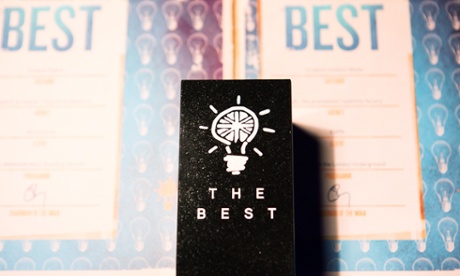
From the mariachi band belting out Don’t You Want Me Baby to the horrors of live, big-screen ChatRoulette, there’s no doubt that the 25th MAA Best Awards lived up to the challenge they threw down to entrants – #dodifferent.
And while the winners were well-deserved, there was a good reason for shaking things up this year, says Scott Knox, the MAA’s managing director. “Awards can start to become a bit same old, same old,” he says. “In a climate where there’s a risk-averse attitude, we need to be shining a light on those who push the envelope just a little bit further. If we’re not, then what’s the point of us running awards in the first place? You don’t want a client searching out cutting-edge agencies that are doing something weird and wonderful, and finding that they all start to look the same – reflecting the magnolia and One Direction-ness of the world today.”
Thankfully there was plenty of exceptional work on show. Manifest London’s #SorryNotSorry “apology” to alcohol advisory panel the Portman Group for BrewDog (“We are sorry for never giving a shit about anything the Portman Group has to say...”) picked up Best Writing. Elvis’s #FreeTheJoy Billboard for Cadbury’s won Best Guardian Vote, voted for by Guardian readers. And Taylor Herring’s Hawking Talking for Paddy Power not only took the honours for Best PR, but also gave the world Professor Stephen Hawking’s formulas for England’s chances of World Cup success.
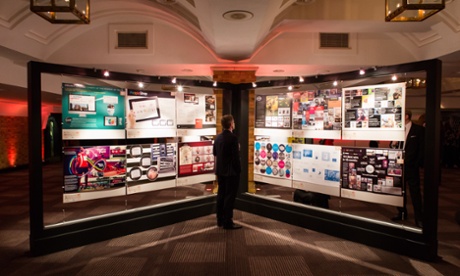
For those who created that work, winning was all the sweeter. “It’s lovely to be recognised as different,” says Richard Perry, partner at Founded, winner of Best Breakthrough Agency of the Year. “It’s really precious and it means that you don’t have to shout to get heard. You can just do things differently, or with a slight twist. It’s not always about big ideas. It can be about small, perfect, beautiful ideas. They might work as well.”
The legendary MMM3000 Meat Snacking Helmet, brainchild of Saatchi & Saatchi and Saatchi & Saatchi X for client Kerry Foods, picked up several awards, including Best Social Media, Best Creative Digital and Best Campaign Doing Differently. It sparked much joy around the Saatchi table when Jones produced a real-life version, originally created by the Mattessons Fridge Raiders brand online community, complete with dangling tasty bites.
“It feels brilliant to win, completely brilliant,” says Chris Owen, marketing controller of Kerry Foods. “We needed something different because we already do something different – selling meat snacks. If you want to engage with young adults and teenagers, you have to engage in their sort of media and get them interested.”
And the judges also recognised the real social value of reaching people. Youth marketing agency Livity’s Zipit campaign for the NSPCC/ChildLine, a smartphone app and online resource created to tackle the issue of sexting among teens, has resulted in more than 60,000 downloads to date of their fabulously sarky riposte jpegs (“Never.Gonna. Happen.” on a picture of a pig with wings, for example). It won Best Strategic Thinking and Best Digital.
“When a business is like us and has a social purpose right at its heart, it’s really important to get recognition for what we’re doing,” says Lianre Robinson, Livity’s business director. “It’s really great to be able to tackle real issues and show that it doesn’t need to be dry or unexciting. It can be creative and innovative in industry-changing ways. Zipit is quirky, fun, a bit irreverent; but it actually understands how people are behaving, mimics that, and gets them using it.”
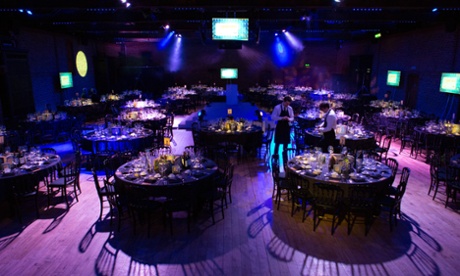
The night itself? Well, a traditional ceremony, it wasn’t. As well as dispensing with the hackneyed winners’ tramp to the front – instead, lanky, frenetic host Sanderson Jones ran from the in-the-round podium to the winning tables, adding an entirely appropriate sense of chaos to the proceedings – this new approach also meant ditching what Knox calls “accolading for accolading’s sake”.
The judges decided that the work in several categories – including Best Intellectual Property Development and Best Creative Advertising – might be good, but it wasn’t “best”. They awarded a merit in these categories, but no winner. “There was a general consensus [among the judges] that our work is actually becoming quite homogenised,” says David Harris, chair of creative judges. “Nobody is being terribly brave.”
But now the #dodifferent gauntlet has been thrown down, Harris says that next year he hopes to see all the talent out there relishing the challenge of creating work that isn’t just good. “We should be celebrating the work that is great,” he says. “But we also need quality control. Raising the bar, if you like. And I also think we could be a little bit more global. There’s a tendency in the UK to say: ‘This is the best in our category in London.’ Actually, we should be saying: ‘This is the best in our category across the world.’ That’s what we should be seeing as our competition – while being brave and doing different.”