When it comes to cricket, the biggest compliment ever paid to the Spin came from “Tiger” Bill O’Reilly, the legendary Australia bowler but, by the time of meeting, a trenchant observer and writer on the game. The introduction, by an esteemed colleague, came in the old press box at the Sydney Cricket Ground during the one-off Bicentennial Test between Australia and England in 1988. His reputation was as an irascible fellow. “Ah, yes,” he remarked, “I remember you. You swung the ball at the Waca.” More than a decade on and he remembered that – and, you see, the memory of those kind words lingers still.
Swung the ball at the Waca – that spelling, incidentally, is insistent Guardian style apparently, for those who wonder, despite the fact that the Western Australian Cricket Association, whose ground it is, themselves use WACA: it did swing, too, in early 1977, when the England team were en route from a successful tour of India to Melbourne for what was to prove a historic Centenary Test. The Fremantle Doctor, the sea breeze that biffs in down the Swan river, blew nicely and conditions were good.
It had only been a Test match ground for half a dozen years, the hulking concrete floodlight pylons, which have loomed claustrophobically over the ground for three decades, had yet to be constructed – for some reason they always reminded of something from Gerald Scarfe’s animation for Pink Floyd’s The Wall – and there was a slightly different pitch orientation but the ball flew through, slips stood in a different postcode to normal, clever batsman, local usually, cut and pulled errant bowling with relish and the ball raced away tantalisingly across an outfield like an inverted saucer: it was a tremendous place to play for batsmen and bowlers alike.
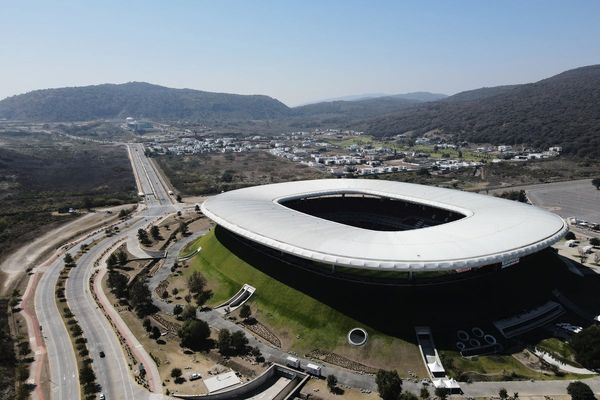
Now, though, the ground is to lose some of its status as one of the most challenging venues for teams visiting Australia and the decision to move the highest-profile Test matches, ODIs and Big Bash matches to a modern purpose-built, multiuse Perth Stadium across the river at Burswood had caused some controversy. From 2018 onwards, when it is expected the new venue will be ready, Australia’s Tests against England, India and South Africa will take place in a ground that will seat more than 50,000, probably in relative comfort and shaded from the 40C+ heat that hitherto fries spectators who must sit in the sun.
Alongside this, the current Waca will be transformed into a “boutique” cricket ground, seating about 15,000, on which matches of lower profile (which is to say, less lucrative) will still be played. The last time England will play a Test on it looks likely to be in December 2017. Whether or not all this turns out to be a good thing or not only time will tell but the last time the Spin reported on a Test match there it was from an open marquee, intolerably hot, located at square leg and 150 metres away from the pitch: hardly ideal, then, so a guess would be that those who actually watch the game, either as spectators or in the media, will be happy to sacrifice Proustian memories of times past for a bit of air conditioning and a decent view.
The tricky part will be in the attempt to replicate the playing conditions that since the first Test there in 1970 have made the ground unique. The new stadium will have drop-in pitches, the technology for the cultivation of which has improved immeasurably since the days of Kerry Packer’s World Series cricket. The intention, of course, is to develop pitches using the same soil type and grass rooting, with the aim of obtaining similar pace and bounce, although this raises the question as to why it cannot, therefore, be done elsewhere.
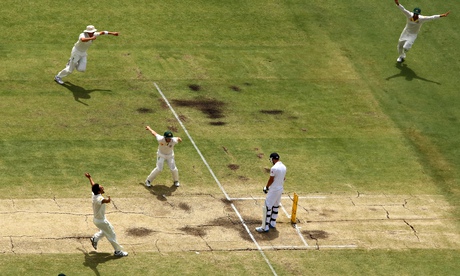
As Russell Jackson tells in his recent piece about the ground, however, stocks of the Harvey-Waroona soil that baked like iron and gave the ground its reputation for skiddy pace were running out even as the Waca received its Test status. Aside from anything else, the replacement, while maintaining some of the characteristics, had a tendency not so much to crack as crevice, which may have looked a great deal worse than it played but was still, and remains, a visual, and hence mental, problem. The influence of the Doctor, which helped the ball swing and gave drift to spin bowlers, is sure to be negated, too, by an enclosure of stands. It would be wishful to think that cricket will be anything like the same again in Perth.
The Spin was privileged to have played at the Waca, and to have bowled well, too, considerably better than the figures in the book suggest, since you ask, not helped by inadequate catching – they always say that fielders as much as anyone need to adjust to the brightness of the light and the way in which the ball floats, hanging in the air almost, to the close catchers – and intransigent umpiring when it came to lbw decisions; yes, it rankles even after all these years. But the Spin’s single match there pales into insignificance when matched against the wealth of experience to be found at Guardian towers. There is Dizzy of course, our wonderful columnist, who as an integral part of one of the finest of all Australian pace attacks, played six Tests on the ground – taking a five-for in the first of them – and half a dozen other first-class matches besides. Then there is Victor. It is a little recognised fact that Vic could well be the only England international cricketer to play in a Sheffield Shield-winning side.
But in 1986-87, Western Australia, with Vic’s help, took the title, in the course of which he played six matches at the Waca. Talking to them both, it was instructive, not to say reassuring, that their memories of the ground back up those of the Spin, who remembers a dark grey surface so hard that a spiked boot skidded on it rather than penetrated, such that modern needle running spikes, or even trainers, would have been an option if either had been available.
Here is Vic: “I remember how you could hear your studs clunking on the turf as you hit the popping crease because it was so hard. Also how deep the slip cordon would be which made slip catches much easier. From mid-on the ball seemed to be in the air for such a long time before it reached the fielder. There was never much rough from bowlers’ footmarks – it was so hard, but there could be cracks getting ever wider, but you had to hit the cracks for something to happen. By and large there was minimal sideways movement but of course there was extra bounce and often swing. Often visiting pacemen excited by the carry would bowl too short and the canny batsmen would leave the ball as much on length as line.
“Rod Marsh always used to say you’ve got to be able to play the horizontal bat shots to score runs there. The Doctor would come either mid-morning (if early) mid-afternoon (if late), the flags would flutter, bringing a bit of relief because it could be bloody hot come February and it would mean all the bowlers would want to change ends. We had two left-armers who might start from the City (Prindiville stand) end but when the Doctor arrived they would switch to the River (police building) end. It was helpful for an off-spinner – it came from long-leg, so some drift towards slip.”
And Dizzy, too: “I will definitely miss the ground, it is a unique place with the bounce and carry – I’m no groundsman but I’m told it is something about the clay content – and that provides a different challenge for players and the best adapt to it. It’s a great place for bowlers but a great place to bat as well. Justin Langer always spoke about the first 30 mins being some of the hardest batting conditions but after that, once used to the bounce, it can be the best. Like many, I was guilty of bowling too short. You get so excited and carried away when you see the ball fly through at head height. Bowling a short length looked pretty but it did not take wickets there, you still need to get batsmen on the front foot and bring the slips into play. It is a wonderful ground with wonderful history, so to see it losing the top-tier international matches is very sad but it’s a commercial reality. Let’s see what this new ground brings, it might be a wonderful venue. Hopefully they can recreate some of the Waca characteristics in the pitch.”
And the Spin? He certainly bowled full, got driven a bit, pulled a bit when tried to retaliate and learned a lot. An overriding recollection, though, is with the bat. Readers with a memory for such things may recall a column in which there was an admission of such inability to cope with leg spin that reading quantum physics in Serbo-Croat would be a doddle by comparison. Now, though, there was a game against Western Australia to be saved and with only two wickets remaining, the Spin joined Mike Brearley. Bowling at one end was Tony Mann, a leg-spinner who was to play four Tests for Australia, and at the other, Dennis Lillee. It was a conundrum. “Brearlers,” the Spin said as he joined his county captain, “this is tricky but if it’s all the same to you, would it be OK if you took the spinner and I faced Dennis?” He agreed that where possible it was a fine idea. So the Spin may be the only tail-ender ever actually to volunteer to face the greatest fast bowler of them all at that time, coming nicely to the boil for the Centenary Test, on the fastest pitch in the world. And survive.