“Nice to meet you
Where you been?
I could show you incredible things
Magic, madness, heaven, sin
Saw you there and I thought, oh my god
Look at that face, you look like my next mistake
Love’s a game, wanna play?”
Taylor Swift, Blank Space
Video games are the most demanding entertainment medium. They take a lot of time; they often require skill and perseverance, and although they are usually built around logical systems, sometimes they are not altogether fair. They hide stuff from you, or tweak the rules in favour of computer-controlled characters. Sometimes you don’t know where you stand.
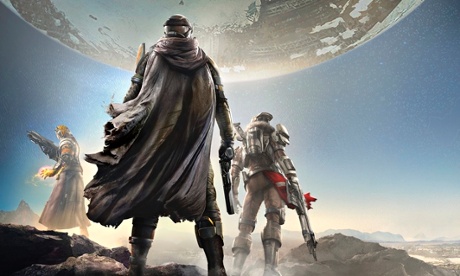
Destiny is a great example. Bungie’s online shooter has been derided for its dull faltering narrative and its obtuse endgame. Once you have completed the story missions, which involve attempting to save humanity from armies of alien invaders, it’s all about levelling up your character and going on quests with friends. But the system is not clear, and earning and unlocking new weapons can be a massive chore. You have to kill enemies for hours hoping they’ll drop the goodies you need. The game hides its cards, and keeps you at distance.
Yet people play. Almost every games writer I know is addicted. It has these perfect cycles of action and drama; you can play for half an hour and know that you will progress your character. Oh but the system can be so cruel, and there’s no decent party gathering feature so it can take an hour to find players and organise yourselves. Destiny is a damaged relationship – it is attractive and fun, but it withholds so much. It won’t let you know it. You can’t get in.
So many games are like this. Dark Souls is an obvious example. This is a game that is filled with systems that interconnect and work together like a monstrous clockwork toy. But you have to work to read them – Dark Souls gives you nothing. The games writer Rich Stanton says that both this game and its precursor Demon’s Souls respect players – they don’t hold your hand. They are not possessive and patronising – and these are good qualities. But sometimes, when you’re low on health and don’t have the right items and you’re facing a 20ft monster, you just think, oh come on, give me something. Tell me what you want.
Books, films and television programmes can be enthralling and demanding. they can make us thoughtful and angry, but they don’t own us in the same way as games do. They don’t take 100 hours of your life; they don’t become habitual. Playing a game like Skyrim or Grand Theft Auto V, with their myriad demands, their side-quests, their emergent tasks, is more like a relationship than “consuming” a film or TV series. Gamers and games have to work with each other to create the experience, and neither ever really knows everything about the other. Some days everything is wonderful and the compulsion loops whirl and you laugh together. But other days, every action grinds, every system glitches or breaks down; you feel furious and frustrated.
All games exist in this space between the player and the designer, both of whom come into the agreement with their own agendas and their own character-forming experiences, their own baggage. It is the tension between these sets of demands that create gameplay. Both participants take active roles. Just like in a relationship.
Play is about practising life. We play to test ourselves and the rule systems of the world. We play to learn and gain experiences – and one very important experience is learning that you’re not happy and need to get out. I got out of Destiny, because I saw in front of me a predictable future of grinding for XP in the same set-piece environments on the same beautiful but soulless planets. I knew there would be fun, but I calculated that, for me, it wasn’t worth it.
We are entering a strange new era. Shared persistent online worlds are creating environments that we can more or less exist in; artificial intelligence will build characters that have simulated emotional lives. And then virtual reality systems like Oculus Rift and Project Morpheus, and augmented reality devices like Microsoft’s Hololens and Google’s Magic Leap, will enhance and deepen our strange symbiotic relationship with games. They will become possessive in ways they haven’t before.
Games are relationships because they cannot exist without our continual input. They respond to us, they in turn evolve with us; and sometimes they are annoying and depressing in the process. The writer Cara Ellison once told me that she felt Dark Souls was an environment that just didn’t want her there – every move you make is uncomfortable; it’s like continually stubbing your toe on a bed post. But you go back, because it has something. You want it to like you, or at least respect you. And 100 hours later, you may still be looking for that acknowledgement and you may never get it.
Dark Souls, and games like it, are fractured love affairs. You know they’re trouble. You walk in anyway.


.jpg?w=600)