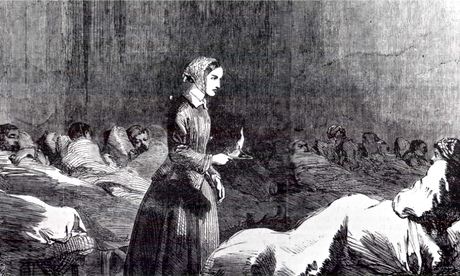
My inbox fills with invitations relating to Black History Month. Usually this means two things. Renewed hostilities from those who deify Florence Nightingale and can’t stand to hear anyone, even momentarily, discussing the qualities of Mary Seacole. They were pretty cross when plans were laid for a statue of Seacole in London. Recently the Nightingale lobby took lumps out of the BBC for suggesting in a children’s programme that Flo could have been a tad racist. The Flo-ites have their equivalent of New Labour’s rapid rebuttal unit. The other hardy perennial is that someone will say why do we have a Black History Month? When are we going to have a White History Month?
A variant of this was directed at the BBC a few years back when it aired a series featuring stories and issues relevant to those of African and Caribbean origin and called it Black Britain. An angry viewer rang the production office. “When are we going to have a current affairs programme about white Britain,” he demanded. The producer, himself indigenous, was lying in wait. “We already have,” he said. “We call it the Nine O’Clock News.”
Commuter says no
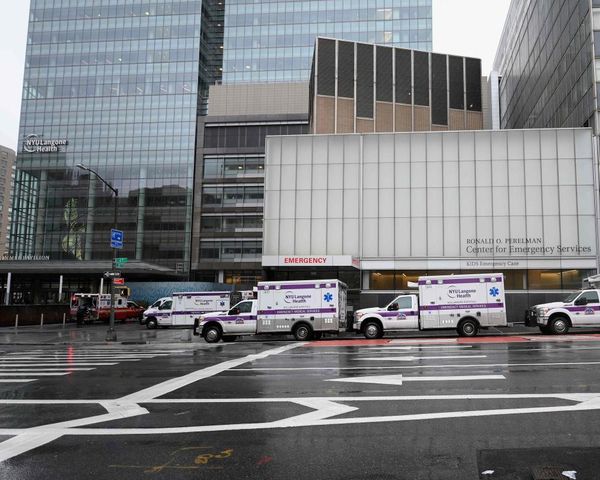
The Ebola crisis hasn’t really taken off in the UK as a medical phenomenon. But the fear of the crisis seems to be progressing quite nicely. Black Africans are regarded warily on planes, on buses and in schools. Lots of opportunity to say the unsayable. I heard one phone-in caller at the weekend complain that every time he wandered onto Bradford’s free city bus – much patronised by students – and “rubbed up against” the black African student passengers, his anxiety levels rose perceptively. You might try not rubbing up against them, advised the presenter. This didn’t seem to have occurred to him. Nor did the possibility that if he stayed away from the free bus, he might – at reasonable cost – give the black African students a wide berth, lower his own anxiety levels and free up space for less jittery commuters. The authorities have yet to detail the risks from actively rubbing up against fellow commuters in the rush hour. High time they did.
Old McDonald had a charm
The whole Ebola operation has been lacking really. No one listens to the health secretary, Jeremy Hunt. Where is the medical leader who can turn on the charm, look us in the eye and give it to us straight? Some of us recall the Falklands War when the news – good and bad – was imparted to a pensive nation by Ian McDonald , a dour career civil servant from the Ministry of Defence. He was described by the author Julian Barnes as having “the delivery and charisma of a speak-your-weight machine”. In matters of life and death, this grave approach worked well: triumph and tragedy, both conveyed in monotone, so that without a transcript you couldn’t tell the difference. McDonald was the template. If anyone could have stopped the frottage on the free bus, it’s him.
And they say nurses have it tough
You certainly can’t rely on the media for calm communication. Some journos have had the nerve to criticise health staff in Spain, where a nurse apparently caught Ebola because of lax procedures. Criticism also of the protective shortcomings in Texas, where staff also caught the virus. Reading this, I was reminded of the comedy that ensued when I and fellow hacks tried to perfect the technique for donning our expensively purchased chemical protection suits during the first Gulf War, that inaugural US outing for the coalition of the willing. We had five minutes to don the clothing, just nine seconds to render the face mask airtight. Had Saddam lobbed even a stink bomb across the border, pretty much the entire British press corps would have been wiped out.
@hugh_muir