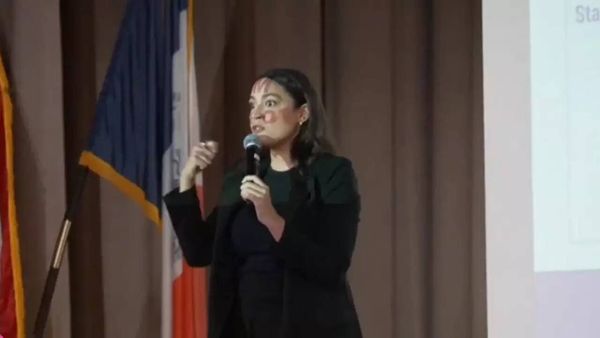
Alison Fleming wants to talk about a big unaddressed problem in education: the lack of female primary school headteachers.
Fleming, head of the successful independent Newton prep school, recently ran a conference about empowering women in leadership, in partnership with a nearby state school. She believes that men find it much easier than women to rise through the ranks at independent primary schools and wanted to provide a forum to discuss the reasons behind this.
“It’s an open secret, there’s no doubt about it, that if you’re a half decent man, then you can find yourself in a good headship in your late 30s, early 40s. And that’s not true for women,” she says. “I think women have to work harder to prove themselves. They damn well earn their stripes.”
There are a lot of different reasons for this, she says. One of them is that traditional prep schools tend to go for a traditional model of leadership, which translates as having a man at the helm. This may partly be because parents choose schools that reflect their own experiences, which for many would have meant a male headmaster.
Men also benefit from being in the minority at primary level. Fleming argues that because women tend to dominate staff, at times there is a misplaced notion that more male role models are needed. “We’ve got so many female members of staff, we could do with a guy in the top job,” is one of the comments she’s overheard. Fleming adamantly disagrees with this, questioning whether a male role model is a good thing if they are a more mediocre leader.
Fleming came to headship six years ago in her late 40s. She started teaching in the state sector in the mid 1980s, but moved into private education after looking into independent schools for her oldest son. She wasn’t happy with the large class sizes and government “fads” seeping into comprehensives.
Many people who know her will be surprised by this, she says, but one of the reasons she did not apply for senior positions until recently was because she was wracked with self-doubt. She worried that she’d be found out as not good enough.
“It was only really when I got to my late 40s that I thought damn this, I’ve seen enough mediocre heads to know now that if they can do it, I sure as hell can,” she says.
Overcoming confidence issues was one of the topics discussed at the conference and it’s something she sees women struggle with when she interviews for positions.
“I [tend to] see women put themselves down a bit more and admit weaknesses,” she says. “And they’ll tell you what they can’t do, before they tell you what they can do.” In contrast, men are quicker to say they’ll be able to do something, like manage a budget, even if they have no experience in that area.
The problem is that when governors are choosing their next head they need to be absolutely certain that the candidate has credibility, and confidence is an important part of this.
“It’s not cockiness or arrogance,” she says. “It’s the sense of ‘I want to lead and I can lead’, and I think men do it more comfortably.”
Another factor that stopped her from becoming a head until later on in life was having children. “I would probably be alongside most heads in saying that there is absolutely no work-life balance in term-time. It’s flat-out. The hours are phenomenal,” she says.
Fleming adds that she couldn’t do the job the way she does if she had young children, although that’s not to say it couldn’t be done differently.
Maternity leave was another subject debated at the conference and Fleming says she finds it difficult to talk about.
“Of course all of us as women believe we mustn’t be disadvantaged by going off on maternity leave. In theory that’s absolutely right,” she says. “But when you’ve got a class of 8-year-old children and their teacher has gone off on leave, there isn’t a single parent who feels pleased about that.”
With a predominantly female workforce, the question of how to manage leave and maintain very high educational standards is tricky, she says.
Although there is no easy solution, she highlights that schools are already finding ways to resolve these tensions. People may begrudge the bureaucracy, but she says the systems and processes that are in place make the transition when handing over a class to another member of staff much smoother.
Another concern raised at the conference, which Fleming flagged up, was flirting in the workplace between young female staff and male leaders. Her remarks got picked up by the Daily Mail and spun into a story about how men flirt their way to the top.
“That’s not what I meant at all,” she says, adding that it reduced a serious comment to a silly story. She wanted to get across that women need to be aware of and careful about how they behave. “If you play the sexual politics game, then you risk quite a lot actually. You risk your credibility as a serious professional practitioner,” she says.
“In my view, a female teacher who avoids the obvious temptation to respond to flirting or power plays, is often the one who succeeds in persuading both men and women that she is the one with the credibility to get ahead.”
The reason she brought the point up was to encourage women to give some thought to the dynamics in the staff room. “I wanted to encourage women to be confident in their own abilities and their own professional judgments, and not feel tempted to rely on winning the approval of a paternalistic head via any means.”