Sustainability means different things to different businesses – what does it mean to Enel?
Sustainability is not advertising, it is not public relations, it is part of the way in which we develop the business. It means respecting local communities, listening to them and understanding what we can do for them. We’re using their land and their natural resources, so we need to create real shared value that’s about social, cultural, and environmental growth, as well as economics.
Forty years ago, the Italian intellectual Pier Paolo Pasolini made a fundamental distinction between development and progress. The first term, he said, referred to the trend towards increasing production of goods for the real benefit of a few; the second, the improvement of the collective conditions of life. This distinction is vital to sustainable development, which is about creating value not only for the business but also for society and environment.
Enel’s emphasis on sustainability has been rewarded by a growth in socially responsible investment. On 31 December 2014 there were 134 socially responsible investors in Enel’s share capital (compared to 117 in 2013), holding 5.9% of total Enel shares in circulation (5.5% in 2013).
What was the thinking behind the recent decision to integrate the company’s innovation and sustainability functions?
It is impossible to have a business model that is sustainable if you don’t innovate. That’s why sustainability and innovation are so strongly linked, and we believe that together they can help create real progress.
Innovating is also our response to new, disruptive technologies that can shake up existing markets, displacing the old ways of doing things but also opening up new opportunities. We want to be a leader in this area, not a victim – but that won’t happen unless we innovate.
Bringing the functions together also supports collaboration and a cross-disciplinary approach. We want to work with startups, universities and research centres and actively involve people who are outside the business. However, unless we are environmentally and socially sustainable, we won’t attract the best people because, quite simply, the best people don’t just work for money.
Where does ‘reverse innovation’ fit in?
In the past, multinationals have innovated and developed new products in their own countries and then exported them. Now it is easier and more effective to go to developing countries, study their needs and then develop new, innovative ideas there, on the spot.
In Africa, for instance, we’re working with startups that are providing electricity to people who are off the grid using PV panels, low cost storage and smart meters. These ideas can then be repackaged and exported back to industrialised countries as cheaper solutions.
To find, develop and take advantage of the best solutions, Enel has an open innovation approach that gets the best out of both our technological capabilities and opportunities from the innovation ecosystem. This approach includes Enel employees, universities, research laboratories and centres, companies, start-ups and business incubators, institutions, customers – indeed anyone who wants to contribute to Enel’s commitment to building a better world by innovating together.
The approach involves many partnerships. For instance, recently Enel Green Power and energy storage manufacturer Tesla agreed to test integration of Tesla’s stationary energy storage systems with Enel Green Power’s solar and wind plants.
Startups obviously play an important role at Enel – how do you go about finding them?
The complexity and size of our organisation can make it difficult to intercept innovation at seed stage, which is why we decided to get structured so we can deal with the best startups.
We have built an ecosystem of venture capital funds, universities, accelerators, other corporations and institutions, where startups get all they need to grow and become success stories, while Enel benefits from their innovation. We have teamed up with five international venture capital funds that focus on clean technology to select the best startups to invest in.
We have joined the Startup Europe Partnership, whose members meet and share best practices, know how and resources. It’s a fantastic way to open our doors to Europe’s top energy startups.
Enel, in partnership with startup development organisations Accellerace and Funding Box, is also coordinating INCENSe, an accelerator backed by the European Commission that identifies and incubates European and Israeli startups. This has already selected 14 startups and, by the end of 2016, will select another 28. And in Brazil, Enel is going to launch Energy Start, an initiative to select and incubate startups that have a strategic fit with Enel.
All these initiatives demonstrate that we want to innovate alongside startups, making the most of their passion and dreams, not just in the countries where we operate but all over the world, because energy innovation can help lay the foundations for a better future.
So if you think there’s a good match, how does the relationship work?
We want to partner with the best startups in the world. We’re not interested in acquiring equity but we invest in their products. We support them to scale up, improving and testing their solutions, and offering them access to our ecosystem where they can take advantage of our expertise, facilities and a potential audience of 61 million customers in 31 countries.
What’s also crucial is that this commitment to working with startups runs through the whole company. We have a powerful innovation committee headed by our CEO and, together with innovation mangers in each business line, it is constantly analysing and evaluating the work we are doing with startups.
Athonet is one of the startups which are part of a long-term industrial partnership. How have you worked with them?
Athonet is an Italian startup that developed an ‘LTE’ (‘long term evolution’, providing wireless connections using mobile phones) private network at much cheaper prices than other players offer – sometimes less than a tenth of the price we’d pay elsewhere. This is excellent for developing countries because not only does it provide us with the connections and communications we need to develop a modern electricity grid, it also means that local communities can access the internet.
Enel is using this technology in Italy, in the Federico II power plant in Brindisi, and we will soon adopt it on a larger scale. But I should underline that we have many other startups in our portfolio and all of them could generate revenues and disruptive products for the energy sector.
Our aim is not just to innovate for Enel – we want to better the world. If we help to provide electricity to some of 1.4 billion people who don’t have access to it, we can help them to develop, to get access to information through the internet and to improve education.
Could you give an example of how you’ve brought innovation and sustainability closer together?
Yes, just last year we helped to bring energy to a remote village in Chile. About 300 people live in Ollagüe, in the Andes, about 3500m above sea level. It’s surrounded by desert and volcanoes, temperatures vary from -20oC to +20oC, and it’s completely isolated from the national grid.
We developed an off-grid hybrid plant for the community using PV panels, a wind turbine and some innovative touches that help make sure it operates in the harsh conditions. These include blades on the turbines that are vertical rather than horizontal, and a sophisticated electro-chemical storage system.
Before, villagers could only count on electricity and hot water until about 2pm each day but now it’s available all the time.
Looking to the future, what do you think will be the most important innovations in terms of making electricity more accessible and more affordable?
First of all I think we will see much more powerful, efficient photovoltaic (PV) panels that are able to collect much more of the sun’s energy. This links in with improvements to batteries too. In the 1970s computers were huge, then microchips came along and revolutionised things, and I think a similar technological jump is going to happen with batteries. Then, along with the new PV panels, we can start to connect up more people who don’t have regular access to electricity.
I think the other huge innovation will be in electric mobility. Again batteries will play an important part, and we’re not far away from ones that will allow cars to travel for a 1000km. And linked to this will be improved vehicle charging that takes minutes not hours. It will be just like refuelling a normal car.
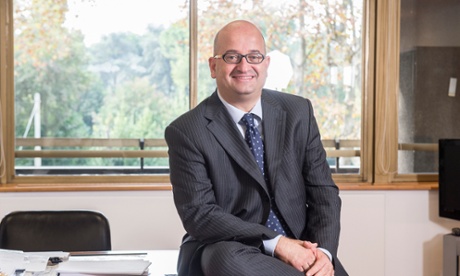
Ernesto Ciorra is Enel’s head of innovation and sustainability.
Content on this page is paid for and produced to a brief agreed with Enel, sponsor of the energy access hub at the Guardian Global Development Professionals Network.