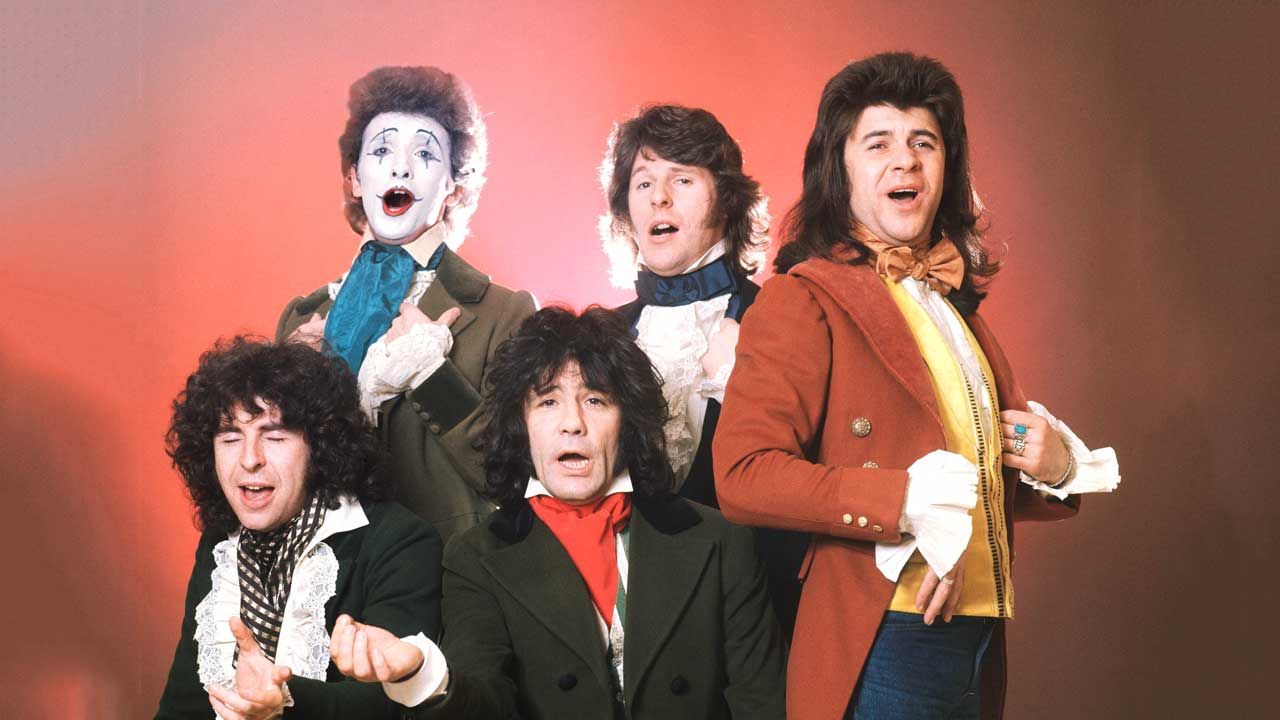
The idea of the Sensational Alex Harvey Band as a progressive, socially aware activist group will come as a surprise to many who heard only their biggest hit, their 1975 cover of Tom Jones’s hit Delilah.
Taken from their Live album of the same year, it was released without the band members’ knowledge, but on hitting the Top 10 it brought them a new level of publicity. It wasn’t all for the good, though, since it was regarded as a novelty single in some quarters – especially because of the light-hearted dance performed by frontman Harvey, guitarist Zal Cleminson and bassist Chris Glen during the solo.
“People thought we were one-hit wonders,” late drummer Ted McKenna once said. “They thought we were a comedy act. Out of context, you couldn’t tell how subversive it was. It’s about a man driven mad by betrayal who murders the woman he loves, and blaming her for what he’s done. What’s funny about that?”
“We only came up with the dance because we’d been doing Del Shannon’s Runaway on the last tour and it had a dance,” Glen says, “and we needed something to replace that. It was meant to make people think: ‘They’re singing about holding a knife in my hand and stopping her laughter, but they’re dancing? What the fuck’s that all about?’”
Perhaps the problem with Delilah was its accessibility – one of the reasons Harvey had been attracted to the song. SAHB had previously covered Jaques Brel’s Next, an equally dark song about a man driven to insanity through his experience of his own army’s actions in a war.
Their performance on TV music show The Old Grey Whistle Test in 1973 made it absolutely clear what was going on, although there was still an element of dark humour there. The style of the song was impossible to misunderstand.
Seen in the context of a SAHB show, their intent with Delilah was clear. Seen on Top Of The Pops alongside the sugary-sweet songs of the era, it was far less so. It affected the band’s profile permanently, and not all in a good way. In an era where the song has been re-evaluated, and Welsh rugby has banned its singing because of its subject, producer Dave Batchelor remains convinced its release was a good move.
“It’s one of the best covers of all time,” he asserts. “A really clever and cheeky version. It should have been a much bigger hit and it deserves respect.”