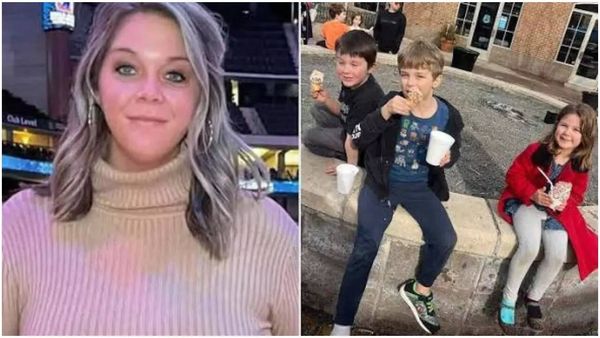
FORT WORTH, Texas — The continued delay of the murder trial for the former Fort Worth police officer who shot and killed Atatiana Jefferson is disrespectful to the community and family, community leaders and Fort Worth residents said after a judge granted a motion Wednesday that moved the trial to May.
Jefferson, 28, was shot inside her own home in south Fort Worth in October 2019. More than two years later, former Fort Worth officer Aaron Dean has not gone before a jury.
Jury selection was set to begin in Tarrant County on Jan. 4, until Judge David Hagerman approved the defense team’s motion Wednesday morning for a continuance. The trial is now scheduled for May.
“Is this how justice comes for Black women?!?!” Jefferson’s sister Ashley Carr posted publicly on her Facebook. “Just let me know!! How long do we have to wait?”
Carr also posted that her sister Amber Carr was admitted into the hospital and was in critical condition on Wednesday. Amber Carr’s son was in the home when Dean, who was responding to a neighbor’s call about open doors at the home, shot Jefferson through a window at the back of the house. The family filed a suit against Fort Worth over the trauma the child endured — and continues to face — after witnessing his aunt’s death.
“People just don’t get it! It’s really real over here,” Ashley Carr wrote in the post. “And I would like a break… just a moment.”
Nysse Nelson, a leader with the local activist group Enough is Enough Fort Worth, said she was at the courthouse Wednesday to support Jefferson’s family, and had been in touch with them throughout the day. She said the entire family was essentially in “critical condition” psychologically because of everything going on with the case and within their family.
“I don’t think anyone was mentally prepared for a continuance until May,” Nelson said. “The focus was on the change of venue. And this was unexpected. This was very unexpected. We thought — the family thought they were about to get what they deserve. It was about to happen. We were gonna go through this trial and then start healing and taking care of ourselves.”
Wednesday was the third consecutive day that Hagerman heard and ruled on motions in the Dean trial. The focus was primarily on a motion from Dean’s defense team requesting the trial be moved out of Tarrant County. Hagerman did not rule on that motion on Wednesday. He said the change of venue motion will be considered in May.
Dean’s defense team, which consists of attorneys Harrison Oldham, Miles Brissette, Robert Gill and Timothy Kae Chung Choy, requested on Dec. 8 that the trial be delayed. The motion for a continuance said two expert witnesses in the case are not available in January.
“This is absolutely a slap in the face to the judicial process to continue to allow the defense to continually make excuses and delays,” Cory Session, the vice president for the Innocence Project of Texas, said about the delay.
Dean’s trial has been moved multiple times. In October 2020, Hagerman set a tentative window for Dean’s trial and said that although scheduling in the case might change, the trial would likely be held in August. As cases continued to back up due to COVID-19, the summer passed without a trial being scheduled. On Nov. 16, the trial was set for Jan. 10, with jury selection to begin on Jan. 4. At that Nov. 16 hearing, the defense told Hagerman they were not ready for trial.
“I have no faith in this justice system,” said Kwame Osei Jr., one of the leaders of Enough is Enough Fort Worth. “I don’t feel like justice truly exists, at least for Black folks. The justice system is working the way it was designed to work, and working for those who are privileged. In this case, that being Aaron Dean.”
In his ruling Wednesday, Hagerman said there would be no further continuances. But Osei worries the trial could be delayed further if the defense’s change of venue motion is granted. If Hagerman agrees to move the location of the trial in May, it could be pushed back again in order to figure out where the trial should be moved to.
“It makes me upset, because I think it is very disrespectful to Atatiana Jefferson’s family,” Osei said. “They have been waiting for so long to seek some type of justice for the illegitimate killing of their sister. And it’s like they just continue to be told, ‘Wait, wait, wait, wait.”
Session said the delay in Jefferson’s trial is “absolutely ridiculous” in comparison to other high-profile trials, such as Derek Chauvin’s trial after Chauvin murdered George Floyd in May 2020. Chauvin was convicted on April 19, 2021.
Session served on the city’s Race and Culture Task Force in 2018 and has spoken out in favor of the formation of a civilian oversight board for cases like Jefferson’s. After Jefferson’s death, Session helped organize a meeting with Jefferson’s family, the mayor, the police chief and other city leaders to show support.
In July, Fort Worth Mayor Mattie Parker urged Hagerman in a public statement to schedule a trial, saying until the criminal trial happens, “Fort Worth cannot reconcile or move forward as a more unified community, and more importantly, Atatiana Jefferson’s family and friends cannot begin to find healing.”
Parker is under subpoena for the trial and said in a statement Wednesday that she couldn’t address the delay specifically.
“As Mayor, my focus remains on continuing the progress we’ve made in addressing the needs of our entire community and healing after this tragedy,” she said in her statement.
Other members of the community have been deeply impacted by Jefferson’s death and have been watching the case closely.
Jannet Ponder, an administrative assistant at a community college, said she was irritated and angry when she read the news about the trial’s delay.
“There’s stress, but now it’s starting to build up to anger,” Ponder, who has lived in Fort Worth since 1992, said. “Because the trial has not even started. I think a lot of people are getting angry because the situation should have been solved already.”
Ponder said while she was upset, she was not surprised by Wednesday’s ruling.
“The wheels of justice are always slow when it involves a Black person where a Black person is a victim and a white person is the perpetrator,” she said. “But yet if it was flipped, this wouldn’t have been two years. This would have been done in a year, and the guilty verdict would have happened.”
______