It is beyond belief that Harriet Harman chooses to promote the view that Labour should not vote against the government’s plans for tax credits, when independent analysis makes clear the damage this will inflict on some of the poorest families (Harman urges Labour not to oppose welfare cuts, 13 July). The acting leader and her handlers may take the view that the party should be “grown up”, and accept the will of the electorate, but they have ignored the fact that the longest-running unanswered question of the election campaign concerned cuts to the welfare budget. And although Matthew d’Ancona may consider Osborne’s “national living wage” to be a triumph (Opinion, 13 July) try telling that to younger people or those who are asking the real question: what is Labour for? If the party, regardless of who leads it from September, carries on as it has begun in the wake of Ed Miliband’s resignation it will be difficult to find any reason to vote for it, with or without the nose peg necessary since Blair’s ill-conceived intervention in Iraq.
Les Bright
Exeter, Devon
• Harriet Harman’s acquiescence to George Osborne’s savaging of working families, and her exhortation to Labour to get in touch with its inner Tory party, seems to be an unnecessary own goal. If the IFS is remotely correct about the 13 million people who will be disadvantaged to the tune of £20 a month, or the three million who will lose £90 a month (Report, 10 July), then all Labour has to do is wait for the next election. Demographics will do the rest. On the other hand, I’m rather impressed by Jeremy Corbyn’s notion that the Labour party should oppose the government, as it’s what is technically referred to as “the opposition”.
Nick Whitmore
Newcastle upon Tyne
• Harriet Harman implies that a majority support the proposed Tory cuts. Even if true this does not justify her supporting Tory policies. Brought up in privilege and luxury, she has no idea of the shattering impact of poverty. Recently I have been with a couple surviving on £75 each a week, a hard worker who on losing his job has been waiting for weeks for benefits to start, and a low-paid worker in debt to the legal loan sharks. Their plight will now get worse. Labour’s role is to oppose the cuts.
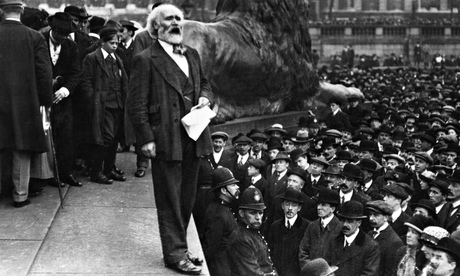
Harman probably has little regard for a main founder of the Labour party, Keir Hardie. One hundred years since his death, it is timely to remember that when he entered the Commons, few voters opposed poverty. He and others set about changing public opinion. If today’s Labour party cannot do this what is the point of having it?
Bob Holman
Glasgow
• I’m afraid Harriet Harman is seriously mistaken if she thinks Labour lost votes in the last election because of its policy on welfare benefits. It lost my vote because it turned its back on all those struggling people, both in work and unable to work, who were having to rely more and more on food banks to feed their children. A party that apparently takes little account of the plight of many of its citizens, or isn’t ready to oppose unkind and damaging policies, doesn’t deserve support.
Thelma Percy
Bognor Regis, West Sussex
• Despite all the attendant wailing and gnashing, one can appreciate where Harriet Harman is coming from. The bitter truth, and a high hurdle Labour now faces, is that the majority of the electorate likes such cuts.
Martin Jeeves
Cardiff
• Re Harriet Harman’s stance on the welfare bill, here are the responses of two Labour MPs to Ms Harman’s plans: “I think we are entitled to say that these measures are not in accord with Labour values; they are not economically necessary” and “The cuts are punitive and cruel”. Both were quoted in the Guardian of 11 December 1997, when lone parent benefit was cut. Now, nearly 20 years later, Harman has again left me thinking that I must withdraw my support for a party which, if she and the shadow cabinet have their way, will abandon its principles and further disadvantage large numbers of children who are already poor.
Judy Turner
Malvern, Worcestershire
• Your Journal essays this week on Labour’s opportunities are very welcome. It is a pity that the Labour party is not promoting such discussion itself, either with members like myself or with the wider public. Instead we are subjected to a leadership and deputy leadership election where discrete policy gobbets are periodically served up by contenders. We needed time to acknowledge the scale of the defeat, reflect on our shortcomings, then begin to develop a new sense of purpose. What’s to be done?
Rob Davies
Pontesbury, Shropshire