The ancient green doors of the Grand Bazaar have welcomed customers for over five hundred years. Closed for 70 days at the start of the Covid epidemic, the huge shopping centre is open again.
"Believe me, it was tough," said Fatih Kurtulmus, the Chairman of the Grand Bazaar board. "Thank God we've now returned to our second home. For us, health is a priority, then comes security, and then the economy."
Stringent health checks are in force. Everyone entering the five-hundred-year-old bazaar now has their temperatures checked.
Public announcements, along with signs, inform visitors of the need to maintain social distancing and wear masks.
Short of the usual 150,000 shoppers
People are returning, albeit well short of the usual 150,000 daily shoppers.
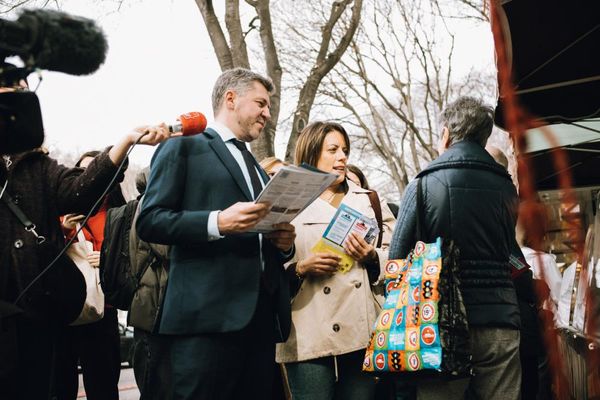
"I've lived in Istanbul for a long time and have never experienced the Grand Bazaar being closed," said Dr. Muge Komurcuoglu with shopping bags in hand.
"Its reopening is a really good thing. As a doctor, I am more aware of the risks. But as long as you wash your hands and wear a mask, there's no problem."
Komurcuoglu said her bazaar visit was possible as infection and mortality rates have markedly fallen, easing pressure on health workers.
Turkish death-rate remarkably low
According to the US-based John Hopkins University, which monitors the Covid epidemic, Turkey has a 2.6 percent mortality rate. Germany, widely considered among the most successful in fighting the virus, has a 4.6 percent death rate.
"The most important point in our success has been reducing the need for intensive care," said Dr. Mesut Sonmez, head physician at Istanbul's Sultangazi Haseki Hospital.
Health officials working at intensive care units in fighting against #coronavirus (Covid-19) in Sultangazi Haseki Training and Research Hospital in #Istanbul Turkey #AA
— Anadolu Images (@anadoluimages) May 1, 2020
📸: Arif Hüdaverdi Yaman pic.twitter.com/NldhavuONf
"This became possible with our early start of the treatment and giving the necessary treatment and support to the patients on time."
Sultangazi Hospital treated the first Covid-19 patients, 20,000 patients later, only a handful remain.
"We're the victors in this war - at least for now, we're ahead, one-nil," says head nurse of intensive care, Merve Altinkaya.
"We're much better off now as our cases have declined, which means more motivation, shorter working hours, and less tiredness," she added.
Massive investment in health
Sultangazi is among many new state hospitals built as part of the government's massive investment in health. A similar recent expansion in private hospitals, ensured that Istanbul, the epicenter of Covid-19, wasn't overwhelmed by the pandemic.
Turkey's young population is also cited as a factor in the country's relatively low death rate, since young people are less vulnerable to the virus. Also, elderly people in Turkey are usually cared for in the community rather than in nursing homes, which were a hotspot in other countries for Covid-19 related deaths.
But the government is facing mounting criticism from health professionals about how the Covid casualty figures are calculated.
Tourism sector suffering
Ankara is now lobbying hard for the European Union to lift travel restrictions. Tourism is vital part of the Turkish economy, accounting for over 10 percent of GDP.
At Istanbul's Bazaar, tourists account for around half of the money taken in by the 4000 shops. For sellers of Turkey's world-famous carpets, the figure rises to over 90 percent, according to rug seller Hasan Can.
"We close early because there is nobody. There are no people because our business is mostly with tourists," said Can. "We are just coming to kill time. We have hope it's going to be good. I hope it gets really better."
But Ankara's easing of controls in its bid to revive the economy, with the message open for business and tourism, is causing growing unease among the medical community.
"Until a vaccine and treatment are found or unless it mutates, this virus will always be in our lives, it's an invisible threat. It's in our hands, in our society's hands, not to turn this optimistic picture into a pessimistic one," warns Dr. Mesut Sonmez.