
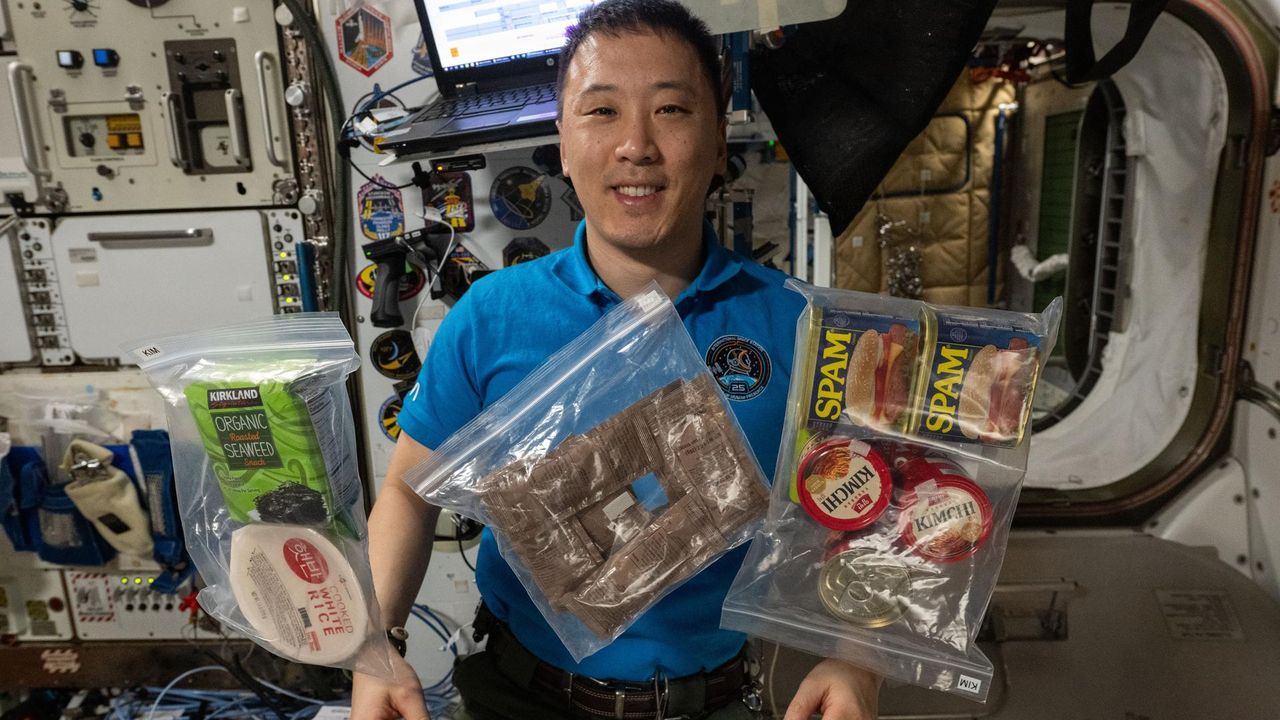
Food has long played a special role on the International Space Station (ISS), where crews from around the world bring pieces of their culinary heritage to share with one another. Beyond the standard menu of thermostabilized entrées and rehydratable snacks, astronauts can request "bonus food" items from their home countries, turning mealtime into a community experience and a way to maintain ties with Earth.
What is it?
As a Korean-American astronaut — and one of NASA's most accomplished, with careers as a Navy SEAL, Harvard-trained physician and now spaceflyer — Jonny Kim often speaks about honoring his heritage.
Sharing Korean cuisine in orbit isn't just a treat; it's a symbol of representation aboard an international laboratory where culture and science blend daily. These moments also highlight the importance of food in astronaut well-being. Familiar flavors help reduce stress, combat homesickness and create a sense of normalcy during months-long missions.
Where is it?
This image was taken aboard the ISS in low Earth orbit.
Why is it amazing?
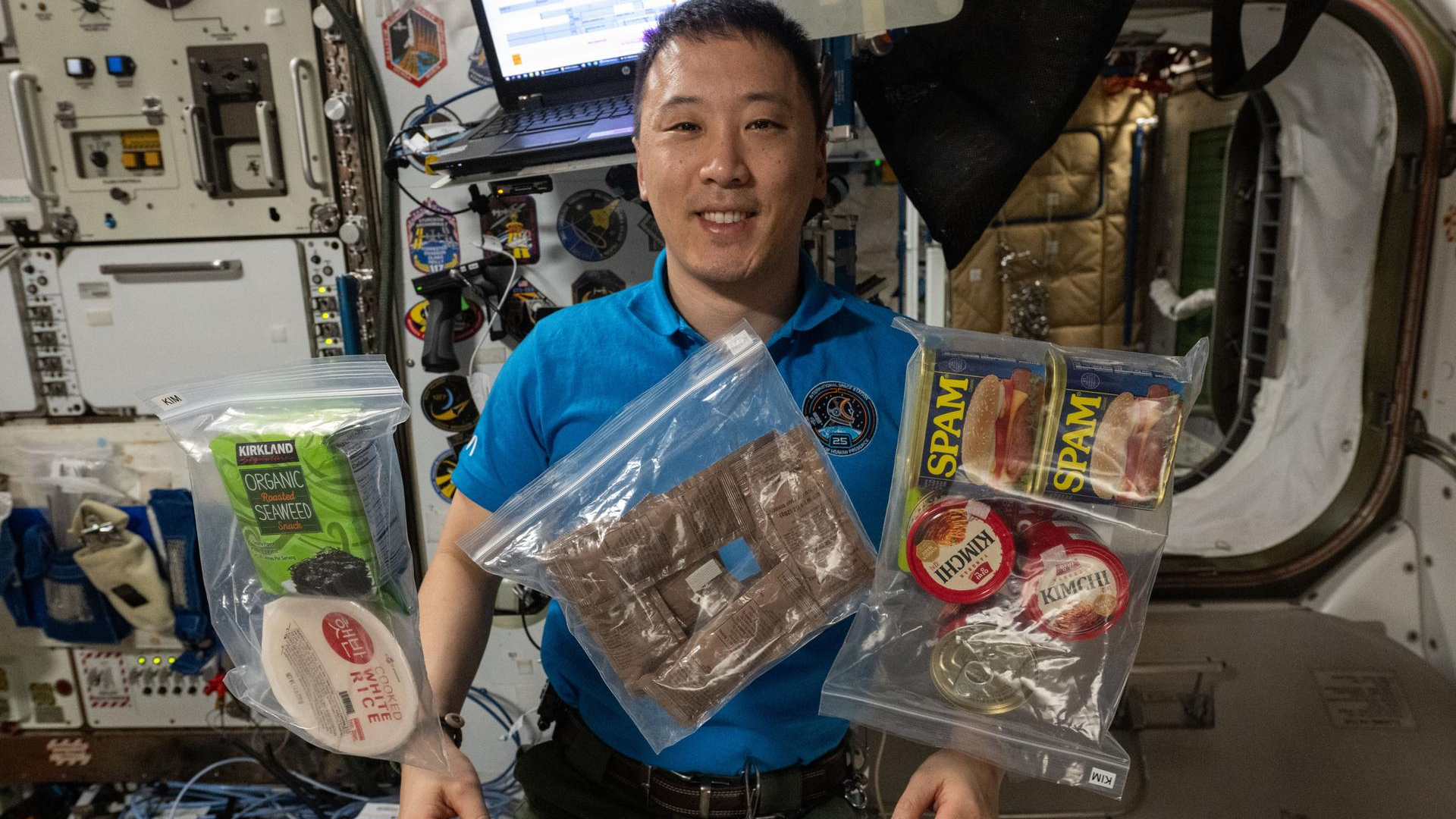
While NASA's research into space nutrition focuses on health, caloric needs and long-duration mission planning, meals like Kim's remind us that food is also about humanity. Each dish carries memories, identity and comfort, qualities that matter just as much 250 miles (400 kilometers) above Earth as they do at home.
In showcasing Korean and American foods side by side, Kim shows the core spirit of the ISS: many cultures, working — and sharing meals — together in orbit.
Want to learn more?
You can learn more about space food and the International Space Station.