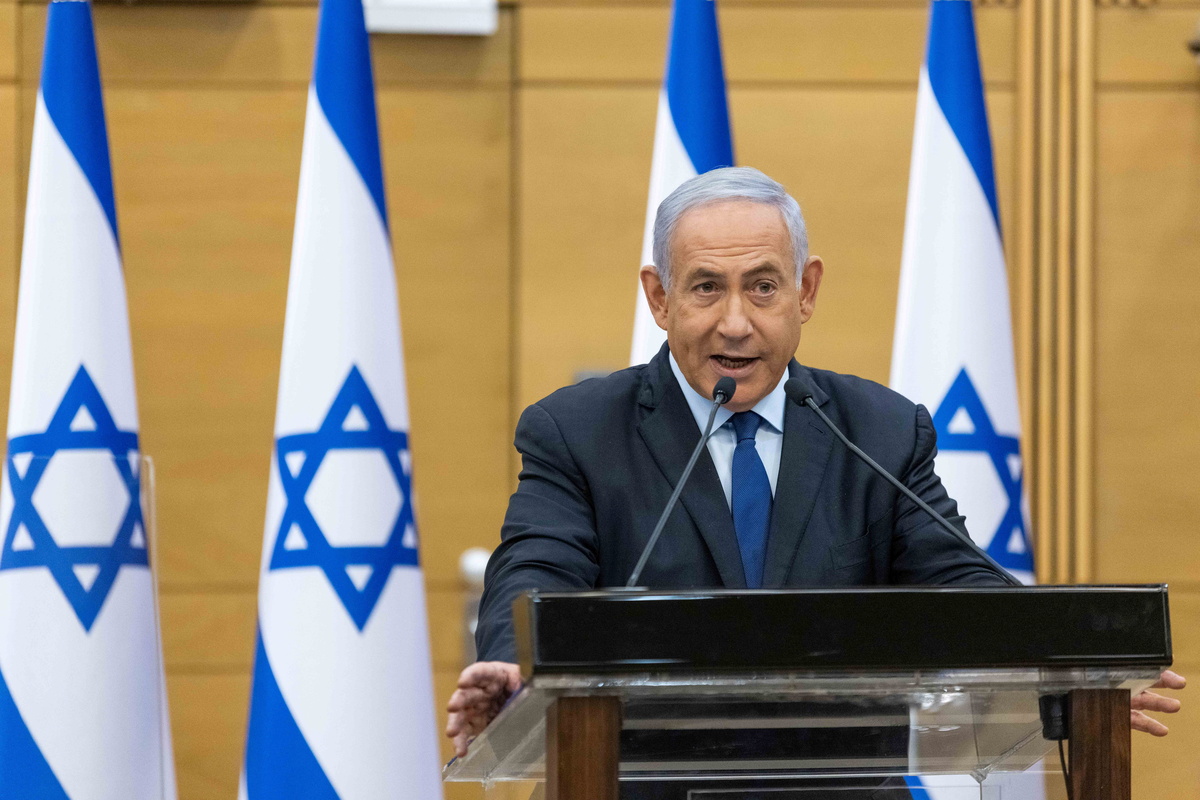
Two rivals of Prime Minister Benjamin Netanyahu announced a partnership on Sunday that could remove Israel's longest-serving leader.
Here is a timeline of events that led to the emerging coalition deal between centrist Yair Lapid and the far-right Naftali Bennett, and what happens next.
March 23, 2021 - Israel holds its fourth inconclusive election in two years. As in every previous vote, no party won a majority in the 120-seat parliament. Netanyahu's right-wing Likud emerges as the biggest party.
Lapid's centrist Yesh Atid (There is a Future) comes second. Bennett's Yamina (Rightwards) party wins just six seats, but he emerges as kingmaker.
April 6 - President Reuven Rivlin gives Netanyahu 28 days to form a new government. He woos smaller right-wing and religious parties, including Yamina, but fails.
May 5 - Rivlin turns to Lapid , who tries to form a "government of change" from an unlikely coalition of right-wing, centrist and leftist parties.
Such a coalition would be fragile and require outside backing by Arab members of Israel's parliament, who oppose much of the right-wing agenda of some in the group.
May 10 - Fighting erupts between Israel and Hamas in Gaza, and unrest breaks out in many mixed Jewish-Arab cities in Israel. Coalition talks break down.
May 21 - Ceasefire declared. Coalition talks resume.
May 30 - Bennett announces he will join centrist rivals to unseat Netanyahu.
June 2 - Deadline for Lapid to announce whether he has formed a majority coalition.
If he fails, the president turns it over to anyone in the Knesset, Israel's parliament. This could include Netanyahu, even though he has already had a shot.
June 23 - If no nominee is chosen within 21 days, or if the nominee does not form a government, parliament automatically dissolves and a fifth election is held, probably in the autumn.
(Reporting by Ari RabinovitchEditing by Stephen Farrell, Giles Elgood and Toby Chopra)