(Bloomberg Businessweek) -- On Nov. 14, 2018, Israel’s then-Defense Minister Avigdor Liberman withdrew his small hawkish party from the parliamentary coalition led by embattled Prime Minister Benjamin Netanyahu, plunging the government into chaos. More than a year later, that confusion has yet to abate.
After two successive national elections, neither Netanyahu nor his principal rival, former military chief Benny Gantz, has been able to form a government; the latest attempt, by Gantz’s centrist Blue and White bloc, ended in failure on Nov. 20.
Having interim leaders at top ministries and a prime minister in permanent campaign mode—not to mention under indictment—is placing the country in a tenuous position. Business goes on, but there’s a limit to what a caretaker government can accomplish. “It’s a dysfunctional crisis,” says Reuven Hazan, a political scientist at Hebrew University. “We continue, and we start seeing the imploding of the democratic institutions here, it could get to an existential crisis.”
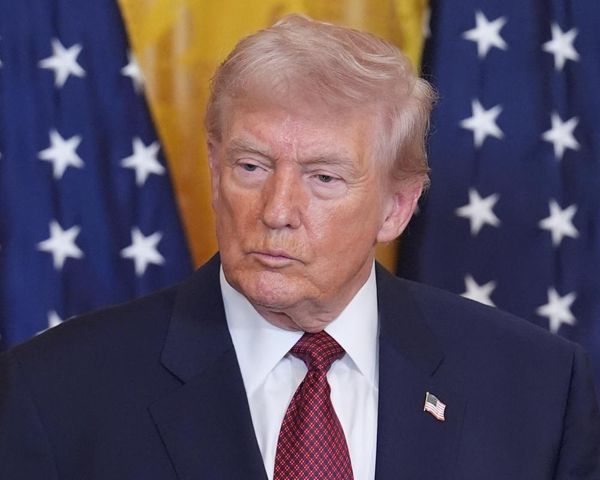
Diplomacy may be where Israel stands to lose the most ground. Since taking office in 2017, President Trump has broken taboo after taboo on Israel relations, including moving the U.S. Embassy to Jerusalem from Tel Aviv and reversing long-standing policy that deemed Israeli settlements in the disputed West Bank inconsistent with international law. The Trump administration’s much-hyped peace plan would likely favor Israel, even if there’s little chance it would lead to an actual agreement.
But U.S. officials are waiting for an Israeli government to be formed before releasing the plan, and that’s pushed off the rollout indefinitely. “I never thought in a million years this would happen,” says Michael Oren, a former ambassador to Washington. “From Israel’s perspective, this is the most friendly administration, which is probably going to give us the best deal we’re ever going to get. So it is important that we cooperate with it.”
Worse still, there’s disquiet on the borders. Iran is becoming more and more aggressive, and the buildup of its proxy forces in Syria and Lebanon is raising fears at home. Recent flare-ups in the conflict with the Palestinian-controlled Gaza Strip have led to talk among Israelis of either a long-term truce or a wide-scale military operation, but either would be difficult to manage under a transitional government.
Israel is striking back on various fronts, particularly with attacks in Syria. But any action involving the armed forces ordered by Netanyahu would be suspect, perhaps seen as more necessary for his campaign than for the country. Already, he’s made nationalist leader Naftali Bennett defense minister amid fears he might bolt to a rival leader. A major escalation could backfire, says Ofer Zalzberg, a senior analyst at the International Crisis Group. “There is concern that Israel’s adversaries are aware of this, that the current political stalemate makes Israel more vulnerable,” he says. “Even tactical operations which are high-risk, cross-border ones are not going ahead as they do in normal times.”
The prolonged uncertainty is also hurting Israel’s economy, as domestic priorities get lost in the shuffle. Most pressing is the country’s widening budget deficit, which last year caused the ratio of the national debt to gross domestic product to rise for the first time in almost a decade. Without a permanent government, Israel won’t be able to pass a budget until well into next year. At the Communications Ministry, long-standing plans such as the rollout of 5G networks are moving ahead, but many other tasks await the next government, including structural reforms and regulatory updates.
Issues continue to pile up: a lack of hospital beds, delayed agricultural trade talks with the U.S., a short-staffed monetary policy committee. Starting next year without a formal budget “presents major challenges related to the functioning of the government,” Rony Hizkiyahu, Israel’s accountant general, told parliament on Nov. 19. “Coping with this will have an effect not only on the government offices, but on the entire market, as well.”
Rather than racking up diplomatic achievements while cruising into the history books as he expected, Netanyahu is instead preparing for a criminal trial. After a three-year police investigation, Israel’s attorney general—a former Netanyahu aide—announced on Nov. 21 that the prime minister would be indicted in three separate cases: one for bribery, fraud, and breach of trust, and two for just fraud and breach of trust. Netanyahu is accused of trading official favors for lavish gifts from wealthy friends, and giving or offering regulatory benefits for positive news coverage.
He won’t go down without a fight. After his indictment, he took to national television with a fiery speech saying prosecutors were staging a legal coup. He’s also attacked the media and raised fears of a government supported by Arab parties.
No clear path exists out of the quagmire. While Netanyahu’s opponents say they won’t sit in a government he leads, his own Likud party is largely standing by him, and polls for a potential third election show an outcome similar to that of the September vote, which gave the Netanyahu-led bloc a one-seat edge. Even so, 43% of Israelis blame him for the lack of a government, and 35% say he must resign now and stand trial, according to the Israel Democracy Institute. “The majority of the public sticks to their own party,” says Nir Barkat, a high-ranking Likud lawmaker and former mayor of Jerusalem. “If we will need to have primaries in the Likud, there’s no doubt that Netanyahu will win.”
Given Netanyahu’s and Gantz’s failures, any member of parliament who can gather support from a majority of lawmakers by the end of Dec. 11 may try to form a government. Netanyahu and Gantz could form a unity government with a rotation at the top, but a third round of elections is also a very real possibility.
A few in Likud have begun to call for change: Gideon Saar, a popular former minister, has said that a leadership primary is necessary to preserve the party’s power. For now, no one will even venture a guess as to how or when the stalemate will end. “They say that in the Middle East it’s hard to predict the past,” Barkat says. “I’m not going to be the predictor.” —With Yaacov Benmeleh
To contact the author of this story: Ivan Levingston in Tel Aviv at ilevingston@bloomberg.net
To contact the editor responsible for this story: Jillian Goodman at jgoodman74@bloomberg.net
©2019 Bloomberg L.P.