Israel's largest opposition bloc split on Tuesday after the leader of the Labor Party announced it would run independently in the April elections.
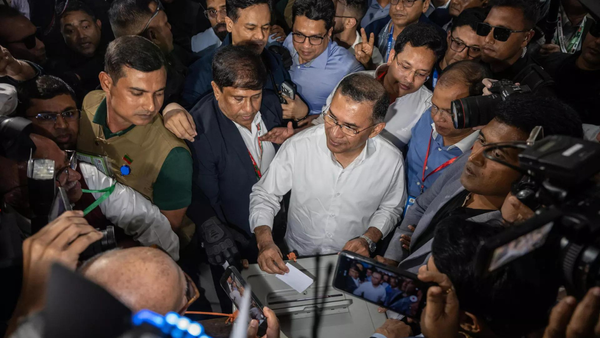
Avi Gabbay said the Labor Party will run without the Hatnua movement of former Foreign Minister Tzipi Livni.
The two had made up the Zionist Union bloc, which earned 24 seats in previous elections, finishing second only to Prime Minister Benjamin Netanyahu's Likud party.
But the union has recently been polling in single digits, a historic low for a bloc led by the Labor Party that founded Israel and led it for its first 30 years.
“I hoped and believed this alliance would bring about our blossoming, a real connection and we would complement each other. But the public is smart, saw this is not the situation and distanced itself from us,” Gabbay said in a nod to the Zionist Union’s weak showing in opinion polls.
“Tzipi, I wish you success in the election - in any party you’re in,” he said, announcing the split on live television.
The move appeared to catch Livni by surprise.
“I’m not responding. I will make my decisions. Thank you,” she said, and then left the room.
In a statement shortly after Gabbay's announcement, she said it was "good that the doubts had been cleared," vowing to focus on winning the upcoming poll.
Gabbay's decision is the latest realignment ahead of the election and more are expected.
On Saturday, two right-wing ministers, Naftali Bennett and Ayelet Shaked, announced they were splitting from their Jewish Home party to form a new one that they hope will attract a mixture of secular and religious voters.
A popular former armed forces chief of staff, Benny Gantz, has also signaled his intention to run by forming a new centrist party.
Opinion polls have predicted Netanyahu will easily win the snap election he called for April 9, taking between 27 to 31 of parliament’s 120 seats - enough to lead a right-wing coalition government, despite three corruption investigations against him.
Zionist Union trails far behind Netanyahu’s Likud and centrist parties in the polls, which predict it will capture only eight to nine seats compared with the 24 it took in its second-place finish in the previous election in 2015.
Livni, who became a leading advocate of a two-state solution with the Palestinians, entered politics in 1999 as a member of the right-wing Likud party, serving in several cabinet posts and eventually moving to the center-left as head of the now-defunct Kadima party.
She was foreign minister from 2006 to 2009 and founded Hatnua in 2012, joining up with Labor to establish the Zionist Union for the 2015 ballot won by Netanyahu, now in his fourth term.