The Court of Appeal has ordered the Internal Security Operations Command (Isoc) to pay 210,000 baht in compensation to two human rights defenders and remove online content that damaged their reputations, overturning part of a lower court ruling.
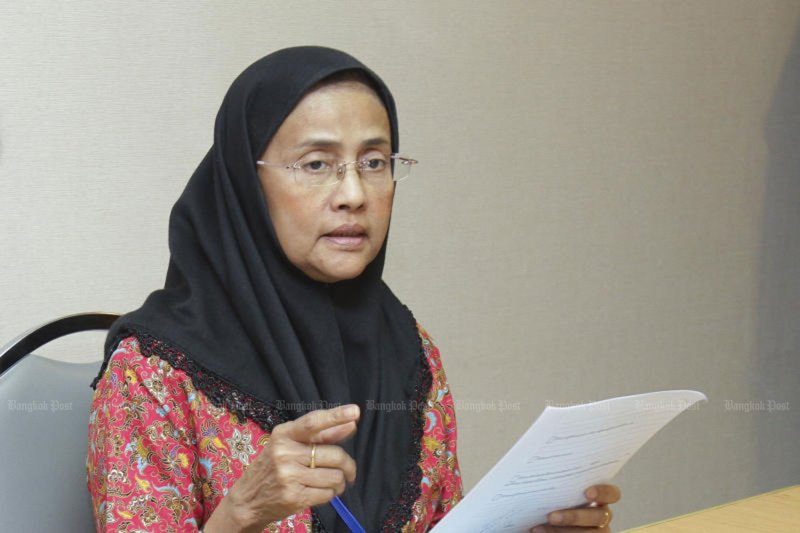
The judgement, read on Thursday at the Civil Court, was issued in a lawsuit filed by activists Angkhana Neelapaijit and Anchana Heemmina against the Office of the Prime Minister, Isoc and the Royal Thai Army.
At issue were online posts targeting the activists by spreading false news about them. The euphemism “information operation” (IO) has come to be used to describe such activities, often carried out by state and military actors to intimidate critics.
The court found Isoc liable, ruling that it had authority to control and supervise Pulony.com, the website used to publish the disputed content.
It ordered Isoc to pay 120,000 baht in compensation to Ms Angkhana and 90,000 baht to Ms Anchana, plus interest as prescribed by law. The agency was also ordered to remove the offending content within seven days.
The plaintiffs argued that names, photographs and information about activists, civil society members and human rights defenders were published online in a manner that damaged their reputations and unfairly linked them to national security threats.
The judgement, read on Thursday at the Civil Court, was issued in a lawsuit filed by activists Angkhana Neelapaijit and Anchana Heemmina against the Office of the Prime Minister, Isoc and the Royal Thai Army.
At issue were online posts targeting the activists by spreading false news about them. The euphemism “information operation” (IO) has come to be used to describe such activities, often carried out by state and military actors to intimidate critics.
The court found Isoc liable, ruling that it had authority to control and supervise Pulony.com, the website used to publish the disputed content.
It ordered Isoc to pay 120,000 baht in compensation to Ms Angkhana and 90,000 baht to Ms Anchana, plus interest as prescribed by law. The agency was also ordered to remove the offending content within seven days.
The plaintiffs argued that names, photographs and information about activists, civil society members and human rights defenders were published online in a manner that damaged their reputations and unfairly linked them to national security threats.
In its ruling, the court said agencies responsible for supervising channels used to disseminate information could also be held liable for damage caused by content published through those channels.
Ms Angkhana described the judgement as an important precedent for human rights protection. She cited evidence presented during the case, including a report by an extraordinary parliamentary subcommittee reviewing the annual budget bill and testimony from witnesses.
She said the court accepted that the operation had been carried out by individuals linked to the Isoc Region 4 Forward Command, constituting a wrongful act by a state agency.
‘Restoring dignity’
Speaking after more than six years of legal proceedings, Ms Angkhana said the case was not about money or punishment but about restoring human dignity.
She also urged the prime minister, in his capacity as Isoc director, not to appeal to the Supreme Court, saying further litigation would delay accountability and remedy for those affected.
The court dismissed the plaintiffs’ request for a public apology through the media.
Isoc, sometimes referred to as the political arm of the military, has an estimated 6,000 personnel nationwide, excluding the South. Most of them are seconded from the army and the police and receive extra stipends for their work with the agency.
Its presence in the South under Region 4 is considerably larger, estimated at up to 60,000 personnel. Numbers are also supplemented by paramilitary rangers and local volunteers.
- Editorial: Isoc role under scrutiny