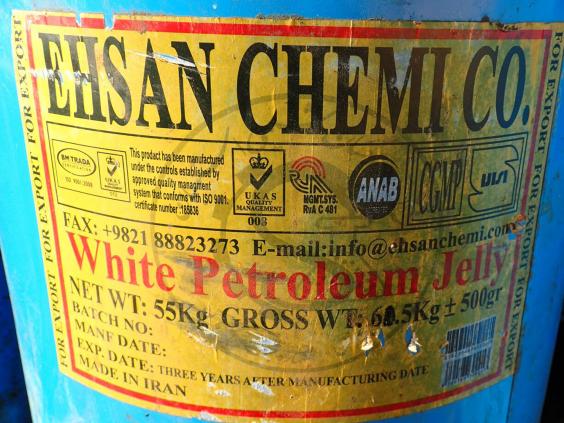
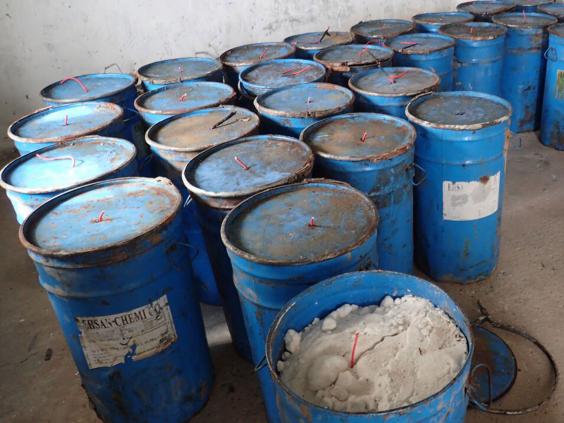
Isis is manufacturing ever more sophisticated and devastating suicide bombs and improvised explosives using civilian components from countries around the world, an investigation has revealed.
Most of the equipment, including chemicals, fertilisers, wire and electronics, is being funnelled through Turkey to the group’s territories, according to a report by Conflict Armament Research (CAR).
The EU-funded group analysed improvised explosive devices (IED) collected over 20 months on Iraqi and Syrian frontlines to reveal how the so-called Islamic State has been able to amass its arsenal at an unprecedented speed.
James Bevan, executive director of CAR, told the Independent militants are using explosives in terror attacks, military offensives and to defend territory.
He said the group was continually experimenting, refining and creating new types of IEDs ranging from suicide and car bombs to landmines, booby traps and improvised mortars.
The inventions have taken a heavy toll on the Peshmerga, Shia militias, Kurdish YPG, opposition rebels and other forces attempting to take back Isis territory.
“Whenever they try to liberate an area, that area is absolutely littered with IEDs and they are causing the greatest amount of casualties,” Mr Bevan said. “It’s on a larger scale than we’ve seen in recent conflicts.”
The report found that most of the components are gained by exploiting legal agricultural and mining sectors where the necessary chemicals and parts are freely available.
It identified 51 companies in 20 countries involved in the deadly supply chain, including Nokia, which is now owned by Microsoft, and firms headquartered in Europe and the US.
Although CAR concluded that issues stretched far beyond the nations surrounding Iraq and Syria, Turkey was found to be the main “choke point” in the enterprise.
Mr Bevan said: “There is a lot of farming and a lot of demand for chemicals, some of which are precursors in the manufacture of explosives.
“There’s certainly a requirement to tighten up regulations and government oversight, and if the companies themselves didn’t know their products were being used, they should be aware now.”
He claimed that CAR investigators had seen cars, lorries, food, oil and people crossing parts of the border between Turkey and northern Syria in recent months.
“If you are in YPG-controlled territory, the border is virtually hermetically sealed, whereas if the border is with Isis-controlled areas it was and still is virtually open,” Mr Bevan added.
The Turkish government failed to respond to CAR’s requests for information but other mentioned parties, including Nokia, aided the non-governmental organisation with documents and invoices.
All companies and countries named have been informed of the findings as investigations continue in Ramadi and other territory recently retaken from Isis.
The Independent had not received a response from Nokia or Microsoft at the time of going to press.